


Love Finds a Way: When a Wedding Reception Goes Virtual
In an extraordinary display of adaptability and modern problem-solving, a newly married Indian couple recently found themselves attending their own wedding reception virtually after an unexpected flight cancellation left them stranded hundreds of miles from their celebration. What could have been a devastating disappointment transformed into a memorable and innovative event that perfectly encapsulates how technology can preserve human connections even in the most traditional of ceremonies.
Medha Ksheera Sagar and Sangama Das had meticulously planned their wedding reception in Hubballi, Karnataka, India, for December 3. Everything was in place—the hall beautifully decorated, catering arranged, and guests arriving from near and far to celebrate with the newlyweds. However, fate intervened when their IndiGo flight was suddenly cancelled, leaving them and several family members who were traveling via Mumbai stranded with no way to reach Hubballi in time. In an earlier era, such a situation might have necessitated a painful postponement or cancellation, disappointing dozens of guests and resulting in significant financial loss. Instead, the couple and their families embraced a thoroughly modern solution.
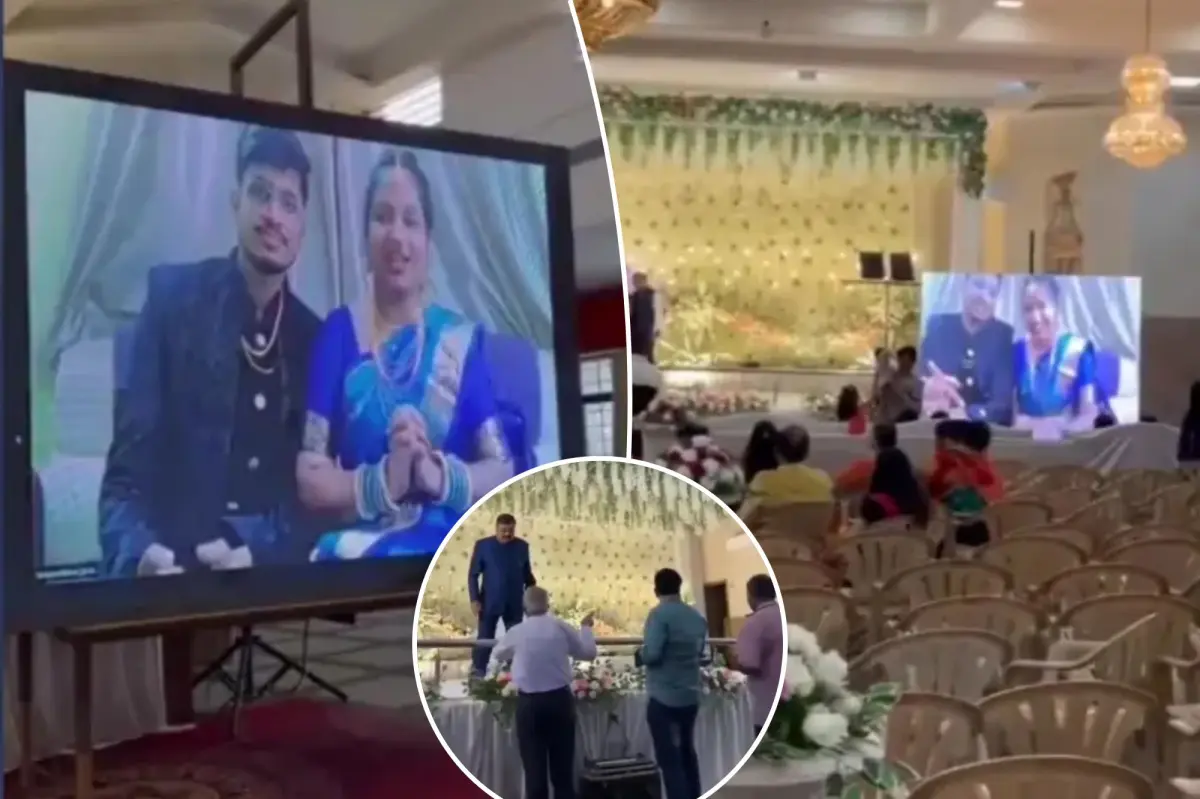
Rather than postpone the carefully orchestrated celebration, the bride’s family made a bold decision to proceed with the reception—with a digital twist. They arranged for the couple to appear on a massive screen at the venue, creating a video-link wedding reception that allowed Medha and Sangama to participate from afar. The bride’s parents took to the stage as physical representatives of the couple, while the newlyweds beamed in virtually, their smiles and joy transmitted across the distance. This creative solution transformed what could have been a crisis into an event that guests would remember for years to come, not for what went wrong, but for the innovative way the family adapted to unexpected circumstances.
The virtual arrangements proved remarkably effective, creating an atmosphere that maintained much of the warmth and connection of a traditional reception. Medha and Sangama appeared on the screens smiling and interacting with guests as if they were physically present in the hall. They greeted attendees individually, participated in ceremonies remotely, and shared in the celebration despite the physical distance separating them from their loved ones. Guests reported feeling genuinely connected to the couple, with the large screen providing a surprisingly intimate way to interact with the bride and groom. The couple’s expressions of joy and gratitude were clearly visible to everyone in attendance, preserving the emotional core of what makes wedding receptions so special.
For the couple themselves, the experience was undoubtedly bittersweet. While nothing could fully replace being physically present at their own reception, embracing this technological solution allowed them to salvage an important life milestone. They watched as guests enjoyed the carefully planned meal, listened to speeches given in their honor, and participated as much as possible in the traditions and rituals that had been arranged. In many ways, this virtual reception became even more meaningful than a conventional one might have been—it demonstrated the couple’s flexibility, resilience, and willingness to embrace unexpected challenges together, qualities that serve well in marriage. What began as a logistical nightmare transformed into a unique story that will become part of their family lore for generations.
This blend of ancient tradition and cutting-edge technology serves as a powerful reminder of how humans continue to find ways to maintain meaningful connections despite obstacles. In a world where digital interactions have become increasingly common, this Indian couple’s virtual wedding reception demonstrates that even our most sacred and traditional ceremonies can be adapted without losing their essential humanity. While Medha and Sangama would surely have preferred to be physically present in Hubballi that evening, their virtual reception stands as a testament to the creativity and adaptability of the human spirit. Their story reminds us that what matters most in celebrations is not perfect execution of plans, but the love, connection, and relationships being honored—elements that can transcend physical distance when necessity demands and technology enables.