





In the biting cold of January 1937, a young Jewish woman named Pauline Trigère stepped off a passenger ship onto the bustling docks of New York City, carrying with her the heavy anxieties of a family fleeing the shadow of Nazi-occupied Europe. Accompanying her was her husband, Lazar Radley, their two young sons, her mother, and her brother Robert. America was supposed to be a mere resting place, a brief intermission on their journey to Chile, where Lazar and Robert planned to build a fashion empire from the ground up. Having grown up in her parents’ Parisian dressmaking workshop, Pauline possessed an extraordinary talent for cutting fabric and construction, but her traditional husband preferred her to remain in the background, a silent supporter rather than an active partner. However, New York had a quiet magic that January morning, and when Pauline joined her husband and brother for a walk down Fifth Avenue to observe the local style, her entire world shifted. Peering through the towering glass windows of Manhattan’s grand department stores, she was utterly transfixed not by European replication, but by the sheer quality, dazzling variety, and astonishing affordability of American-made garments. She noticed that even though winter still gripped the city, the shop displays were already blooming with vibrant spring collections—a level of forward-thinking industrial organization that seemed impossible back in Paris. Most surprisingly, she observed that the average working-class woman walking down the New York sidewalk was dressed with a chic, polished confidence that rivaled, and perhaps even surpassed, the average Parisian. That night, fueled by a sudden and fierce conviction, Pauline looked at her husband and announced she was not getting on the boat to South America; she was staying in New York. Lazar dismissed her as hysterical, pointing out the agony it had taken to secure their visas, but Pauline refused to budge. Her stubbornness sparked a rebellion that would define the rest of her life: she remained in Manhattan, eventually divorced Lazar, and rose to become one of the undisputed matriarchs of Seventh Avenue, draping elegant icons like Grace Kelly and Lena Horne in impeccably tailored coats, and retiring decades later with three prestigious Coty Awards to her name.
Pauline’s instant infatuation with American fashion stemmed from a profound, instinctive understanding of how deeply it differed from the European system she had left behind. In France, fashion was an aristocratic luxury, born from the tradition of haute couture which catered exclusively to the ultra-wealthy, crafting one-of-a-kind masterpieces for one privileged client at a time. New York, by contrast, had built a sprawling, highly efficient manufacturing infrastructure that treated stylish clothing not as a luxury for the few, but as a ubiquitous, celebratory part of daily life, as plentiful and accessible as the city’s yellow taxicabs. This radical approach was grounded in the deeply held American ideals of democracy, equality, and the pursuit of individual happiness. While fashion is never explicitly mentioned in the United States’ founding documents, its symbolic power was recognized by the nation’s earliest leaders as a tool for social leveling. When George Washington stood before a hopeful crowd for his inauguration on April 30, 1789, he consciously rejected the lavish imported silks, gold embroidery, and intricate velvet laces that European monarchs used to project superiority; instead, he chose to wear a simple, unadorned suit of brown wool woven right in Connecticut. By choosing the fabric of the common citizen, Washington established a powerful, enduring national precedent: in this new republic, a citizen’s clothing should unite them with their peers rather than separate them by class. Centuries later, New York Mayor Fiorello LaGuardia would beautifully echo this foundational sentiment when he declared that a well-made, beautiful dress was the inherent right of every single American woman, regardless of her socio-economic status, her background, or her dress size.
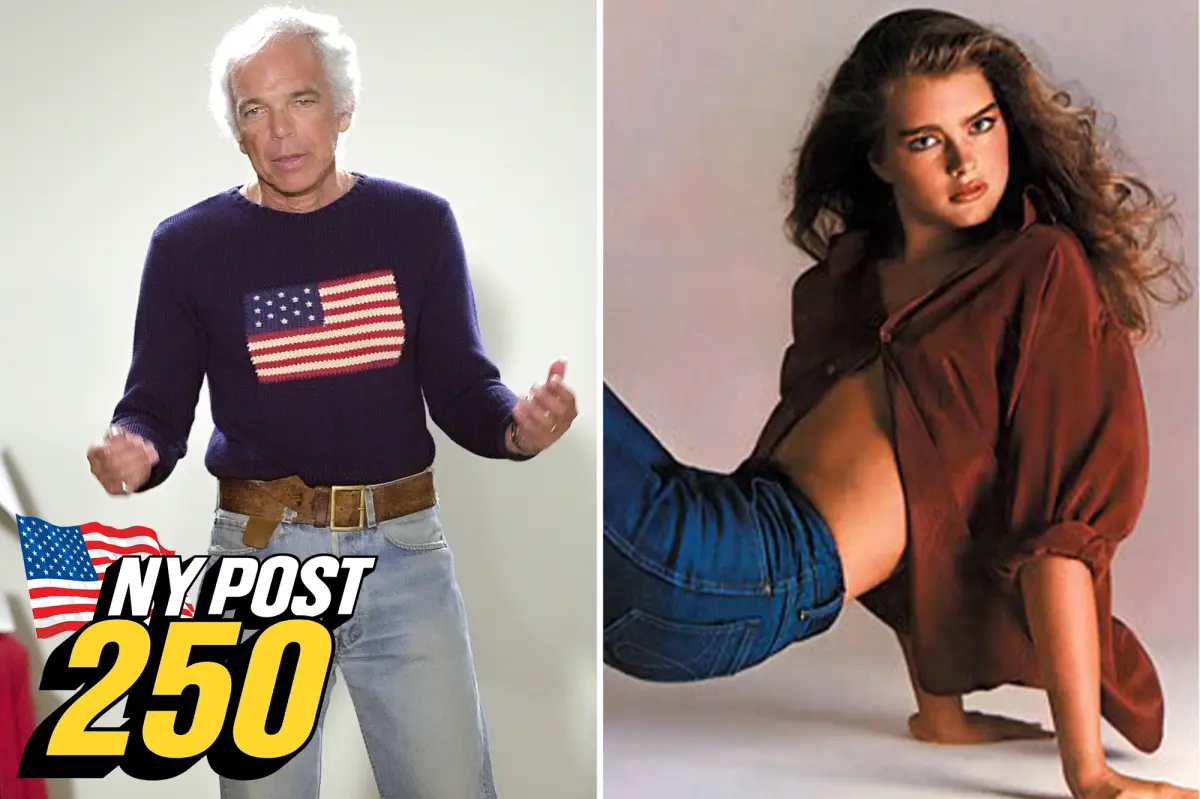
This passion for equality and practicality birthed an array of unpretentious, deeply human clothing archetypes that have come to globally define American style. Unlike European fashion, which often took its cues from royalty, military uniforms, or the opera, American style drew its creative oxygen from the lives of ordinary people working, dreaming, and reinventing themselves on the expansive frontier. There was the rugged cowboy, defined by durable denim and functional leather; the daring rebel in a simple white T-shirt; and the hardworking laborer in sturdy canvas overalls. Even the most elite of American archetypes, the Ivy League student, approached fashion with a casual, lived-in irreverence that rejected stiff European formality in favor of comfortable tweed sports coats, soft flannel shirts, and classic Bass Weejun loafers, worn with pride until the elbows frayed and the soles flapped open. The brilliance of America’s most celebrated designers lay in their ability to translate these rugged, down-to-earth archetypes into modern, sophisticated wardrobes. In the late twentieth century, Calvin Klein took standard American sportswear and stripped it of all unnecessary ornament, transforming basic denim and underwear into something minimalist, sleek, and undeniably sensual. Ralph Lauren built an empire by blending the rustic charm of Western plains with the polished prep of New England, filtering it through the romantic lens of vintage Hollywood cinema to sell a dream of aspirational heritage. Tommy Hilfiger democratized Ivy League prep by vibrant, oversized tailoring that merged collegiate classics with the bold energy of hip-hop culture, while Marc Jacobs captured the raw, anti-establishment spirit of the 1990s Pacific Northwest grunge scene, elevating thrift-store aesthetics to the high-fashion runways of Manhattan.
Because American fashion is built on a foundation of inclusivity, these archetypes are never static; they are constantly being reclaimed, reimagined, and enriched by a wonderfully diverse array of contemporary voices who refuse to let American history remain whitewashed or one-dimensional. Designers today are unpacking their own cultural heritage to show that “classic American” can look like many different things. For instance, Christopher John Rogers, an industry darling whose voluminous, breathtakingly colorful creations have been embraced by trailblazing women from Michelle Obama to Lady Gaga, frequently infuses his work with references to the proud, theatrical “Sunday best” dressing of Southern Baptist church culture. By elevating the vibrant, communal joy of Black Southern style to the pinnacle of high fashion, Rogers expands the boundaries of luxury. Similarly, Willy Chavarria—a designer who honed his craft at major corporate houses like Ralph Lauren and Calvin Klein—utilizes his platform to honor the artistic dignity of Mexican-American history. His collections pay beautiful, dramatic homage to the pachuco and cholo subcultures born in the barrios of Texas and California, using oversized silhouettes, crisp pleats, and sweeping structures to tell stories of resilience, street sovereignty, and pride. By weaving these deeply personal, historically marginalized narratives into the fabric of mainstream fashion, these modern visionaries prove that the American dream is at its most beautiful when it is diverse, validating the lived experiences of communities that have long contributed to the nation’s cultural tapestry.
This focus on the beautiful intersections of real life and clothing is what ultimately birthed the concept of “sportswear”—a term that, in the American lexicon, does not refer to athletic gear, but rather to the comfortable, interchangeable, and stylish casual clothing that people wear to navigate their busy daily lives. The true pioneer of this philosophy was Claire McCardell, a visionary designer often remembered as the mother of American sportswear. McCardell believed that women should not be prisoners of their clothing, actively designing pieces that rejected the rigid corsetry, heavy padding, and restrictive lining that still dominated Paris. She envisioned a future where women lived active, global lives, famously predicting to a journalist in 1945 that the modern wardrobe would need to be capsule-minded to easily fit into the trunk of a plane, offering the greatest number of outfit possibilities with the absolute fewest garments. Long before the fashion industry embraced the concept of the capsule wardrobe, McCardell was designing interchangeable separates, wrap dresses, and flat shoes, despite facing intense resistance from retail buyers who insisted that women were too traditional to understand the concept of buying pieces individually rather than complete, pre-assembled ensembles. It would take another half-century, and the brilliant mind of another legendary designer named Donna Karan, to truly cement this concept in the global consciousness. In 1985, Karan launched her revolutionary “Seven Easy Pieces” collection, which showed working women how a simple black bodysuit, paired with an interchangeable skirt, trousers, and jacket, could take them seamlessly from a high-stakes board meeting to an elegant evening dinner, finally realizing the democratic, functional future that McCardell had passionately championed decades prior.
Claire McCardell passed away in 1958 at the young age of fifty-two, never living to see the full, global realization of her design philosophy. Throughout her life, and indeed for much of the twentieth century, New York struggled to gain the artistic respect of Paris, a city that had positioned itself as the undisputed capital of style since the lavish reign of King Louis XIV. Critics often dismissed American fashion as being too commercial, too industrial, and too focused on the bottom line to ever be considered true art. Yet, McCardell and her contemporaries never viewed their commercial focus as a creative failure; rather, they saw it as their greatest achievement and a source of immense pride. To design beautiful, durable clothes that could be mass-produced meant that a factory worker, a schoolteacher, and an heiress could all wear the same flattering silhouette, bridging social divides through the shared joy of self-expression. Mass production may lack the romantic, status-driven mythos of a century-old European couture house, but it is the very engine that has built today’s massive, $1.8 trillion international fashion industry. This entire global phenomenon is rooted in a beautifully simple, revolutionary concept that was first put into practice in the crowded, noisy factories of New York City’s Garment District: the profound belief that style, confidence, and dignity are not exclusive privileges reserved for the wealthy elite, but are fundamental, democratic rights belonging to every single human being.