






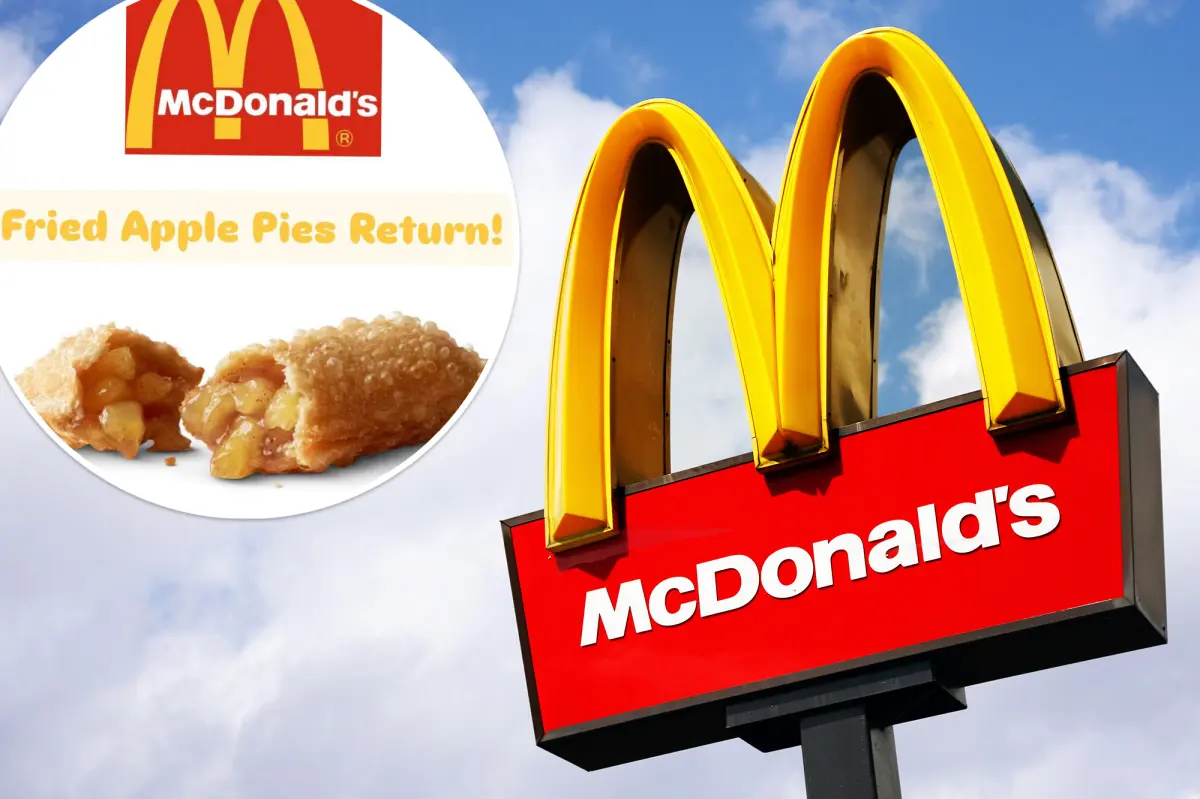
There is a distinct, deeply buried sensory memory shared by almost everyone who grew up in the latter half of the twentieth century: the anticipation of sliding a blazing-hot, rectangular cardboard sleeve open to reveal a golden, blistered, bubbling pocket of pure joy. For generations of fast-food lovers, the McDonald’s apple pie was not merely a dessert; it was a culinary rite of passage, a scalding-hot, crispy-crusted masterpiece that defined the very essence of American comfort food. Now, in a spectacular nod to nostalgia that has sent waves of excitement through the culinary world, the Golden Arches is preparing to resurrect this legend. Starting on June 22, the fast-food giant will officially bring back its iconic deep-fried apple pies to restaurants nationwide. This long-awaited homecoming, leaked to the public by the popular online food commentator Snackolator, is set to coincide with early celebrations of America’s 250th birthday. For a fleeting window of just two weeks, the brand will replace its standard baked pies with these crispy relics of the past. For millions of loyal patrons, this limited engagement is not just a promotional stunt, but a long-overdue reunion with a beloved childhood staple that vanished from national menus over three decades ago.
To truly understand why the return of the fried apple pie has sparked such intense fervor, one must look back at the dramatic evolution of McDonald’s dessert menu. First introduced in 1968—the very same year the legendary Big Mac made its debut—the fried apple pie immediately captured the hearts of a rapidly suburbanizing America. Its magic lay entirely in its texture: a deep-fried, bubbly, shatteringly crisp outer crust that gave way to a luscious, cinnamon-spiced apple filling so hot it practically required a warning label. However, the culinary landscape shifted dramatically in 1992. Responding to a growing wave of public anxiety regarding dietary fats, trans fats, and cholesterol, McDonald’s corporate leadership made the executive decision to pull the plug on the deep fryer. In an effort to project a more health-conscious image, they introduced a pale, doughy, baked version of the pie. While the baked alternative was undoubtedly lower in grease, it lacked the soul, the crunch, and the legendary blistered texture of its predecessor. For thirty-two years, purists have lamented this swap, arguing that a baked pie simply could not replicate the decadent, comforting magic of the original fried recipe.
The internet’s reaction to the announcement of the pie’s temporary return has been nothing short of a cultural phenomenon, highlighting a fascinating collective defiance against modern dietary wellness culture. When Snackolator broke the news on social media, the comment sections erupted with a mixture of sheer ecstasy, profound nostalgia, and a healthy dose of populist outrage. One passionate commenter, whose demand amassed hundreds of supportive likes, asked the question on everyone’s mind: “WHY NOT JUST MAKE IT PERMANENT AGAIN?” Another fan perfectly encapsulated the spirit of the modern fast-food consumer by declaring, “Make it permanent! I don’t go to McDonald’s to feel good about myself.” This hilarious and incredibly honest sentiment strikes at a deeper truth about contemporary dining. In an era dominated by kale salads, seed oils, and calorie-counting apps, the local drive-thru remains a sacred temple of pure, unapologetic indulgence. People do not pull into a McDonald’s parking lot looking for a lecture on clean living; they go there to find comfort, consistency, and a temporary escape from the pressures of daily life, which is exactly what a crispy, deep-fried pocket of spiced apples offers.
Interestingly, while the nationwide return of the fried pie is a rare novelty for most Americans, a few select regions and rival chains have quietly kept the flame of the deep-fried dessert alive. For those willing to travel, a handful of permanent oases have preserved the 1968 recipe. In Hawaii, where unique regional tastes have long influenced franchise menus, McDonald’s locations never made the switch to the baked version, quietly serving the fried classics to locals and tourists alike for decades. Similarly, the historic, retro-themed McDonald’s in Downey, California—the oldest operating location in the world—continues to fry its pies as part of its commitment to living-history preservation. Beyond the Golden Arches, other fast-food brands have happily stepped in to fill the void left by the 1992 menu change. Popeyes Louisiana Kitchen famously maintains a rotating selection of deep-fried pies, currently tempting customers with a decadent strawberry cream cheese variety. Burger King has also dabbled in the fried pastry game, while Jollibee, the massively popular fast-casual chain from the Philippines, has built a global cult following around its incredibly crispy, deeply fried peach mango pies.
From a strategic business perspective, this two-week nostalgia trip fits perfectly into McDonald’s recent history of embracing bold, high-calorie, and deeply indulgent menu items to drive store traffic. In an economically challenging climate where consumers are increasingly budget-conscious, capitalizing on “fear of missing out” (FOMO) and nostalgia is a proven formula for success. The brand has increasingly leaned away from its mid-2000s identity as a pseudo-health food café and returned to what it does best: heavy, satisfying comfort food. This shift is beautifully illustrated by another recent headline-making release: the “Big Arch” burger. Clocking in at a whopping 1,020 calories, this limited-time behemoth features two quarter-pound beef patties, melted cheese, crispy onions, and a rich signature sauce. By pairing massive, unapologetic entrees like the Big Arch with beloved retro desserts like the fried apple pie, McDonald’s is sending a clear message to its customer base: we are embracing our roots, celebrating our history, and giving the people exactly what they want, without any health-conscious pretension.
As the June 22 release date approaches, anticipation continues to build for what promises to be a chaotic, sugar-fueled fortnight at drive-thrus across the country. There is something beautifully poetic about the fleeting nature of this comeback; because it is only staying for two weeks, every single bite of that bubbly, crispy crust will taste just a little bit sweeter and feel a little more precious. It is a reminder of a bygone era when fast food was simpler, guilt-free, and unabashedly delicious. So, mark your calendars, prepare your taste buds, and perhaps warn your tongue in advance for the inevitable burn of that delicious, molten apple-cinnamon lava. Whether you are a Baby Boomer looking to recapture your youth, a Gen Xer nostalgic for the Friday nights of your childhood, or a Gen Z foodie curious to know what all the fuss is about, this two-week window is your chance to taste history. Sometimes, a simple pocket of fried dough and warm fruit is more than just a quick dessert; it is a delicious, edible time machine wrapped in cardboard.