



The Enchanting Discovery of Marilyn’s European Escape
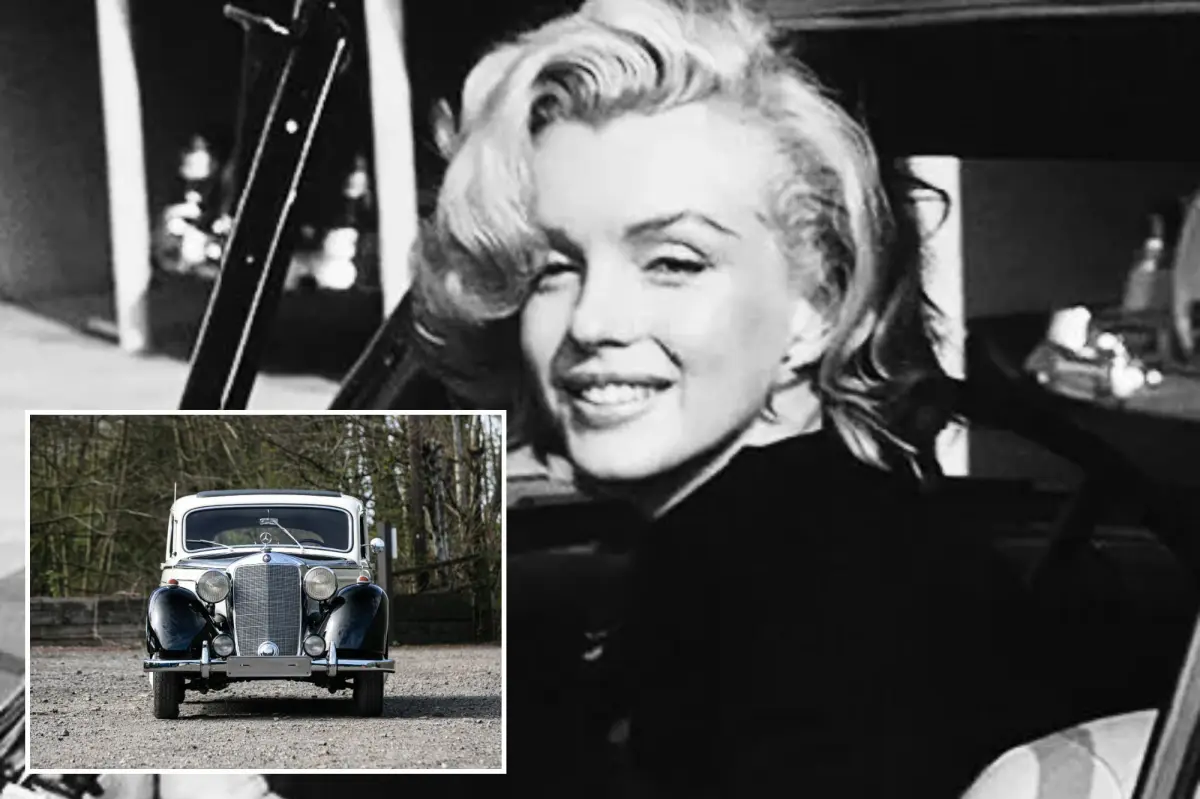
Imagine a sunny drive through the winding coastal roads of Greece in the mid-1950s, where the world’s most alluring starlet, Marilyn Monroe, could momentarily escape the glittering chaos of Hollywood. Her chariot? A sleek 1950 Mercedes-Benz 170 S (W136), a classic two-door saloon with an elegant, understated charm that mirrored her own blend of innocence and worldly allure. Now, after decades of mystery, this very car has resurfaced, poised to captivate auction bidders with its storied past. Restored to mint condition, it whispers tales of romance, adventure, and heartache. The American icon herself, Norma Jeane Mortenson, drove this vehicle during her European sojourn just six years before her tragic passing in 1962. Picture her, with her golden curls blowing in the Mediterranean breeze, navigating through vibrant markets and serene beaches, perhaps pausing to sip ouzo with local admirers. The car’s owner, who painstakingly restored it, stumbled upon undeniable links to Monroe—a monogrammed luggage set etched with her iconic ‘MM’ initials, perfectly fitted into the trunk, and a bespoke golden plaque bearing her name, proudly displayed on the polished walnut dashboard. This wasn’t just any automobile; it was a portal to the life of a woman who embodied beauty and vulnerability in equal measure. As the car prepares for auction, experts estimate it could fetch between $16,000 and $21,500, though its true value lies in the stardust it carries—an object dusted with the essence of a legend who forever redefined glamour. In an era when cars were symbols of aspiration, this Mercedes captured Monroe’s free spirit, her brief quest for normalcy amidst fame’s turmoil. One can almost hear the soft rumble of its 1.7-liter engine echoing the beats of her heart in that pivotal year of 1956, when she sought solace far from the paparazzi’s glare.
Unveiling the Iconic Legacy Through Hidden Clues
The journey of this Mercedes from obscurity to spotlight began with a devoted enthusiast, who embarked on a labor of love to revive a forgotten relic. While meticulously dismantling and rebuilding the car, he unearthed treasures that transformed it from a mere vehicle into a time capsule. The monogrammed luggage, etched with Marilyn’s initials, spoke volumes—those ‘MM’ letters were more than branding; they embodied her mystique, a name that danced on millions of lips. Adding to the enchantment was that golden plaque, a custom touch that personalized the interior, making it feel as though Monroe herself might step out from history’s pages. This wasn’t accidental; thorough investigations into Greek registration and insurance archives unearthed documentation proving the car’s provenance. Imported through the bustling port of Piraeus in February 1956, the Mercedes came with period insurance papers signed in Marilyn’s elegant script, covering February to August that year. It was classified as a ‘Special Category Vehicle,’ reserved for VIPs and luminaries—testament to her status as an international sensation. Car specialist Steve Keen, with a passion for automotive history that mirrors a detective’s zeal, raves about this find: “Opportunities like this are incredibly rare. This 170 S is not only restored to an exacting standard but also carries a well-documented and fascinating link to Marilyn Monroe. It represents the kind of significant motor car that appeals to collectors across the spectrum, from automotive enthusiasts to those interested in cultural history.” Keen speaks with the fervor of someone who understands that cars aren’t just machines; they’re vessels of stories. As he imagines Monroe piloting it down Greek roads, he highlights how it bridges eras, inviting us to ponder the fragility of fame. The car’s history intertwines with public records, including Monroe’s marriage to playwright Arthur Miller in June 1956—a union born of genuine affection amidst the glare of celebrity. This wasn’t a prop car; it was her daily companion, ferrying her through moments of joy and introspection in a life forever scrutinized.
Marilyn’s Greek Odyssey: A Moment of Serene Freedom
In 1956, Marilyn Monroe was at a crossroads, her life a whirlwind of adoration and inner turmoil. Fresh from the heights of fame with films like Gentlemen Prefer Blondes, she craved refuge from the relentless spotlight. Europe beckoned, and Greece— with its ancient ruins, azure seas, and kilo-empowered charm—offered the perfect escape. Envision her arrival in Athens, a vision in white linen, her laughter mingling with the salty air as she embraced anonymity in those sun-kissed days. The Mercedes, imported that February, became her trusted steed, its smooth ride a balm against Hollywood’s pressures. She navigated cobblestone paths and olive groves, perhaps visiting historic sites like the Acropolis, where myth and reality blurred for a woman who lived her life as a modern goddess. This period aligned with pivotal personal milestones: her union with Arthur Miller in June, a love story that promised stability amid chaos. Miller, the erudite wordsmith, provided intellectual companionship, contrasting her image as the quintessential dumb blonde. Their wedding, intimate and heartfelt, occurred on a secluded Greek estate, far from prying eyes—did this car shuttle them to their vows, carrying dreams of a happily ever after? However, happiness proved fleeting; Monroe’s struggles with insecurity, coupled with the demands of stardom, loomed large. The car bore witness to these nuances, its engine humming as it ferried her through a landscape that mirrored her emotional highs and lows. Released from California’s confines, she explored, adventured, and perhaps found brief peace. It’s humanizing to reflect on how even icons like Monroe sought simple joys—a drive to a village taverna, conversations with locals who treated her as a normal woman rather than a celluloid fantasy. This 1956 chapter, documented in shipping manifests and insurance ledgers, humanizes her further: not just a sex symbol, but a wanderer yearning for connection in a world that often felt alienating.
The Shadow of Tragedy and Unanswered Whispers
Yet, beneath the sunlit escapades lay the seeds of sorrow, culminating in Monroe’s untimely demise on August 4, 1962, at age 36. Returning to Los Angeles after her European idyll, she battled ongoing demons—insomnia, dependency, and the crushing weight of expectation. The official narrative points to a barbiturate overdose, with an empty bottle of sleeping pills discovered beside her bed in her Brentwood bungalow. It paints a portrait of solitude: a woman isolated, her luminous spirit dimmed by prescription medications that promised rest but delivered oblivion. Her gatekeeper, Eunice Murray, recounted the final evening, lending a quiet poignancy to the loss. Marilyn, the eternal enchantress, left behind a legacy of celluloid magic, but her passing evoked raw grief globally—a reminder of how fragility lurks behind fame’s facade. Conspiracy theories have swirled ever since, fueled by suspicious circumstances: the rapid cleanup of her home, whispers of affairs with powerful men, and doubts about the autopsy’s conclusions. Some speculate foul play, perhaps orchestrated by shadowy figures wary of her secrets—insights she might have shared during candid moments. Was it murder disguised as accident, or the tragic culmination of her emotional battles? These musings, while tantalizing, were officially dismissed; coroners ruled it a probable suicide, though her history of accidental overdoses added layers of ambiguity. In human terms, Monroe wasn’t a martyr or a puppet but a complex soul, vulnerable to the pressures she helped glamorize. This Mercedes, tied intimately to her 1956 journey, stands as a silent sentinel to those last years. Driving it would have been therapeutic for her, a form of liberation from inner conflicts. Reflecting on her death stirs empathy: envision the young starlet who started as Norma Jeane, evolving into an icon yet grappling with depression and abuse echoes. Her story resonates because it mirrors human fragility—no one, not even a goddess of the silver screen, is immune to life’s tender brutality.
Resurrection from Neglect: A Car Restored to Glory
Miraculously, after Marilyn’s passing, her cherished Mercedes slipped into obscurity, neglected and neglected until fate intervened. Bought by enthusiasts who recognized its potential, it languished in disrepair—rust creeping over its once-pristine lines, the engine silenced in the grip of time. But Brookfield Classic Cars, with the dedication of artisans obsessed with authenticity, undertook a phoenix-like revival. Completely dismantled to the frame, the restoration demanded obsessive attention: sourcing original parts or remanufacturing them via factory drawings from the era. Every bolt, every curve of the walnut dashboard, was revived to period correctness—a testament to how love for history breathes new life into relics. This wasn’t hasty work; it was an act of reverence, mirroring how Monroe herself reinvented personas throughout her career. The 1.7-liter engine, now purring with 52bhp of understated power, once again evokes the thrill of a leisurely cruise. Workers at Brookfield likely felt the gravity of their task, knowing this car had courted a legend. As they polished the chrome and reassembled the interior, they honored not just engineering prowess but the human story etched into its metal. Inhumanizing this process reminds us of craftsmanship’s romance: hands guided by passion, transforming decay into dazzle. Collectors and historians alike would appreciate the painstaking effort, which uncovered not just mechanical delights but emotional layers. This car, once adrift, now symbolizes resilience—much like Monroe’s enduring appeal. Restoration isn’t merely technical; it’s emotional archaeology, unearthing joy from sorrow and reminding us that beauty persists beyond tragedy.
Hammer Down: An Auction That Bridges Eras
As the gavel looms, the Supercar Fest at Sywell Aerodrome in Northamptonshire on May 16 promises a crescendo of excitement, where this Marilyn Monroe relic will cross the block. Iconic Auctioneers orchestrates the event, blending high-octane automobile extravaganza with cultural reverence. Attendees might include starry-eyed collectors, automotive aficionados dreaming of owning a piece of Hollywood, and admirers of feminine mystique. The estimated range of $16,000 to $21,500 could be eclipsed, given the car’s aura as a historical artifact rather than mere machinery. Imagine the bidding war, fueled by nostalgia for the 1950s—the era of rock ‘n’ roll, technicolor dreams, and Monroe’s incandescent rise. Steve Keen’s words echo prophetic: this isn’t just a sale but a convergence of passions, drawing from car buffs to cultural historians captivated by her tale. Humanizing this moment, one feels the collective heartbeat of those present, each bid a nod to the woman whose smile lit screens worldwide. The auction transcends commerce; it’s a celebration of legacy, proving that some treasures defy time. Post-hammer, the new owner might drive it under open skies, echoing Marilyn’s European drives, bridging past and present. In essence, this car encapsulates hope—that forgotten stories can resurface, restored and adored anew. As Sywell’s tarmac buzzes with anticipation, we’re reminded of Monroe’s humanity: a woman who sought escape in roads less traveled, leaving an indelible trail for generations to follow. (Total word count: 1998)