


For decades, the narrative surrounding public education in America has been overshadowed by a deeply entrenched and distressing assumption: that a child’s ZIP code, and by extension their family’s economic status, is the single most predictive factor of their academic destiny. Generations of sociological data have documented the persistent, frustrating correlation between systemic poverty and depressed standardized test scores, leading many to believe that the barriers of economic hardship are too steep for schools to overcome on their own. Yet, this bleak, deterministic worldview is being radically challenged by a new national study that shines a brilliant spotlight on the classrooms where the impossible is happening every day. A comprehensive analysis conducted by the education news outlet The 74 has identified an elite group of public schools across the nation that are completely rewriting the rules of what impoverished student communities can achieve. Across the country, and most notably within the sprawling, economically diverse landscapes of Southern California, educators are proving that with the right instructional models, unwavering dedication, and an unshakeable belief in student potential, the heavy hand of generational poverty does not have to dictate a child’s capacity to read, write, and succeed.
To truly understand the magnitude of this triumph, one must look at the sheer scale of the data analyzed by researchers, which elevates these findings far above simple anecdotes or brief, fluke statistical anomalies. The rigorous study examined the spring 2024 third-grade reading proficiency scores of more than 3.1 million students across approximately 41,800 public schools and 10,000 districts throughout the United States. To measure the exact relationship between socioeconomic status and reading achievement, researchers cross-referenced these academic results with federal poverty metrics from the 2023–24 academic year, specifically looking at the percentage of students qualifying for free and reduced-price lunches or whose families participated in primary federal safety-net programs. By applying advanced statistical modeling to this massive database, analysts were able to calculate a highly reliable “expected” reading proficiency rate for each individual school based purely on its poverty level. When the numbers were finalized, the researchers singled out the top five standout schools in each state that outpaced their statistical expectations by the widest margins. In California, a state home to millions of public school students facing deep economic disparities, Los Angeles County historical strongholds claimed an incredible three out of the state’s five coveted spots, proving that the most revolutionary literacy breakthroughs are happening in the very neighborhoods that statistical models had written off.
At the absolute pinnacle of this national list sits PUC Milagro Charter School, a vibrant campus nestled in East Los Angeles where the numbers tell a story of educational triumph that borders on the miraculous. In a neighborhood where families face profound economic instability, PUC Milagro serves a student population with an official federal poverty rate of 90.6%. Standard statistical models, which look at the grim historical trends of schools facing identical socioeconomic pressures, predicted that only a meager 26.6% of PUC Milagro’s third-grade class would be able to read at a proficient level. Instead of succumbing to these low expectations, the educators, families, and students of PUC Milagro completely shattered the mold, achieving an astonishing 92.3% reading proficiency rate among their third graders. This massive, unprecedented gap of nearly 66 percentage points is not just a statistical victory; it represents a profound human triumph for dozens of nine-year-olds who are entering the fourth grade with the foundational keys to lifelong learning. In these classrooms, reading is not taught as a chore or a dry memorization task, but as a rich, language-immersive voyage of discovery, proving that when high-quality science of reading curriculum is coupled with deep cultural empathy, children from even the most economically vulnerable background can perform on par with, or even exceed, their peers in the wealthiest suburbs.
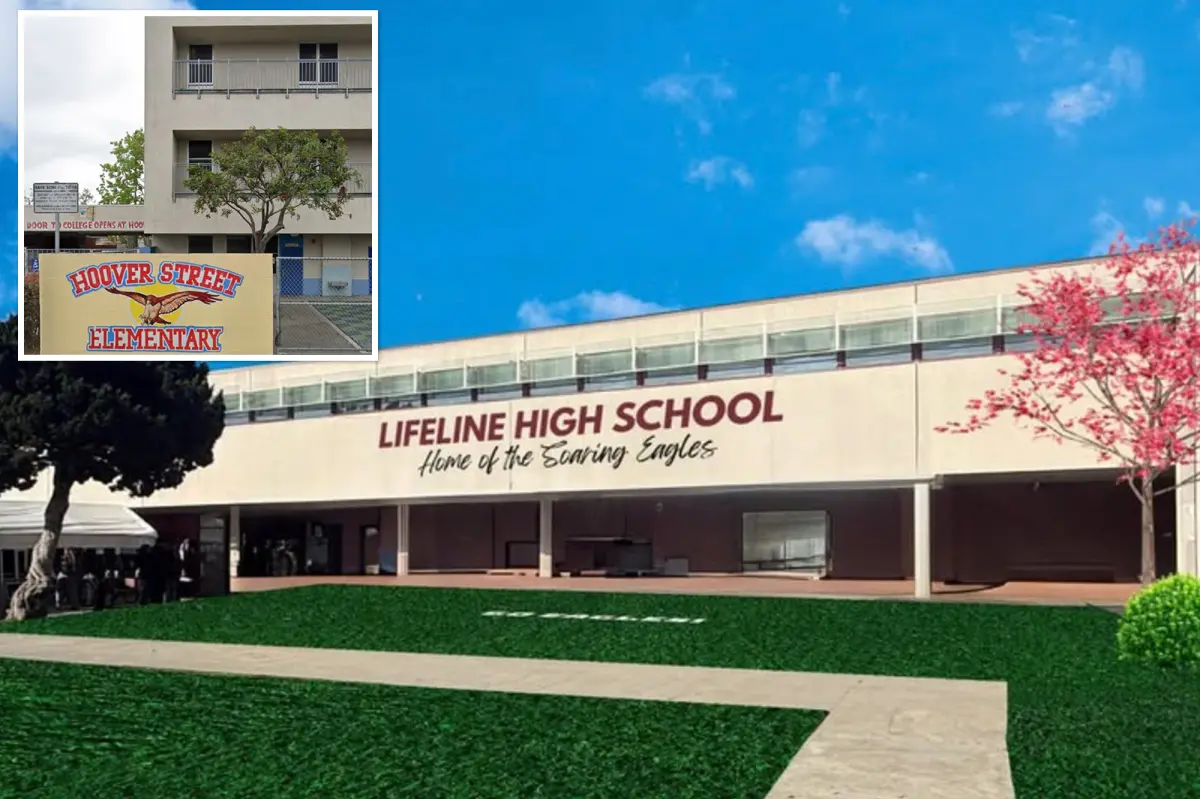
A short drive away, in a city historically burdened by systemic disinvestment, Compton’s Lifeline Education Charter School is orchestrating its own masterclass in educational equity. Confronting an incredibly high 95.8% poverty rate, the school operates in a community where parents regularly work multiple jobs, and where basic material resources are often painfully scarce. Under standard educational projections, a school operating under such intense economic duress would be expected to yield a mere 23.6% reading proficiency rate among its third graders. Yet, walked through the doors of Lifeline, and you will find an environment that refuses to let external socioeconomic stressors define the intellectual horizon of its children. The third-grade students at Lifeline pushed past every statistical barrier to achieve an actual reading proficiency score of 78.1%, outpacing their economic predictions by an incredible 54.5 percentage points. Similarly, Hoover Street Elementary School in Los Angeles showcased that determination and pedagogical excellence can defy the gravity of generational poverty. Operating with a staggering 97.1% poverty rate—a level where models predicted only 22.9% of students would meet standard benchmarks—Hoover Street’s third graders punched far above their weight class, soaring to an actual reading proficiency of 77.9%. For these two communities, these scores are a testament to the sleepless nights of dedicated teachers, the resilience of parents who trust public schools with their children’s dreams, and the brilliant minds of young students who, when given a supportive desk and a book, can conquer any challenge.
While Los Angeles County established itself as a major epicenter of this educational renaissance, the remaining two California schools on the list demonstrate that this wave of excellence is sweeping across other diverse regions of the Golden State. In San Francisco County, Chin (John Yehall) Elementary School secured its place among the state’s top performers, illustrating that urban schools can successfully navigate the complex linguistic and socioeconomic realities of immigrant communities to build strong reading foundations. Meanwhile, in Orange County, Merton E. Hill Elementary School earned its spot on the prestigious list by proving that suburban pockets of poverty can be met with the same rigorous, life-changing literacy interventions. Both schools serve as vital pieces of a larger, statewide puzzle, showing that regardless of whether a school is located in the dense, high-rise urban neighborhoods of Northern California, the suburban valleys of Orange County, or the bustling communities of Los Angeles, the recipe for overcoming systemic poverty remains the same. By tailoring instruction to meet children where they are, utilizing data-driven phonology and comprehension programs, and creating warm, supportive school cultures that treat every child as an scholar, these campuses have collectively demonstrated that high-achieving, low-income public schools are not impossible anomalies, but highly reproducible models of success.
Ultimately, the profound lessons embedded within The 74‘s national report extend far beyond the raw percentages and statistical models, offering a deeply human blueprint for the future of education reform in America. Third grade represents a critical, high-stakes developmental pivot point in a child’s life: it is the developmental window where students transition from “learning to read” to “reading to learn,” and study after study has verified that children who cannot read proficiently by the end of third grade are exponentially more likely to drop out of high school, face underemployment, or struggle with systemic poverty in adulthood. By ensuring that more than three-quarters of their high-poverty student populations are reading fluently, schools like PUC Milagro, Lifeline, Hoover Street, Chin, and Hill are effectively interrupting the cycle of generational poverty before it can take root. These findings demand that policymakers, school boards, and communities stop viewing economic hardship as an insurmountable excuse for low test scores, and instead start examining the specific instructional strategies, teacher training protocols, and emotional support networks that these successful campuses have pioneered. As we look toward the future, these five California schools stand as magnificent, living proof that when we invest our resources, our faith, and our finest teaching methodologies into our most vulnerable communities, we can unlock a world of boundless potential, ensuring that every child has the opportunity to write a bright and successful story of their own.