


In the bustling world of social media, where viral phenomena often emerge from the most unexpected places, one heartwarming tale has captured the hearts of millions: the story of Punch, a tiny baby macaque at Ichikawa City Zoo in Japan, and his inseparable companion, a plush stuffed toy. Born in July 2025 into a world that felt suddenly cold and unwelcoming, Punch faced rejection from his mother right after birth, a common yet devastating occurrence in primate life. Without the nurturing bond that most baby monkeys rely on, the zoo’s dedicated caretakers intervened, stepping in to hand-raise him with gentle care and attention. As Punch grew, he was introduced to his fellow monkeys in the enclosure, but the integration wasn’t smooth sailing. Videos that have since gone viral show the heartbreaking scenes of Punch attempting to socialize—reaching out, only to be pushed away or ostracized by the other monkeys. It’s a poignant reminder of how tough life can be in the animal kingdom, where acceptance doesn’t come easily. Yet, amidst this isolation, Punch discovered a lifeline in an unlikely form: a soft, cuddly stuffed orangutan that became his constant source of comfort. This “oran-mama,” as affectionate fans online have fondly dubbed it, has been his faithful companion, providing the emotional support he craved. Punch is rarely seen without it, clinging to the plushie in ways that mimic the natural clinginess baby monkeys have toward their mothers. The toy helps ease his loneliness, offering a surrogate hug in a world that’s been unkind. This touching connection has not only helped him cope but has also turned Punch into an internet sensation, drawing cheers and well-wishes from people around the globe who root for his resilience with messages like “Ganbare Punch-kun!” It’s stories like these that remind us of the power of simple comforts in overcoming adversity, and Punch’s journey has inspired countless discussions about empathy, belonging, and the surprising ways we find family in the most tender places.
Delving deeper into Punch’s early days, it’s important to understand the tender challenges he endured as a hand-raised macaque, a role that carried immense responsibility for the zoo staff. When pregnant macaques give birth, the instinctual bond with their offspring is profound, but Punch’s mother, for reasons possibly rooted in health or stress, abandoned him shortly after delivery. The caretakers, recognizing this as a critical moment, whisked him away to nurture him themselves, feeding him with care and monitoring his development closely. However, transitioning him to the main monkey enclosure unveiled new difficulties. The other monkeys, territorial and hierarchical as is their nature, didn’t immediately embrace this outsider. Those viral clips that tug at heartstrings depict Punch’s earnest attempts at play and connection—only to be rebuffed with shoves or indifferent stares. It’s not uncommon in captive primate groups for such social dynamics to play out, where established hierarchies can make integration for a newcomer arduous. Punch’s experiences highlight the complexities of animal behavior, where loneliness and rejection aren’t just human emotions but shared across species. Despite these hurdles, his indomitable spirit shone through, and that’s where the stuffed orangutan entered the picture. Given to him as a soothing tool, it became more than a toy; it was a lifeline, reducing his anxiety and providing a feeling of security. Punch’s emotional dependency on it speaks volumes about the profound impact of attachment objects in overcoming trauma. Watching him snuggle it close evokes a universal sense of sympathy, making his story a mirror to our own struggles with isolation and the solace found in cherished mementos, whether they’re stuffed animals from childhood or simple gestures of comfort that bridge the gap in times of need.
As Punch’s story spread online, it warmed people’s hearts and sparked waves of compassion, turning the little monkey into a symbol of hope and resilience. The zoo’s caretakers, ever attentive, observed how the plushie transformed his demeanor, giving him a sense of normalcy in his disrupted life. It’s fascinating how animals, much like humans, seek out comfort through objects that evoke familiarity and love. In Punch’s case, the orange-furred toy served as a maternal figure, fulfilling the role his biological mother couldn’t. Fans worldwide have rallied around him, sharing videos and messages that celebrate his bravery. “Ganbare Punch-kun” has become a rallying cry, urging him on as he navigates his world. This outpouring of support isn’t just about anthropomorphizing a cute animal; it’s a testament to our shared humanity and the innate empathy we feel toward vulnerable beings. Punch’s reliance on the toy underscores themes of adoption and found family, showing how unexpected companions can heal wounds. The zoo, in response to the public’s affection, has embraced this narrative, ensuring that Punch’s comfort remains a priority. It’s moments like these that make us reflect on the animal-human bonds that enrich our lives, from pets who comfort us in sadness to these cross-species connections that inspire global communities to unite in support. Punch’s tale has gone beyond entertainment, fostering discussions on mental health, animal welfare, and the simple joys that small acts of kindness can bring, proving that even a tiny monkey and his plushie can bring immense joy to countless lives.
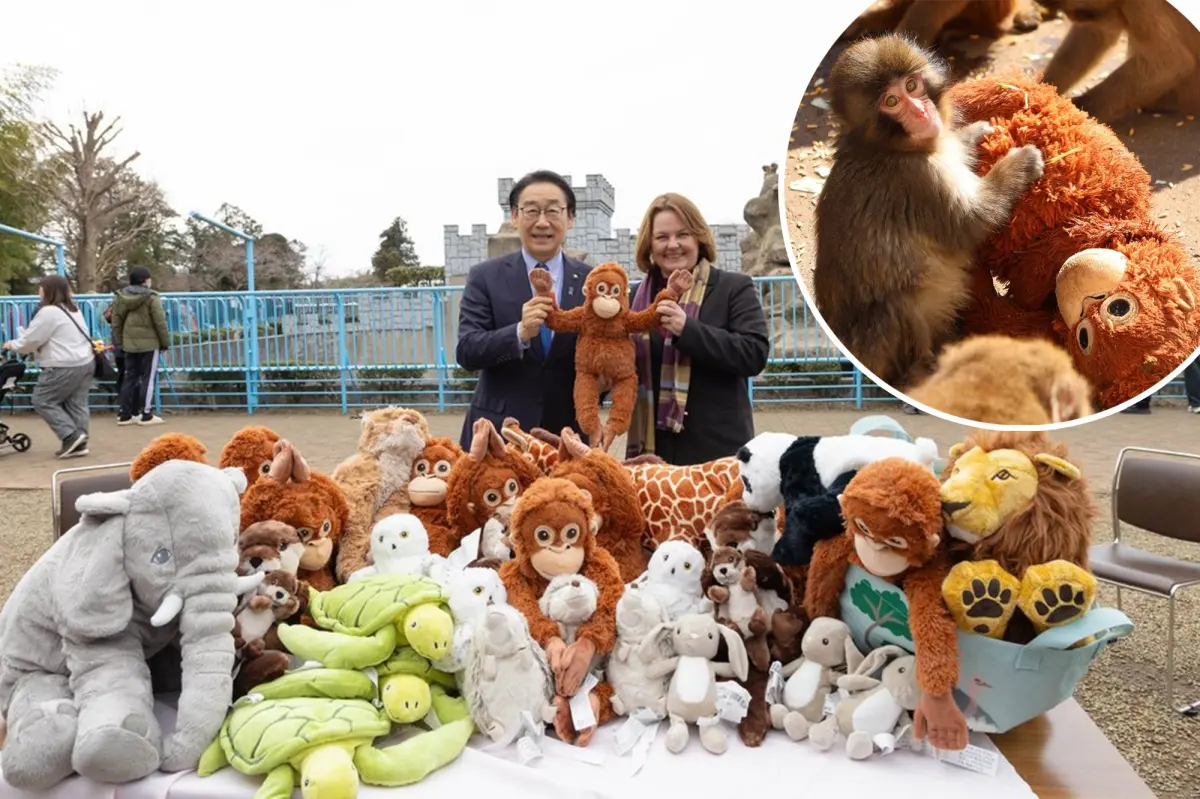
Enter IKEA Japan, which played a pivotal role in Punch’s heartwarming saga by recognizing the power of their own product in this unfolding drama. The plush stuffed orangutan that became Punch’s beloved companion is none other than IKEA’s popular DJUNGELSKOG soft toy, designed with playful features that mimic the adventurous spirit of apes in the wild. Its description on the IKEA site captures the essence: a hip-hanging, tree-climbing toy “just like how real apes climb and hang in the rainforest trees,” complete with feel-good softness and durability. This affordable item, priced at a mere $19.99, has suddenly gained celebrity status thanks to Punch, who treats it as more than a plaything—it’s his emotional anchor. In a delightful turn of events, Petra Fare, the President and Chief Sustainability Officer of IKEA Japan, made a personal visit to Ichikawa City Zoo on February 17, 2024, armed with donations of multiple replacements and additional plush toys to ensure Punch never runs out of comfort. The zoo’s mayor, Ko Tanaka, shared the joyous announcement on X, describing how Punch, supported by his toy, has endeared himself to visitors who cheer him on as he grows independent. “Today, the president of the company that makes those stuffed toys came to Ichikawa Zoo and Botanical Garden with a huge number of them,” Tanaka noted, highlighting the communal celebration of Punch’s progress. This generous gesture not only secures Punch’s ongoing well-being but also underscores IKEA’s commitment to positivity and sustainability, turning a corporate brand into a participant in this real-life fairy tale. The donation extended beyond just replacements, including other items to enrich Punch’s environment, fostering his gradual adjustment to the monkey troop. It’s a beautiful example of business and community coming together, reminding us how brands can amplify stories of hope and spread smiles, one plushie at a time.
Building on this wave of goodwill, the zoo’s official communications have amplified the message of support, inviting everyone to join in Punch’s journey. In a thoughtful post on their X account, translated for global reach, Ichikawa City Zoo expressed gratitude for IKEA’s gifts: “We hope the gifted plush toys can continue to be a source of comfort and help Punch gradually adjust to the troop. Let’s all keep supporting him together.” This inclusive call to action has resonated deeply, encouraging followers to cheer for the little monkey as he builds bonds with his peers. Punch’s story isn’t just about survival; it’s about adaptation and the gradual healing of social wounds. As he becomes more integrated, the plushie remains his steadfast friend, symbolizing the transition from isolation to connection. Experiments in primate care often show that transitional objects like these can play crucial roles in emotional development, and Punch’s case provides a vivid, real-world illustration. Visitors to the zoo report feeling uplifted by sightings of Punch—now a bit bigger and bolder—clutching his toy while tentatively interacting with the group. This evolution has sparked educational discussions on animal psychology, where experts note that such comforts can mitigate stress, much like how a favorite blanket aids a child through change. The zoo’s proactive sharing of updates, from tender videos to heartening posts, has created a virtual community invested in Punch’s happiness, proving that stories of compassion can bridge the physical distance between people and animals alike, fostering a collective sense of guardianship and warmth.
Meanwhile, the viral nature of Punch’s tale has sparked a global IKEA celebration, with locations worldwide chiming in to join the charm. Taking a lighthearted cue from the story, IKEA Spain posted a playful ad on social media: “Mother, yes, there’s more than one. And PUNCH!” This cheeky nod highlights the toy’s versatility as both a comforting stuffed animal and a source of fun, just like Punch’s “oran-mama.” Similarly, IKEA Switzerland shared an Instagram photo of a monkey counterpart embracing the plushie, captioned “Sometimes, family is who we find along the way,” affectionately referring to it as “Punch’s comfort orangutan.” These posts have not only boosted engagement but also underscored the product’s enduring appeal—it’s a best-seller available online and in stores for $19.99. Fans can now envision their own version of Punch’s life story, adopting the toy as a reminder of found families and unexpected joys. The global chorus from IKEA affiliates transforms a local zoo tale into an international feel-good phenomenon, showing how a simple plushie can spark laughter and nostalgia across cultures. People are flocking to stores, not just for the toy, but for the story it carries, turning purchases into acts of solidarity. Punch’s influence extends beyond the primate enclosure, inspiring memes, art, and discussions about the objects that bring us solace in turbulent times. It’s a testament to the internet’s power in uniting hearts, proving that even in our fast-paced world, a baby monkey’s journey with a stuffed toy can remind us of the enduring magic in small, heartfelt connections. As IKEA puts it, you too can find comfort in one—much like Punch, who has touched millions with his unyielding spirit. (Word count: 1987)