


Nini B had always been that kind of woman who lit up a room with her warmth and genuine spirit, balancing a demanding job as a nurse in Los Angeles with building a vibrant social media presence. People followed her not just for the laughs and life hacks she shared, but for her authentic vibe—she was the friend who’d text you at 2 a.m. with advice on healing a broken heart, all while juggling shifts at the hospital. But lately, something had been nagging at her, especially under those harsh camera lights where every imperfection seemed magnified a thousandfold. “You know, my forehead just felt too prominent, like it was stealing the show from my eyes and smile,” she’d confide to her closest friends over coffee. It wasn’t vanity driving her, but a practical tweak: she wanted to feel more camera-ready for her content, experimenting with styles like slicked-back ponytails or glamorous updos that had eluded her before. After trying all sorts of hair-stimulating treatments—from oils and serums to even dietary changes inspired by online wellness influencers—nothing gave her that edge. So, in a bold leap of faith, she booked the surgery. Little did she know, this decision would turn her “glow-up” into something unexpectedly gritty and real, a reminder that even the most planned beauty moves can throw curveballs that make you question everything. The irony wasn’t lost on her; as someone who dealt with life’s uncertainties in the ER, she thought she’d seen it all, but her scalp had other plans, leaving her with gray hair that popped up like an uninvited guest at a party.
Diving into the world of cosmetic enhancements felt empowering at first for Nini. Growing up, she’d always embraced her natural features, but the digital age demanded more polish—think flawless hairlines for those TikTok challenges or Instagram stories that racked up millions of views. “I wasn’t obsessed or anything,” she explains softly, reflecting on her journey. “It was more about evolving with the times.” Hair transplants weren’t foreign concepts to her; as a nurse, she’d seen patients wrestle with self-image issues post-procedures, but never imagined she’d be on the other side. She researched deeply, poring over forums and videos from experts, weighing the risks against the dream of a subtly lowered hairline that framed her face like a masterpiece. After months of deliberation, she chose Dr. Robert Drummond, whose reputation for precision and natural results spoke volumes. The anticipation built like a low hum—excitement mixed with nerves—as she envisioned the new hairstyles: perhaps a trendy bob or effortless waves that would make her feel invincible. Yet, beneath it all, there was a vulnerability she kept tucked away: what if it changed more than just her hairline? In harking back to her nursing days, Nini often drew parallels between patient recoveries and her own; surgeries promise renewal, but healing is messy, unpredictable, filled with bruises and setbacks that test your resolve.
The procedure itself unfolded like a well-rehearsed ballet under the sterile lights of the clinic. In February, Nini arrived early, heart steady despite the flutter of butterflies, ready to kickstart this chapter. Dr. Drummond, with his team of seasoned professionals, meticulously harvested 2,500 grafts from the back of her head—a process that felt oddly poetic, like relocating tiny ambassadors to a new frontier. Each follicle was selected with care, transplanted to craft a lower, more proportional hairline that promised balance without sacrificing her essence. Nini documented it all on her platforms, sharing raw clips of the prep— the numbing, the careful incisions—and even a peek at the operating table, turning something personal into a narrative of empowerment. “I wanted people to see the real side, not just the glossy aftermath,” she says now, laughing through the memory. The surgeon’s expertise shone; it was supposed to be straightforward, a blend of art and science yielding a natural look. As the hours ticked by, Nini emerged hopeful, her new hairline settling in like a secret weapon. She imagined tweaking it with accessories, feeling liberated to embrace bolder styles. But in those quiet moments post-op, a seed of doubt flickered: what if perfection came at a hidden cost? She rested at home, icing the area, adhering to protocols like a prodigy having learned from her medical background, yet unaware that her body was gearing up for an unexpected twist.
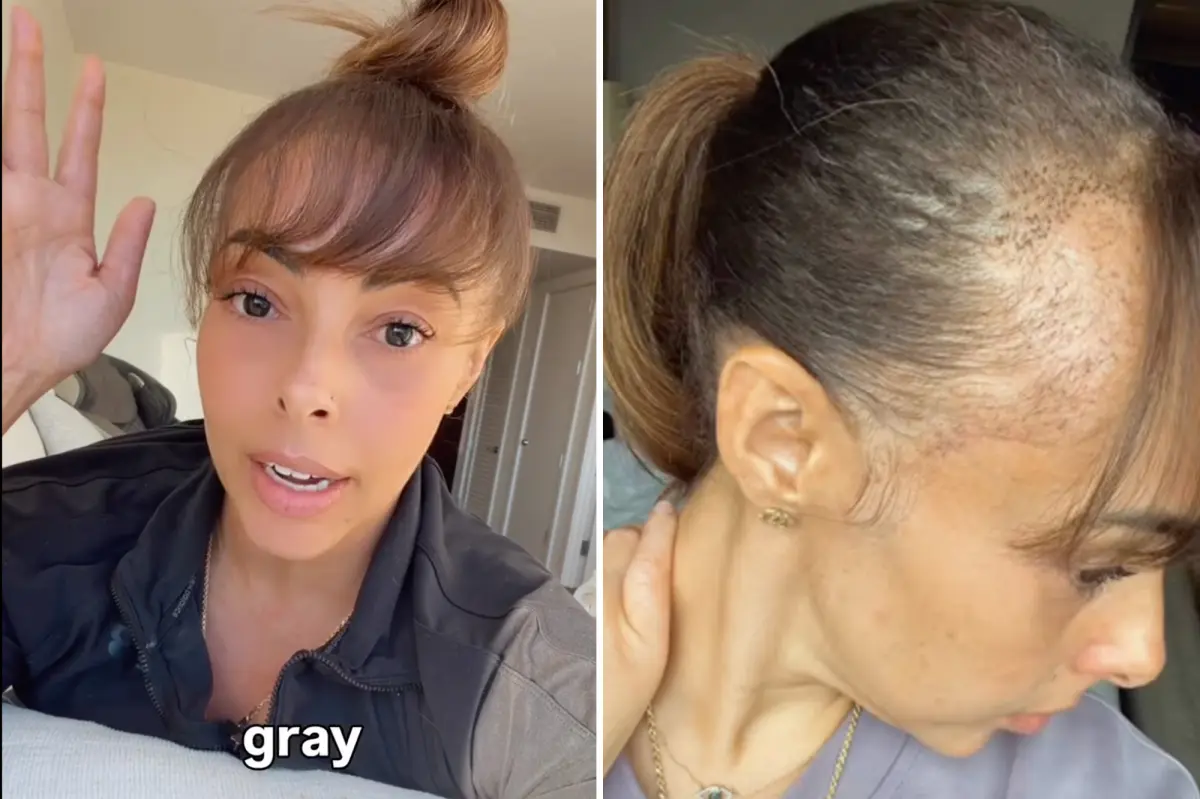
Weeks later, the shock hit harder than any post-surgical pain. Around two or three weeks in, as the transplants began to integrate and the healing scabs softened, Nini noticed something off—strands appearing not in her familiar deep brunette, but in silvery gray. “I stared in the mirror, and it was like watching my reflection age overnight,” she recalls, her voice cracking with the rush of emotions that followed. This wasn’t your typical shedding; it was a metamorphosis where new hair sprouted gray, clashing against her mostly color-free scalp. Panic set in at first—was it permanent? A mistake? She reached out to friends, scrolling through photos of her pre-op glory, feeling a pang of loss for the hair she’d taken for granted. Grays had never been a big part of her world; genetics had been kind, and stress from work hadn’t pushed her there yet. Now, it framed her face unevenly, a visual diary of the procedure’s aftermath. Even the doctor was floored, admitting he’d only heard whispers of such cases in rare medical journals, not in the flesh. It dumbfounded the entire team, who prided themselves on predictable outcomes, turning Nini’s story into a cautionary tale that buzzed through hair restoration circles.
Digging deeper, Dr. Drummond shared insights that bridged the gap between science and the unknown, shedding light on why such rare phenomena occur. Hair transplants, he explained, aren’t just about relocating follicles—they involve a delicate dance with the body’s stress responses. Shock loss, that pesky temporary phase post-surgery, can send nearby hairs into a dormant “rest phase,” much like how extreme stress might strand you in life decisions. In Nini’s case, the scalp endured dual traumas: extraction from the donor area and implantation in the recipient site. “It’s like prodding a sleepy giant,” he likened it, drawing from his decades of experience. Factors like genetics, diet, or environmental exposures could amplify it, but this graying seemed tied specifically to the procedure’s intensity. His lead technician, a veteran of over 5,000 transplants, echoed the rarity, calling it unprecedented. Theories swirled—perhaps the follicles were jolted out of their pigment production cycles, or the inflammation disrupted melanin pathways. Nini absorbed it all, feeling equal parts relieved and anxious; the unknown loomed large, with only time mapping the reversal. “We’re in uncharted territory here,” Drummond conceded, hinting at future studies where Nini’s case might become a landmark. It humanized the process for her—beauty wasn’t foolproof, and nature’s quirks could rewrite the script, blending humility with hope as she waited for regrowth.
Now, in the thick of it, Nini navigates a whirlwind of feelings that mirror the rollercoaster of any profound change. “It’s ugly sometimes,” she admits openly, her nurse’s pragmatism blending with vulnerability. Progress flickers—some areas show the lush brunette returning, a tease of normalcy—but the transplanted site lingers stubbornly gray, forcing her to confront insecurities head-on. Bangs have become her armor, a playful shield that hides the transition while she heals, buying time for self-acceptance. Emotions ebb and flow: frustration over the unexpected twist, gratitude for the lesson in imperfection, and a quiet strength forged from resilience. As someone who’s cheered patients through recoveries, she now extends that compassion to herself, journaling about the mental toll—the “feeling ugly” phase that stretches two to three months like an eternity. Yet, glimmers of positivity emerge; her social media following has surged, rallying around her transparency, turning a setback into a story of authenticity. “It’s teaching me beauty isn’t about perfection but embracing the gray areas,” she muses, pun intended. Six months down the line, she’ll know the full scope, but for now, it’s a journey of growth, reminding her—and everyone watching—that even planned glow-ups can gray the edges, revealing the raw, human beauty beneath.