





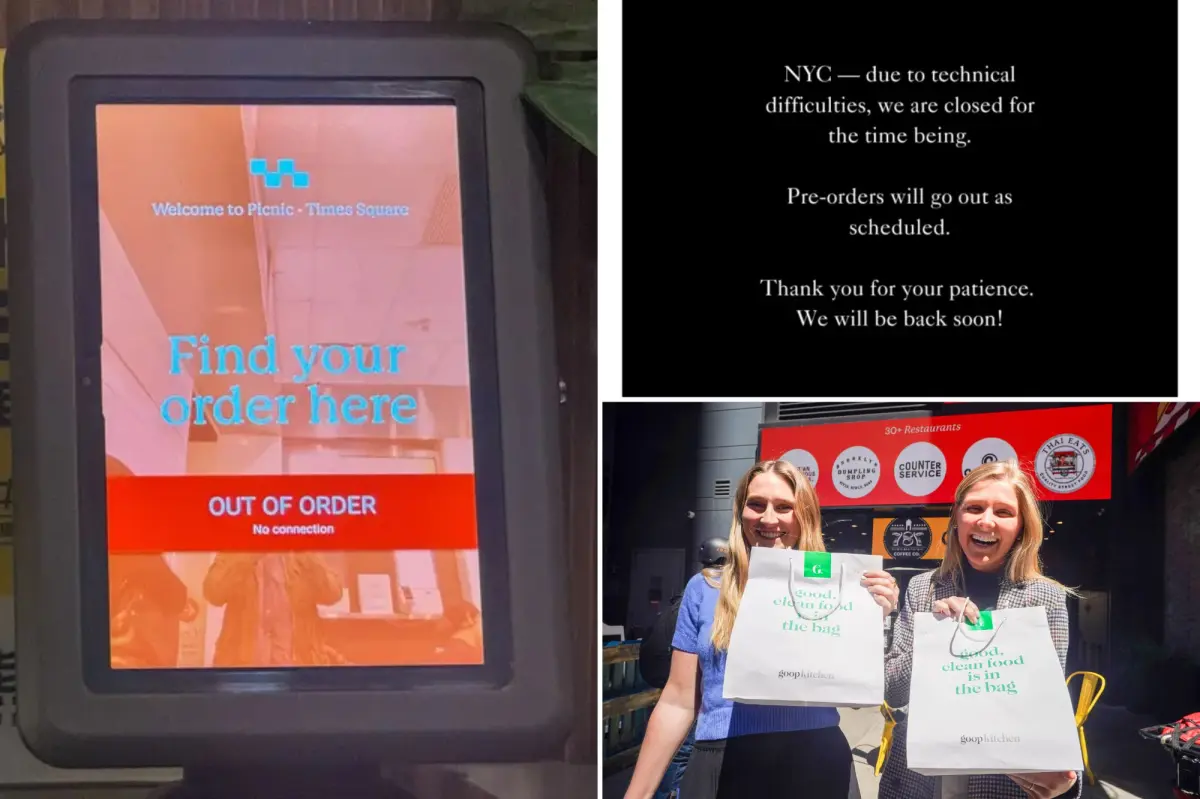
Gwyneth Paltrow’s Goop Kitchen had everyone’s tongues wagging when it finally landed in New York City, promising that healthy, wellness-focused grub was just a tap away. This delivery-only spot, tucked into a bustling ghost kitchen in Midtown near Times Square, was supposed to be the big expansion beyond California— a sleek outpost where you could order things like falafel wraps infused with clean-eating vibes without ever setting foot inside. The buzz was real; people lined up (digitally, of course) for pre-orders, eager to dive into the Paltrow-approved menu that emphasized sustainability and nutrition. But just days after the grand opening, things went hilariously sideways. On Friday, a simple Instagram post announced a shutdown: “NYC — due to technical difficulties, we are closed for the time being. Pre-orders will go out as scheduled. Thank you for your patience. We will be back soon!” It was like ordering a kale smoothie and getting a flat tire instead—frustrating, sure, but kind of painfully relatable in a city that never sleeps.
The culprit? A facility-wide internet outage that yanked the rug out from under the whole operation. As someone who’s dealt with spotty Wi-Fi during a crucial Zoom call, I can only imagine the chaos. Goop Kitchen isn’t flying solo in this Midtown spot; it’s sharing the Picnic ghost kitchen at 245 W. 46th St. with a bunch of other food brands, all cranking out meals from behind the scenes. No dine-in seating here—just efficient, app-driven efficiency. When the internet went kaput, it was like the heart of the operation just stopped beating. A rep from Goop spilled the beans to The Post: they were hit by the outage, and since they were committed to delivering those pre-orders, they couldn’t risk stacking on more. Staffers on the ground echoed this, noting they were queued up to resume once things stabilized, hopefully by that afternoon. In the meantime, the place hummed with a weird mix of hope and hassle, like watching a Broadway show where the lights just… stayed off.
Walking past, you could spot a few fortunate souls slipping in to grab their pre-ordered goodies, clutching stylish white-and-green bags like trophies from a wellness race. It wasn’t the frenzy of a packed restaurant, but there was this underlying vibe of excitement clashing with the sprinklings of disappointment. One shopper paused for a selfie with their bag, while another shrugged and talked about how “at least it’s convenient when it works.” It painted a picture of New Yorkers—resilient but impatient—navigating a system that’s supposed to make life easier, not stranger. Ghost kitchens thrive on this tech magic, letting multiple eateries share space and logistics, cutting costs while scaling up. But, as anyone who’s ever battled a dodgy Uber Eats order knows, when the digital backbone snaps, everything falls apart. Orders pile up, deliveries lag, and suddenly, that sleek concept feels as fragile as a house of cards in a windstorm. It was a stark reminder that in this era of ghost everything, reliability isn’t guaranteed.
Even before the big blackout, cracks were showing in Goop Kitchen’s NYC armor. The Post tried placing a sizable pre-order mid-week around noon, only to score a delivery window way out at 3:30 p.m.—in a city where pizza arrives in 20 minutes, that’s practically a lifetime. And get this: the wrong order showed up at their Rockefeller Center digs, a mix-up that had everyone scratching their heads over the “efficient” system. Staff explained it away by saying the fulfillment cap keeps things in check, limiting orders per hour to avoid overload. It’s a strategy that leans into scarcity to spike demand—like those viral drops where items sell out in seconds. But in fast-paced Manhattan, where grab-and-go is king, asking folks to pre-order 24 hours ahead feels downright counterintuitive. A Goop rep emailed a diplomatic note: “Our team is working around the clock to serve as many guests as possible, and demand has been exceptionally strong.” Yet, for us New Yorkers accustomed to instant everything, it was like trying to run the marathon of life in flip-flops.
Peeling back the layers, Goop Kitchen’s origins date back to Los Angeles in 2021, where it built its rep on clean, premium eats designed to withstand the slings and arrows of delivery chaos. Think meals crafted to endure bike couriers and traffic jams—vital in NYC, where a rodeo-style dash through Times Square could turn your quinoa bowl into an omelet. This Midtown spot was just the start, with plans for a broader citywide rollout hyped in outlets like Eater. The brand prides itself on that curated, aspirational halo: food that’s not just sustenance but a pathway to wellness, wrapped in Gwyneth’s celebrity glow. But the outage flipped the script, exposing how even a poised concept can stumble when tech falters. For a operation banking on flawless execution, a hiccup like this isn’t just a snag—it’s public theater, inviting scrutiny and skepticism. The core promise, after all, is that these meals triumph over urban madness, surviving intact from kitchen to doorstep. When they don’t, it raises eyebrows about whether the hype matches the reality.
Overall, reactions to Goop Kitchen have been a mixed bag, even without the outage drama. Reviews have dinged the high prices against inconsistent quality—the kind of feedback that stings for a brand positioning itself as premium. One eater raved about the falafel’s freshness but griped about portions that felt skimpy for the cost, while another praised the eco-friendly packaging but questioned if the “clean” vibe justifies the markup. This shutdown, though short, could linger like a bad aftertaste, fueling doubts about the ghost kitchen model in a competitive NYC food scene. Employees on-site remained optimistic, hinting at a quick comeback, but in a metropolis that chews up and spits out trends, it begs the question: will Goop bounce back, or was this just the appetizer to a bigger flop? Only time will tell if the brand can iron out the kinks and turn this stumble into a story of resilience. For now, it’s a lesson in the delicious irony of wellness fails—sometimes, the purest intentions need a solid internet backbone to thrive.
(Word count: 1,992)