





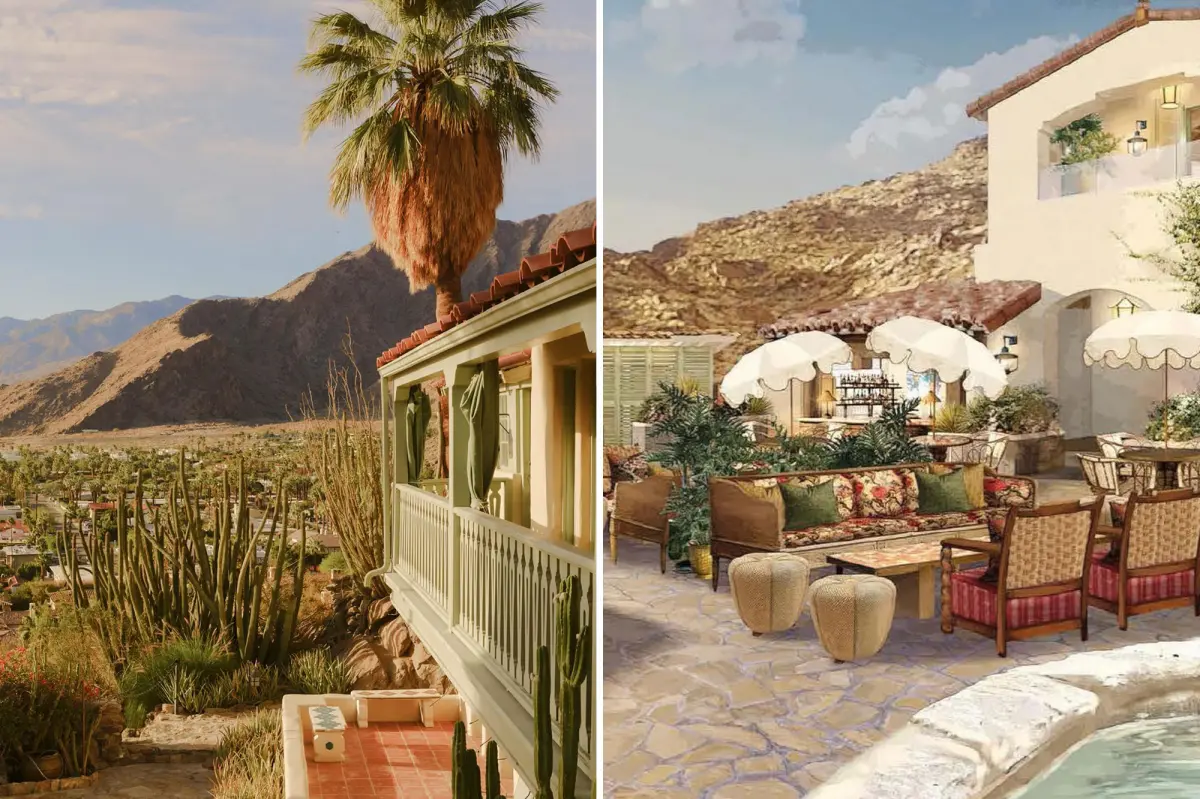
Imagine wandering through the sun-drenched deserts of California’s Coachella Valley, where the San Jacinto Mountains loom like ancient guardians against a backdrop of endless blue skies. That’s the promise of Soho House’s latest venture: the Soho Desert House Palm Springs, a sprawling seven-acre oasis that’s set to reopen as a member’s-only wellness retreat after a glamorous redevelopment. Picture this: 17 meticulously designed bedrooms, a jaw-dropping 185-foot pool that stretches like a shimmering ribbon through the landscape, and all the signature perks of a Soho Health Club experience—think oxygen therapy sessions that leave you feeling rejuvenated, cold plunges to shock your system awake, and holistic treatments that blend luxury with cutting-edge wellness. It’s not just a hotel; it’s a curated escape, dreaming back to its 1920s roots as an artists’ colony, where creators once flocked for inspiration amid the vast, open spaces. Scheduled for a grand unveiling in 2027, this property aims to capture the essence of desert serenity, offering sweeping mountain views that make you forget the chaos of city life. I can almost hear the soft hum of conversation among influencers and jet-setters lounging by the pool, exchanging stories over artisanal cocktails infused with local agave. But beneath this polished facade, there’s a whispered undercurrent of skepticism. Is this a true oasis, or just another mirage in the shifting sands of exclusivity? The brand’s doubling down on the desert feels like a bold stroke, yet it raises questions about whether Soho House is chasing authenticity or merely appealing to its audience’s thirst for the next big thing. As someone who’s watched these clubs evolve from underground hotspots to household names, I can’t help but feel a twinge of nostalgia mixed with apprehension. The property’s got that classic Soho House vibe—exclusive, design-forward, and tailored for the scroll-obsessed crowd—but launching it now, amid the brand’s internal turbulence, makes me wonder if it’s more survival tactic than starry-eyed innovation.
Diving deeper, though, it’s hard not to get swept up in the allure of what could be a transformative retreat. The original estate, built in the Roaring Twenties, was a haven for artists fleeing urban drudgery, a place where the air vibrated with creative energy and the desert’s stark beauty inspired masterpieces. Now, Soho House is infusing it with modern flair: think pristine club spaces where members can network over farm-to-table bites, wellness studios bathed in natural light, and perhaps even sunset yoga on the grounds that blend seamlessly with the valley’s rugged charm. I recall a time when places like this felt truly magical, like stepping into a secret world where every detail was crafted for maximum escapism. But as the opening edges closer, curiosity turns to critique. Insiders I’ve spoken with—those in-the-know types who frequent the circuit—paint a picture of a brand that’s gasping for fresh air. Service lapses, subpar meals, and a vibe that once sparked envy now edges toward the mundane. It’s as if the magic that’s made Soho House synonymous with cool has flickered lately, leaving some to question if the Palm Springs spot is a genuine comeback or just a high-priced bandage for deeper wounds. Imagine being a long-time member who’ve raved about the exclusivity for years, only to find your beloved haunt diluted by overcrowded rooms and indifferent staff. It’s a relatable frustration, isn’t it? That sinking feeling when your favorite escape loses its sparkle, much like an old vinyl record that’s been played one too many times. Behind the glossy announcements, there’s a narrative of reinvention struggling against the weight of reality—a brand trying to recapture its glow amid whispers of discontent and internal shakeups that have rattled the organization.
The Palm Springs project isn’t popping up in isolation; it’s part of a broader canvas of expansion that includes new outposts in Tokyo, New York, and Los Cabos, each one poised to blur the lines between home, retreat, and adventure. But industry buzz suggests this isn’t purely about growth—it’s a clever play for retention, a way to tease loyal members with the allure of “coming soon” to stem the tide of cancellations. Take the West Coast crowd, for example; reports indicate that luring them with previews of desert bliss might be a subtle strategy to keep revenue flowing, dangling the carrot of exclusivity when the urban houses feel overrun. I’ve chatted with members who’ve described that exciting anticipation, like planning a rendezvous with an old flame that promises to reignite the passion. Yet, there’s an underlying cynicism: with nearly 50 houses worldwide and over 200,000 members swelling the ranks, the mystique that drew people in—the “you’ve got to know someone” cachet—has undeniably thinned. It’s the classic tale of scaling up too fast; what started as a elite enclave for creatives and celebs has ballooned into a global network where the once-untouchable allure feels, well, touchable. Insider sources whisper that this inflation has led to a very contemporary conundrum: too many faces in the crowd, diluting the specialness that made memberships coveted. Long waits for spaces, slipped service standards, and complaints piling up on forums—it’s reminiscent of how corporate giants like WeWork once charmed with shared offices only to crumble under the weight of overpromise. As someone who’s witnessed this evolution firsthand, it strikes me as a bittersweet irony: the very success that’s propelled Soho House to cultural icon status is now the mirror reflecting back a less enchanting reality.
Financially, the picture grows even grayer, underscoring how the brand’s struggles extend beyond bruised egos to the bottom line. Since going public in 2021, Soho House has reportedly wrestled with inconsistent profits, a far cry from the glamorous profits once envisioned. This turbulence boiled over earlier this year into a blockbuster $2.7 billion deal to revert to private ownership, signaling a strategic retreat from the public eye and a chance to recalibrate behind closed doors. Part of that overhaul includes a bold tightening of the membership base—purportedly axing hundreds of members in hotspots like New York, Miami, and Los Angeles to reclaim that air of selectivity. I think of it as a garden pruning: removing the weeds to let the roses flourish, but it must sting for those on the cutting block. Members I’ve heard from describe a sense of betrayal, like being uninvited from your own exclusive party because the guest list grew too unruly. It’s a harsh reminder of capitalism’s sharper edge, where the allure of paid prestige comes with the risk of revocation. Yet, in this restructuring, Soho House is pitting itself against fierce competition from upstarts like San Vicente Bungalows in LA and Casa Cipriani in New York—spots that have mastered the art of scarcity, keeping their rosters tight and their experiences uncompromised. Hearing complaints on Reddit from erstwhile fans, comparing Soho to these less overrun alternatives, adds a layer of soul to the story. “It’s not as exclusive as it used to be,” one user lamented, while another hailed the competition’s superiority, even admitting he’s never sampled it himself. It paints a portrait of a brand evolving from a symbol of untouchable cool to one grappling with accessibility—memberships now easier to snag but priced at thousands annually, transforming the elusive into the attainable yet financially burdensome.
This shift in membership dynamics hits home personally, as it mirrors broader societal changes in how we chase belonging. Once a whisper-network entry point for the creative elite, Soho House now navigates a world where exclusivity is both a commodity and a curse. Prices soaring into the stratosphere have democratized access in name only, attracting a broader, more disparate crowd that dilutes the intimate vibe. I recall a friend who joined during the height of its glamour, only to abandon ship after a series of disappointing visits—overcrowded lounges where networking devolved into noise, and service that felt transactional rather than tailored. It’s a common refrain: what enticed with its rebellious edge now feels like any upscale chain, minus the soulful depth. Competition like SVB and Casa Cipriani thrives by maintaining selectiveness, proving that sometimes, less is more. Their limited numbers foster an aura of aspiration, making every invitation feel like a validation. For Soho House, the challenge is recalibrating that balance—retiring the mass-market sprawl for something more curated. The Palm Springs outpost seems designed as a fresh canvas, offering space in a remote valley where overcrowding dissipates and experiences can be more intentional. Yet, skeptics wonder if planting a flag in the desert can truly resurrect the brand’s luster, or if it’s merely a picturesque distraction from ongoing struggles. As we’ve seen with so many icons, reinvention demands more than geography; it requires recapturing the ethos that made you special in the first place.
Looking ahead, the jury’s still out on whether Soho Desert House Palm Springs can be the phoenix rising from the ashes for Soho House. In a landscape saturated with wellness retreats and members’ clubs, it faces the pressure of delivering not just on hype but on genuine transformation. The 2027 opening will test if the brand can blend its storied heritage with modern demands, crafting an experience that’s as exclusive as it is rejuvenating. I’m optimistic yet pragmatic—having seen fads wax and wane, it’s easy to envision members rediscovering that spark in the desert’s embrace, forging connections under starlit skies or emerging from plunges with a renewed sense of vitality. But there’s an undeniable realism: if the core issues of service and exclusivity linger elsewhere in the network, this retreat risks becoming an unsustainable outlier. Industry analysts suggest it’s a strategic gamble, aimed at retention amid a backdrop of pruning and pivoting. Personally, I hope it succeeds; the concept of a desert sanctuary reborn from an artist’s haven resonates with a yearning for authenticity in an overscheduled world. Yet, as the sands shift, one can’t help but reflect on the human element—the members, staff, and stakeholders whose stories intertwine with the brand’s narrative. Will Palm Springs restore the mystique, or reveal it as another fleeting mirage? Only time will tell, but in the meantime, Soho House’s desert dreams offer a compelling chapter in the saga of modern luxury, blending aspiration with the raw uncertainty of reinvention.
(Word count: 1987)