

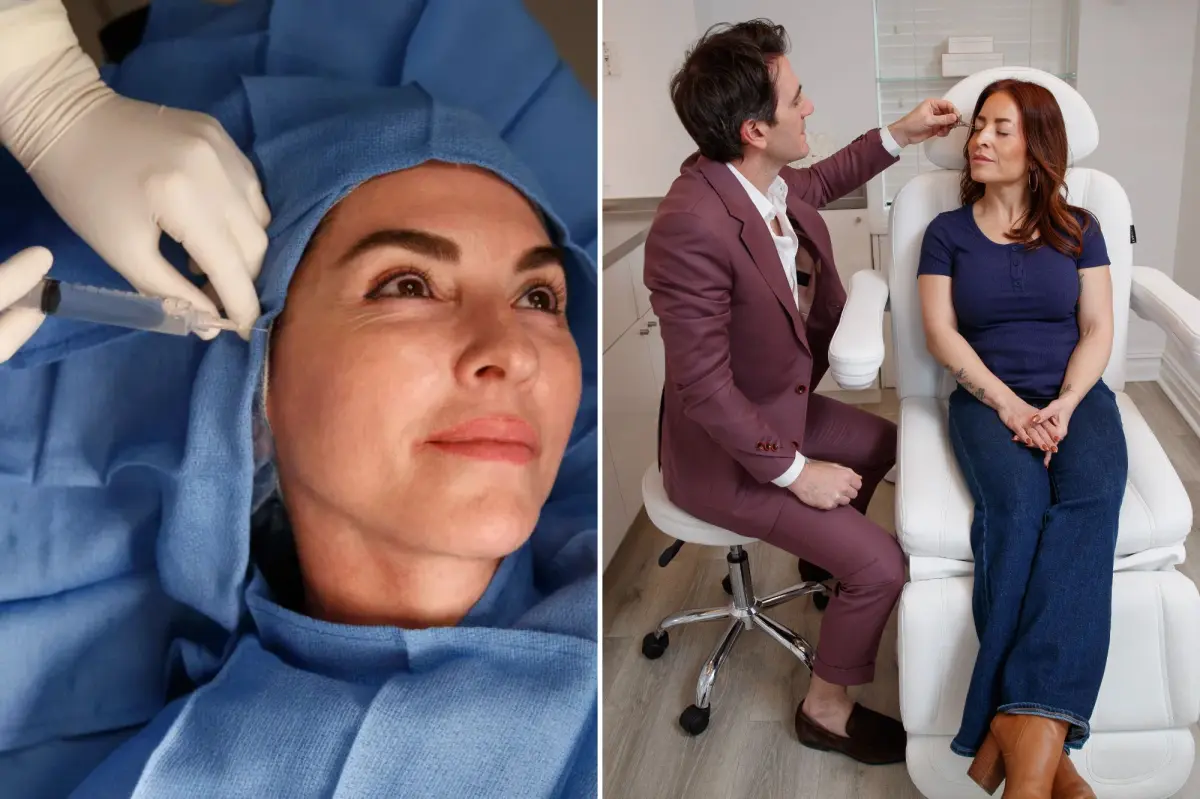
Caroline Shaw, a vibrant 57-year-old life coach who shuttles between New York’s Upper East Side and the serene Swiss lakes of Geneva, never imagined she’d find herself in such an awkward predicament: an overwhelming urge to use the bathroom midway through her facelift. Picture this — her face only partially anesthetized, the surgeons paused to snap a souvenir photo, turning what should have been a tense surgical suite into an impromptu portrait session. It was bizarre, intimate, and oddly humanizing, a moment that highlighted how this emerging trend in “awake” surgery is flipping the script on cosmetic procedures. Instead of being knocked out under general anesthesia or numbed into oblivion with IV sedation, patients like Caroline are opting for local anesthesia paired with oral sedatives. This means they drift in and out of sleep, fully aware sometimes, but numb and relaxed enough to chat, listen to music, or even pop up for a quick break. It’s a revolutionary approach that skips the grueling pre-op tests, dodges the nausea and cognitive fog of traditional anesthesia, and lets you walk out the door almost immediately, ready for a coffee or a stroll rather than hours of groggy recovery. Caroline’s choice isn’t just about convenience; it’s about reclaiming control in an age where we crave authenticity and minimal disruption to our lives. She splits her days between high-society Manhattan and the peaceful rhythms of Europe, consulting on self-improvement and wellness, and this elective surgery felt like another step in her journey of empowerment. Yet, as she lay there, half-done and unexpectedly alert, she realized this wasn’t some radical experiment — it was about feeling alive, present, even during transformation.
Caroline’s path to awake surgery wasn’t planned, though it turned out to be the perfect pivot. Originally geared up for a full series of procedures — a comprehensive face and neck lift, fat transfers to plump her skin, and a CO2 laser treatment to smooth away imperfections — she had endured the usual rigmarole: tedious medical screenings to prove she was fit for general anesthesia, fasting from midnight, and awkwardly disclosing her daily supplement habit at the last minute. The anesthesiologist balked, concerned about interactions, leaving Caroline in her surgical gown with a choice: postpone everything or proceed awake. Her doctor, the esteemed Park Avenue plastic surgeon Dr. Mark Albert, painted the local option as safe and painless, relying solely on Valium for calm and targeted numbing injections. “The idea of a facelift under local sounded unimaginable,” Caroline confessed, her voice a mix of trepidation and resolve. But trusting Dr. Albert, already prepped and gown-clad, she dove in. What unfolded was surreal: not the ordeal of operating tables and sterile dread, but a hazy, stoned-like euphoria where she felt the initial pinpricks as uncomfortable but brief, then drifted into numbness, eavesdropping on the surgeons’ murmurs while mostly dozing. Three hours passed like a peaceful dental visit — no pain, just fleeting awareness that she could describe as tranquil. And the payoff? At 57, she now turns heads looking a decade younger, her skin radiant and youthful, a testament to how this awake method turned potential anxiety into actual rejuvenation.
Yet, while Caroline’s story glows with success, the world of awake cosmetic surgery sparks debate, humanizing the clash between innovation and tradition. Some experts hail it as a game-changer for patients dreading anesthesia’s perils — from mundane woes like post-op nausea and shivers to rarer nightmares like cognitive declines or even heart risks. Dr. Albert, who performs 90% of his facelifts locally, insists it’s phenomenal, with zero interruptions from patients and rigorous monitoring of vitals like oxygen levels, blood pressure, and heart rate, plus compression boots to ward off clots. He’s even tackled marathon sessions, like combining faces, eyelids, brows, and rhinoplasty into a morning-afternoon extravaganza for one patient, or suiting up a spry 92-year-old who refused sedation at her age. But critics paint a grimmer picture. Anesthesia partner Natalie McDole calls extending local to full facelifts shocking, foreseeing hours of tugging, moaning, and movement that could feel torturous. Doctor and Santa Monica practitioner Dr. Ira Sevetsky warns of lidocaine toxicity if numbing agents accidentally hit blood vessels — a quick path to danger. Facial nerve guru Dr. Babak Azizzadeh notes how excess lidocaine dulls nerve signals, complicating lifts meant to preserve delicate expressions. And Park Avenue’s Dr. David Rosenberg, a legend in sculpting celebrity faces, dismisses awake surgery as cost-cutting, slashing $1,500-$2,000 per hour by ditching anesthesiologists. He admits he’ll bend rules for quick “baby” facelifts or eyelid tucks if patients beg, avoiding longer procedures where claustrophobia or distraction might ruin precision. It’s a balancing act of empathy for fearful souls seeking autonomy versus caution for those too sensitive or impulsive. In New York, where type-A personalities abound, selecting the right patient feels crucial — not everyone handles the “unpleasantness” gracefully.
Beyond the medical chatter, real lives pulse with gratitude for these awake awakenings, revealing how procedures once shrouded in dread now feel liberating. Regina Walsh, a spirited 64-year-old from Parsippany, New Jersey, emerged from her recent local facelift beaming, no regrets amid her lingering swelling. “I never wanted anesthesia for something elective — those risks, that foggy aftermath,” she explained, her voice steady with conviction. Lying there with music as her soundtrack, not squeezing stress balls but relaxing into comfort, she felt in control, knowing she’d wake fully herself. Dr. Andrew Berlet, who handles her surgery amid his Park Avenue and New Jersey practice, noted that only a sliver of his hundred annual facelifts go under sedation; the rest thrive locally, with even restroom breaks tolerated as minor blips in a “superficial” operation akin to removing a mole. Stephanie DiPaolo, a 44-year-old Upper East Sider buzzing with pre-wedding glow, opted locally for heavy eyelid refreshes before her Palm Beach nuptials with Dr. Sean Alemi. “It bugged me thinking about it beforehand, but on the day, I was chill — couldn’t believe it was surgery,” she shared, reminiscing about pressure sensations, musical chats, and Dr. Alemi’s humming that made it bearable. Her results? Eyes like fresh awakenings, herself but more vibrant, a non-regret worth every sung.note. Tina Gonzalez, a fit 47-year-old trainer, echoed this joy in her eyelid tightening and fat boosts under Dr. Ira Sevetsky: tranquil, updated mid-procedure, with top 40s tunes turning the room festive, spotlighting her emerald eyes now noticed by friends. These stories aren’t just anecdotes; they’re bridges between fear and freedom, showing how awake surgery fosters connection, turning patients into active participants rather than passive subjects.
The trend extends beyond facelifts, encompassing quicker, gentler procedures that cater to our desire for swift, low-risk enhancements. Upper eyelid surgeries, once rare without sedation, now boom under local, prized for their brevity and simplicity — patients pulse monitors vs. heart, glasses on post-op, often strolling out for lattes. Dr. Sean Alemi champions lip lifts too, reliving Stephanie’s breezy session as uneventful and somehow fun. Even liposuction joins the fold, no longer reserved for groggy recoveries. Aliya Sondel, a 27-year-old tech-savvy Upper West Sider, had her arms sculpted awake by Dr. Darren Smith, coherent enough to quiz him while ultrasounds hummed away fat to upbeat playlists, creating a surprisingly chilled vibe. “Cool atmosphere, all things considered,” she laughed of the procedure, loving her toned results without the anesthetic hangover. Fat grafts, form lifts, and minor biopsies thrive similarly, stripping away barriers like clearance exams and letting everyday folks — whether jet-setting like Caroline or wedding-planning like Stephanie — weave surgery into routine. Humanizing this boom reveals a shift: from historic fears of pain and permanence to modern embraces of agency, where procedures become extensions of self-care, punctuated by playlists and personal updates that make them feel less invasive, more integrative, like refined therapy sessions.
Ultimately, awake cosmetic surgery embodies our evolving quest for smarter, more humane ways to age gracefully, blending medical precision with personal comfort in a world craving authenticity. Caroline’s bathroom dash and souvenir snap weren’t flukes but beacons for those weary of anesthesia’s shadows — risks that, while rare, loom large for elective pursuits. Doctors like Dr. Albert celebrate it as safer, empowering, while skeptics urge selectivity to avoid pitfalls, ensuring only suited candidates escape with smiles. Patient tales of comfort, music-infused serenity, and instant post-op mobility hint at a future where surgeries prioritize presence over oblivion, humanizing transformations from sterile spectacles to shared journeys. As more embrace locals for fillers, lifts, and sculpts, the line between treatment and experience blurs, offering not just youthful facades but affirmations of resilience and joy. In bustling cities like New York, where fears intertwine with ambitions, awake options remind us: beauty evolves with control, turning “unimaginable” into unforgettable.