


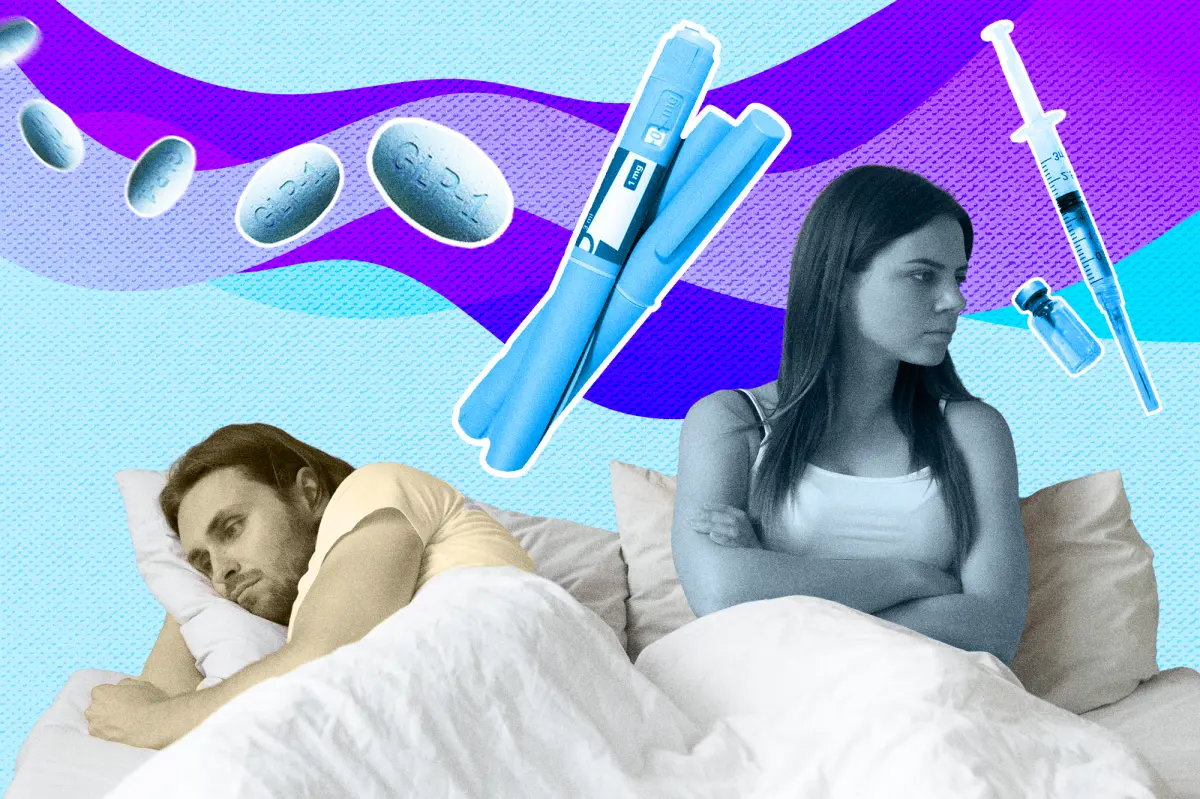
GLP-1 medications have become a game-changer for millions grappling with weight issues, diabetes, and related health challenges. Brands like Ozempic, Mounjaro, and Zepbound, powered by ingredients such as tirzepatide, mimic natural gut hormones to help control appetite and blood sugar, leading to impressive weight loss and improved well-being. Yet, as with any powerful tool, there’s a shadowy side. This is part of “The Thin Line,” a series from The New York Post diving into the less-talked-about risks of these drugs. While they’ve transformed lives, some users face unexpected downsides, from digestive troubles to, surprisingly, a dip in libido. Picture this: you’re finally getting the body you’ve always dreamed of, but intimacy feels like a distant memory. That’s the reality for some, turning a step toward health into an emotional rollercoaster. Take Christine Reed-Smith, a 50-year-old salon owner from Oregon, who had battled her weight with diets, intense workouts, and even surgery in Mexico. Insulin resistance and creeping pounds plagued her, so she turned to tirzepatide. She shed the weight and stabilized her health, but along with the pounds, she lost her spark in the bedroom. “All of a sudden, I couldn’t care less about sex,” she shares candidly. It’s a human side we don’t often hear about—how a pill meant to mend one part of life can subtly unravel another. For Reed-Smith, who had always been the passionate one in her 17-year marriage, this shift wasn’t just physical. She participated in intimacy, but pleasure felt out of reach, leaving her feeling guilty and questioning her own body. “It’s literally that something is wrong with me,” she admits, her voice tinged with frustration. Beyond the sheets, it widened emotional gaps: the silence, the cold shoulders, the unspoken hurts on both sides. It’s heartbreaking to imagine a couple, who’ve built a life together, now navigating this invisible barrier—all because of a drug sporting success stories on TV.
Reed-Smith’s experience hits home because these medications work by tweaking the body’s hunger signals, but they can also rewire parts of the brain involved in desire. Dr. James Chao, a physician specializing in GLP-1 users, explains it like this: these drugs reduce the brain’s cues for seeking pleasure, dimming sexual motivation for some. It’s not universal—studies and anecdotes show mixed results. On the flip side, the self-confidence boost from weight loss can ignite passion for others, like a dopamine rush from fitting into old clothes or feeling energized again. Imagine reviving that sexy strut in the mirror, with stress hormones down and vitality up; it’s a spark for many. Yet for those like Reed-Smith, it’s as if the medicine flips a switch to “off.” Think about the human toll: a woman who’s always been active and engaged suddenly feels distant, even toward the partner who makes her feel loved. It messes with self-image, planting doubts—am I less desirable? Is my relationship strong enough? In Reed-Smith’s case, the emotional strain rippled outward, testing the resilience of her marriage. It’s not just about orgasms; it’s about connection, vulnerability, and the unspoken negotiations that keep love alive. Doctors note that rapid weight loss can trigger a “conservation mode” in the body, where non-essential drives like desire get sidelined until energy balances out. It’s a biological survival hack, but in our human context, it feels deeply personal, almost punitive. For Reed-Smith, admitting her apathy wasn’t easy; it forced conversations about needs that had been taken for granted, reshaping how she viewed intimacy as tied to her overall health. Stories like hers remind us that while science advances, the heart doesn’t always follow the lab results—it lags, questions, and sometimes protests in the quiet moments we least expect.
Diving deeper, these libido changes aren’t confined to age or gender; they’re a reminder that GLP-1s touch more than just metabolism. CJ Rock, a 47-year-old who saw her weight plummet 70 pounds in seven months on tirzepatide, started with that familiar confidence high. “In the past, losing weight gave me a self-esteem boost, almost like dopamine—it cranks up the craving for sex,” she reflects. But midway through, her drive vanished. What was once a vibrant, frequent connection with her husband turned into recoil: “No, stop, I don’t even want to kiss you.” She felt numb, chilly, as if her body had betrayed her. Rock chalks part of it up to the menopausal maze she’s navigating—hormones fluctuating, drive fading naturally. Overlapping with the drug’s effects, it created confusion: is this aging, the meds, or both? “It’s very hard because when you start perimenopause, your sex drive is one of the main things that goes,” she says, her words echoing the frustrations of so many women who feel unseen by doctors. CJ’s experience highlights a broader truth: GLP-1s make you healthier on the surface, but the internal churn—dealing with medication while riding hormonal waves—can feel like choosing between poisons. Nathalia Souza, a vibrant 37-year-old from New Jersey, echoes this with her own stark tale. After years of dieting and exercise netting only 30 pounds, tirzepatide helped her drop 22 more in seven months. She hailed it as a win, but the cost? Losing her “very high sex drive.” From four or five nights a week of passion, she plummeted to aversion, questioning if the trade-off—the slim body—was worth the loss. “I’m not losing my marriage over this,” she vowed, her resolve shining through the numbness. It’s a poignant human dilemma: weight versus want, priority over pleasure. For these women, the high of transformation clashes with the low of disconnection, forcing a reckoning with what “success” truly means.
Yet, amidst the struggles, there are glimmers of hope—ways to reclaim that lost spark without ditching the meds. For Nathalia, who drew a firm line at letting intimacy slip away, the turning point came through persistence and smart supplementation. She tried vitamin D, magnesium, creatine, and maca root, but nothing clicked. Then she discovered URO Vaginal Moisture & Mood, a supplement targeting lubrication, mood, and arousal. Within weeks, she felt the shift, her desire stirring like a flame rekindled. It wasn’t instant, but it proved there’s life beyond numbness. Christine Reed-Smith found her lifeline in a synthetic peptide called PT141, or bremelanotide, FDA-approved for low libido in women (and sometimes used off-label for men). It targets brain receptors to ignite desire, like flipping on a light switch in the mind. After her first injection, she surfaced—orgasms were achievable again, more than once. “It was like coming up for air when you’ve been drowning. Like I’m not broken,” she breathes, relief palpable. For CJ Rock, patience was her ally. Her drive returned over time as her body adjusted to the drug, though not as explosively as before. It speaks to the body’s adaptability—the quiet recalibration after the initial shock. Doctors like Dr. Fernando Ovalle Jr. emphasize this: libido shifts are often temporary, stabilizing as doses settle, nutrition balances, and the body adapts. “If changes are persistent or distressing, they deserve to be taken seriously,” he advises, underscoring that no one should suffer in silence. Eli Lilly, the makers of tirzepatide, stayed mum on comments, leaving room for patient voices to guide the conversation. It’s a reminder that real-world experiences fill the gaps where research lags, painting a fuller, messier picture of these miracle meds.
Ultimately, while scientists keep piecing together the puzzle, the stories from users reveal a spectrum of responses—some thrive without issues, others navigate hurdles with ingenuity. What’s clear is that GLP-1s, often lifelong commitments, don’t guarantee weight regain upon stopping, but they can leave emotional imprints. Nathalia plans to pause tirzepatide at her goal, chasing normalcy without the fog. CJ, however, credits it with reclaiming her life from perpetual “someday” delays. “They do work,” she affirms, her gratitude outweighing the bumps. Christine admits she’d choose her transformed body over boundless passion, a raw confession that sparks self-reflection—what priorities define our fulfillment? She urges women not to internalize the blame: “You have not lost something. There are ways you can come back from it.” It’s a call to empathy, acknowledging that side effects touch real people, relationships, and psyches. Dr. Chao notes the need for dedicated studies on libido, since anecdotes drive most of our understanding now. As users share openly, it humanizes the narrative, showing that behind the pharmaceutical labels are individuals wrestling with body, mind, and marriage. Reed-Smith’s journey, with its twists of lost desire and regained rhythm, encapsulates hope: you’re not alone, and fixing one part of life doesn’t mean sacrificing the whole. In the end, GLP-1s offer profound aid, but they teach us to listen to our bodies’ subtler whispers—to balance gains with gentle interventions when desire dims. It’s a testament to human resilience, turning potential pitfalls into stories of adaptation and deeper connection.
Navigating this terrain requires open dialogue with doctors, partners, and oneself, recognizing that sexual vitality is intertwined with overall health. For many, the initial disruption prompts a reassessment of what’s truly essential—perhaps more foreplay through communication than physical acts. Imagine couples turning meals into dates again, or solo time for reflection, rebuilding intimacy beyond frequency. Professionals stress holistic approaches: nutrition tailored to balance post-weight-loss changes, therapy to unpack emotional blocks, and possibly hormonal checks, especially for those in transitional life stages like menopause. CJ’s entanglement of aging and meds illustrates how intertwined factors demand personalized care, not blanket prescriptions. Nathalia’s supplement success story shows innovation at the individual level—trial and error until something clicks. And Reed-Smith’s peptide revelation underscores that, while FDA-approvals exist, off-label explorations can offer lifelines when libido lags. It’s empowering to know there’s a toolbox beyond quitting the drug: from lifestyle tweaks to targeted aids, people are crafting paths back to pleasure. Yet, Dr. Ovalle warns against ignoring persistent issues, advocating for medical checks to rule out other causes like thyroid imbalances or stress, which GLP-1s might exacerbate. The absence of Lilly’s response highlights a gap in manufacturer transparency, leaving patients to advocate for themselves. But through forums and shared testimonies, a community emerges, demystifying the risks. Reed-Smith’s hope resonates deeply—that women understand this isn’t personal failure, but a manageable effect. It fosters compassion, encouraging partners to approach discussions without judgment. As GLP-1 use surges, stories like these broaden our view of “successful” treatment. They’re not just about pounds shed; they’re about preserving joy, desire, and relational harmony. Embracing the human messiness means progress isn’t linear—it’s about adapting, experimenting, and prioritizing what lights you up, even as medication evolves our bodies. In this dance of science and self, the goal remains holistic well-being, where weight loss amplifies life, not diminishes its pleasures. Christine’s words echo as a beacon: recovery is possible, reminding us that true healing embraces the full spectrum of our experiences.