






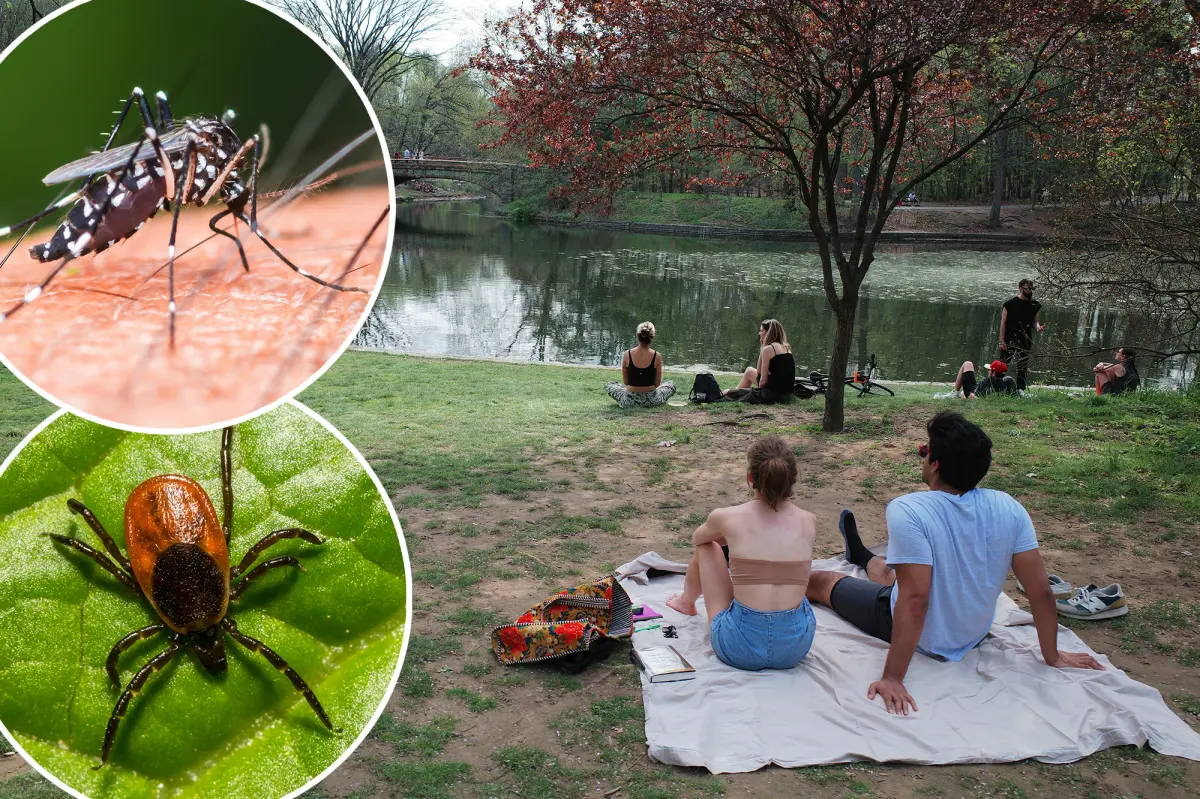
New York City in the spring and summer? Picture this: The Big Apple buzzing with life, but lurking beneath those sunny days is a shadow – tiny invaders that could turn your stroll through Central Park into an itchy nightmare. I’m talking about ticks and mosquitoes, folks, and they’ve been making headlines for all the wrong reasons. With warmer weather stretching their seasons like taffy and populations booming thanks to those generous acorns and milder winters, we’re looking at what feels like a biblical plague of these bloodsuckers. It’s not just inconvenient; it’s got locals packing bags for the suburbs or upstate escapes, wondering if the city’s rat race is worth the risk of waking up with mysterious rashes or fevers. Remember that scorching April day when the thermometer hit 90 in Central Park? That wasn’t just a record; it was a green light for these pests to thrive, raining down from trees or swarming from puddles. As someone who loves a good park picnic but now scowls at every bush, I can’t help but feel a pang of frustration. Cities like NYC aren’t built for this; our concrete jungles were supposed to ward off nature’s bites, but climate change is crashing the party. Experts are whispering about an “uptick” in cases, and it’s enough to make you double-check your shoes before heading out. We’re not exaggerating here – this is real, with mosquitoes and ticks bringing diseases that sound more like exotic adventures than urban woes. Families are stocking up on bug spray, dog owners are vetting their pets for ticks, and I’m personally eyeing those long-sleeved shirts even on hot days. It’s a wake-up call: our beloved city, with its diversity and grit, is vulnerable to these tiny global travelers. If you’re planning a backyard BBQ or a subway commute through the boroughs, think twice – these critters are infiltrating everything from Prospect Park to downtown alleys, turning this city that never sleeps into one that’s constantly scratching.
Now, let’s get down to the numbers, because statistics don’t lie, and boy, are they alarming. Imagine you’re in the emergency room, itching from a tick bite that won’t quit – sounds familiar? According to fresh data from the Centers for Disease Control and Prevention, early April saw a whopping 71 out of every 100,000 ER visits statewide tied to these pesky insects, with the Northeast leading the charge. That’s not a fluke; it’s the highest spike in nearly a decade, making you wonder how our daily routines became a health hazard zone. For every 100,000 visits in the Northeast, a staggering 163 were tick-related last month, jumping from just 52 in March. As a New Yorker dodging yellow cabs and dodging bites, I recall my own close call after a Hudson Valley hike – that red bullseye rash is no joke. Public health officials like Byron Backenson from the New York State Department of Health aren’t surprised; he’s predicting more ticks this year than last, thanks to thriving populations in urban green spaces. From the leafy expanses of Central Park to the lawns of Prospect Park, these eight-legged invaders are everywhere, even showing up on man’s best friend. A Columbia University study backs this, revealing ticks in 70% of NYC parks – talk about ruining a romantic bench date or a family stroll. And it’s not just adults; kids and pets are at risk too. I think back to my neighbor’s yorkie, infested after a simple outing, and it hits home. These stats paint a picture of an unwitting epidemic, where a casual walk turns into a medical drama. As someone who’s tossed clothes in the dryer on a whim and still checked for hitchhikers, I urge everyone: awareness is your first line of defense. The city’s various boroughs – from Manhattan’s hustle to Brooklyn’s buzz – are all battlegrounds. If last year’s numbers teach us anything, ignoring this could mean more sleepless nights and doctor visits, turning our vibrant city life into a paranoid parade.
So, what’s fueling this tick explosion? Experts like Backenson point to a perfect storm of factors that make you rethink outdoor living. Start with a bumper crop of acorns in 2023; those led to skyrocket numbers in deer and mice – the furry hosts ticks love to party with. Throw in.record-breaking warmth, like that April 15 heatwave in Central Park pushing temperatures to 90 degrees, and you’ve got ticks extending their usual March-to-November season. Spring arrives earlier, fall lingers longer, and these bloodsuckers stay active longer, feasting from April through September. Backenson explains it vividly: snow acts like an insulating blanket, keeping the ground barely below freezing for ticks to hunker down and survive winters that previously would have wiped them out. It’s ironic – what we thought were harsh East Coast freezes are now cozy dens. As a city slicker who once scoffed at deer in the suburbs, I now see them as ticking time bombs. But ticks aren’t the only stars of this show; mosquitoes are crashing too, especially the Asian tiger variety that snuck into the US in the 1980s and set up shop in NYC by the mid-2000s. Last year, New York ranked third in Orkin’s most mosquito-infested cities list, trailing only LA and Chicago. Wet, hot summers create breeding paradises, and Cornell University’s Laura Harrington notes their activity stretching into November – unusual and unnerving. I can visualize those subtropical squalls from last summer, turning our streets into mosquito motels. The longer they’re out, the more viruses they carry, building up to peak risks by late summer. Harrington’s words stick: “We’ll see adults flying around in New York, and that’s very unusual.” This urban encroachment isn’t just annoying; it’s a lifestyle shift. I used to enjoy sunset jogs by the Hudson, but now I swat away skeeters mid-stride. For anyone planning trips to parks or waterfronts, prepare for a swarm – these changes alter how we experience the city, blending joy with caution.
And with these pests come the real dangers: diseases that can derail your life. Mosquitoes sling West Nile virus across all five boroughs, with cases 40% above normal per a September study. That’s nothing compared to the scare of chikungunya, a tropical fever causing joint pain that’s now locally acquired in Nassau County on Long Island – the first such US case in seven years. Harrington ties it to NYC’s global nature, with travelers importing pathogens from endemic areas, turning our melting pot into a disease hotspot. As an international hub, the Big Apple’s openness invites trouble, and it’s a reminder to check our own adventures for souvenirs. Ticks add their own arsenal: over a dozen illnesses, from Rocky Mountain spotted fever to babesiosis, but Lyme disease reigns supreme. New York averaged over 17,500 annual cases in the past three years, hitting 19,000 in 2023 alone. Backliked 30 years ago, Lyme was mostly a Long Island issue; now, it’s marching west and north, even creeping into NYC itself. Many locals catch it while traveling upstate, where ticks need to latch on for over 24 hours to transmit. Yet strongholds on Staten Island and parts of the Bronx mean urbanites aren’t safe. I recall my college roommate’s Lyme battle after a Vineyard vacation – weeks of fatigue that humbled him. Then there’s alpha gal syndrome, a deadly meat allergy from the Lone Star tick prevalent on LI; a New Jersey pilot’s fatal reaction after a burger in 2024 chills the blood. These stories humanize the stats: people just like us, struck by symptoms that mimic arthritis or worse. It’s a sobering reality check – our outdoor escapades, festivals, and leisure could lead to chronic pain or emergencies. If you’ve ever felt that post-bite anxiety, you’re not alone; experts warn that vigilance is key, as treatments exist but prevention is better.
Thankfully, defenses are in place, from official efforts to personal habits that can turn the tide. NYC Health Department kicks into gear with summer mosquito surveillance, deploying traps citywide to monitor populations and test for illnesses, spraying pesticides when outbreaks loom. It’s a proactive stance that’s saved lives, using data to nip problems in the bud. For individuals, repellents like DEET are gold, coupled with draining standing water – mosquitoes’ favorite spawning grounds. Tick prevention, however, is trickier; Backenson admits even after 32 years in the field, we lack broad-area controls like effective sprays. Personal responsibility reigns: wear light-colored, long-sleeved clothes, treat them with permethrin, and tuck pants into socks in grassy or wooded spots. Exhaustive checks post-outing are crucial, especially in late spring when nymphs are poppyseed-sized stowaways. I live by throwing infested clothes in a hot dryer for 10 minutes – Kills the critters without fail, and it’s a simple ritual now. As a parent, I inspect my kids like a detective after park visits, sharing stories of other families’ close calls. Community education through apps and neighborhood alerts helps too, fostering a watchful culture. This blend of public health and personal diligence feels empowering, transforming fear into action. If a potential Lyme vaccine – 70% effective in trials but timeline unknown – arrives, it’ll be a game-changer, but until then, these steps are our armor. It’s about reclaiming our city spaces, turning potential panic into practical preparedness that lets us enjoy summers fully.
In the end, this tick and mosquito surge in NYC isn’t just a health headline – it’s a mirror to our changing world, where climate shifts amplify everyday threats. With warmer temps, booming pests, and imported diseases, we’re at a crossroads, balancing the joys of urban life against silent risks. I’ve walked these streets for decades, marveling at skyscrapers and street art, but now I see the hidden dangers in dappled sunlight and humid nights. Experts like Backenson and Harrington urge vigilance – not panic – because knowledge becomes power. Annual cases spike, yet with surveillance, repellents, and checks, we can mitigate harm. Families share scare stories, but also triumphs of early detection. As New Yorkers, let’s embrace this: treat clothes, check for bites, support health initiatives. A vaccine’s on the horizon, promising protection, but personal habits ensure safety now. This city thrives on resilience; let’s apply it to bugs too. So, venture out with caution, cherish green spaces responsibly, and remember – awareness keeps us ahead. In this unpredictable summer, preparedness isn’t paranoia; it’s peace of mind, letting us savor the Big Apple without the itch. Future seasons may bring more, but united, we’re unstoppable against these tiny foes.