

A Second Chance: The Rise of Pet Cloning in America
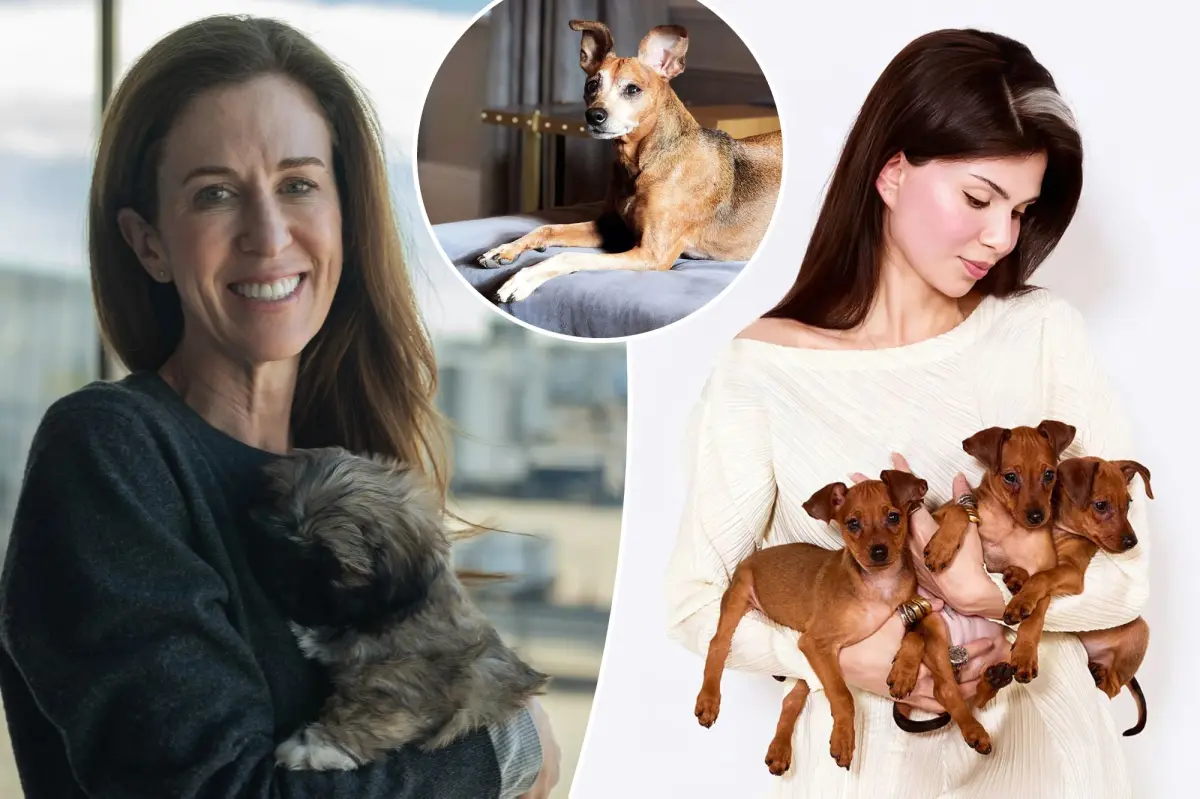
In a sunlit room in upstate New York, Venessa Johnson experienced a moment of déjà vu that few pet owners ever will. Looking into the eyes of her 8-week-old Shih Tzu puppy Ollie, she saw something hauntingly familiar – the unmistakable gaze of her beloved companion Oliver, who had passed away just months earlier. “It was strange because it was Oliver’s eyes looking at me, but it was not wholly him,” recalled the 48-year-old Amazon executive. This wasn’t just an uncanny resemblance or trick of the mind; it was science. Ollie is Oliver’s clone, a genetic replica made possible by technology that was once the exclusive domain of science fiction. Johnson, who describes Oliver as her constant companion for nearly a decade, found herself in a spiral of grief after his passing just before Christmas. “I don’t have kids; I’m single,” she explained. “We were together 24/7. I brought him everywhere.” In her darkest moments of mourning, an internet search for grief resources led her to ViaGen, a Texas-based biotechnology company specializing in pet cloning. Despite the $50,000 price tag and concerned advice from family and friends to wait, Johnson made the emotional decision to proceed. “Everybody told me to wait, but I just couldn’t listen,” she admitted. “My head wasn’t clear. It gave me a lifeline where I felt a ray of hope, having a piece of Oliver to continue on.”
The science behind pet cloning is both straightforward in concept and complex in execution. Using a process called somatic cell nuclear transfer – the same method used to create Dolly the sheep in 1996 – scientists take a tissue sample from the original pet and extract the nucleus from those cells. This nucleus contains the pet’s complete genetic information, which is then inserted into a donor egg that has had its own nucleus removed. The resulting embryo, genetically identical to the original pet, is implanted into a surrogate mother who carries and delivers the clone. ViaGen, recently acquired by Dallas-based Colossal Biosciences, reports a success rate of nearly 80%, though earlier industry studies suggested much lower rates. The technology that once seemed accessible only to celebrities like Barbra Streisand and Paris Hilton is increasingly entering the mainstream, with even NFL star Tom Brady not only cloning his family’s pit bull mix but investing in the technology itself. For many pet owners, the opportunity represents nothing less than a scientific miracle – a chance to extend the bond with a beloved animal companion beyond the boundaries of natural mortality.
Kay, a 37-year-old software developer from Seattle, shares a similar story to Johnson’s. After losing her 18-year-old pinscher Feto last spring, Kay also turned to ViaGen, investing the same $50,000 sum in the cloning process. Her case, however, had an unexpected twist – the procedure resulted not in one, but three genetically identical puppies. “I cloned him once, technically, but sometimes the science results in multiple puppies,” explained Kay, who named the trio Feto 4, Feto 5, and Feto 6 after their microchip numbers. The moment she first encountered the puppies was overwhelming. “It feels stupid to say out loud, but it felt like reaching across the universe back in time,” she described. What surprised Kay most was not just the physical resemblance but behavioral similarities that seemed impossible to explain. All three puppies shared the same distinctive whimper when needing to go outside – identical to their predecessor’s signal – and even had the same scent. “I immediately knew the difference between their ‘I don’t want to be in here’ or ‘I need to go to the bathroom’ whines. Doing that with three, I was like, ‘Holy crap, how is this happening?'” she marveled.
Despite the emotional appeal of cloning, the practice remains controversial from both scientific and ethical perspectives. Dr. Rebecca Greenstein, a veterinarian, cautions that prospective pet cloners should temper their expectations. “There’s obviously quite a strong debate about nature versus nurture,” she explained. While cloned pets share identical DNA with their predecessors, countless environmental factors influence development and personality. “Could you really say that they’re exposed to the same environmental factors? Are they fed the same diet? Are they exposed to the same levels of pollution? Does the owner behave identically with the first one as they do the second?” These variables mean that while physical appearance may match closely, personality isn’t guaranteed to follow suit. Animal rights organizations like PETA and the ASPCA have taken strong positions against pet cloning, pointing to the millions of animals in shelters awaiting adoption. Critics question the morality of spending tens of thousands of dollars to replicate a pet when so many living animals need homes, suggesting the practice prioritizes human sentiment over animal welfare. A 2018 Columbia University study warned that pet cloning “doesn’t actually provide any medical benefit to the health of a pet or to people.”
Both Johnson and Kay acknowledge the complex emotions and ethical questions their decisions raised. Johnson admits she began to regret her choice as she gradually healed from the grief of losing Oliver. “This is a decision I made in a really deep amount of profound grief,” she reflected. “I would not make this decision again. There are so many amazing dogs in shelters, that are overcrowded right now.” She also wrestled with philosophical questions about uniqueness and the special bond she shared with Oliver. “I think that there’s something super special about Oliver being unique, and us having a once-in-a-lifetime kind of love and loyalty and devotion to each other,” she said. Yet three weeks after bringing Ollie home, Johnson’s perspective had softened. “I’m happier and happier that I did this,” she reported. “Ollie’s little walk, the way he runs in the grass and burrows into the bed, all remind me of Oliver, and that is really remarkable.” Kay echoed similar sentiments about her experience with the three Feto clones. “If I had to give advice to anybody, it would be to wait, because you don’t want to make decisions when you’re grieving,” she cautioned. “It’s a gray area, I know the full implications. But now, I’m really happy I did this. This is the best thing that’s ever happened to me.”
As pet cloning technology becomes more accessible, it forces us to confront profound questions about love, grief, and the boundaries between science and nature. ViaGen reports having cloned more than a thousand cats and dogs since 2015, suggesting that what was once extraordinary is becoming increasingly normalized. For Johnson, Kay, and others who have chosen this path, the decision represents a deeply personal response to loss – one that reflects both the depth of human-animal bonds and our struggle to accept their impermanence. While cloned pets may carry the same genetic material as their predecessors, the experiences of these pet owners reveal something more nuanced: that what they’ve gained isn’t exactly what they lost, but rather something new that carries echoes of the past. As the technology continues to advance and more pet owners consider this option, society will need to grapple with the complex ethical landscape that arises when science offers us the ability to challenge death’s finality – at least for our furry companions.