



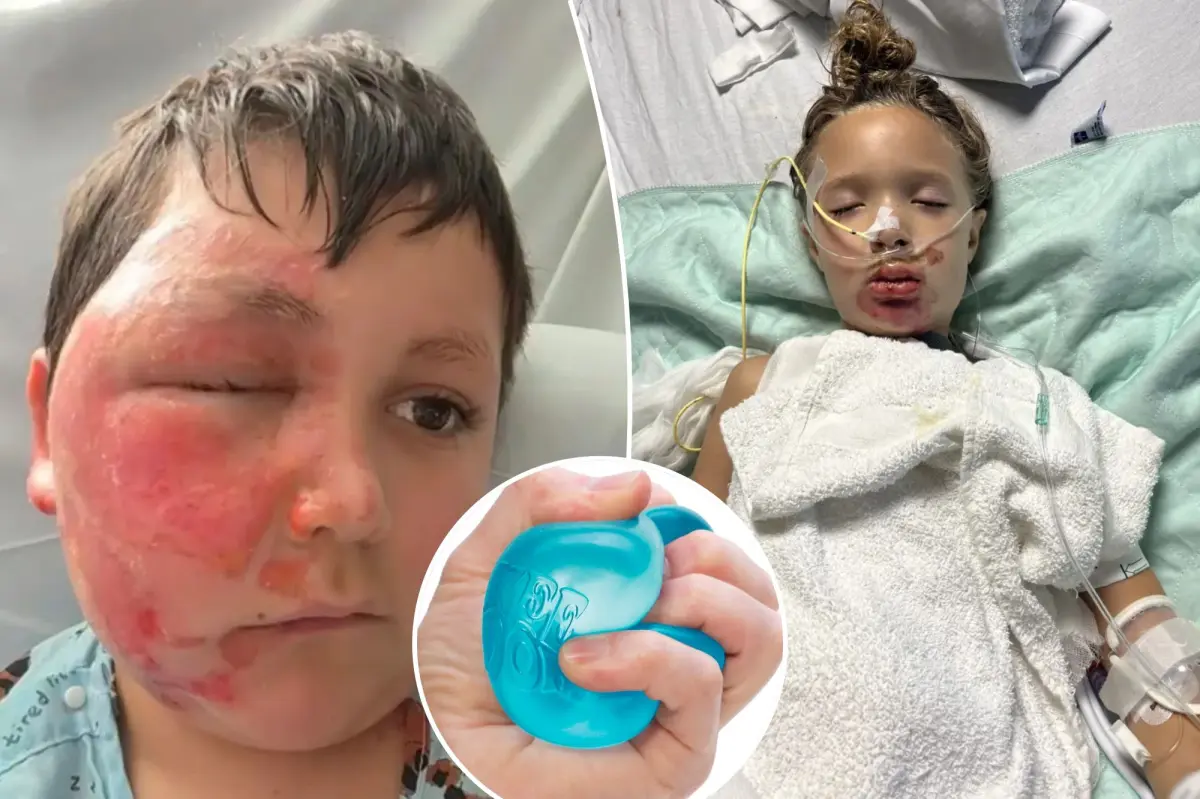
They look like harmless, brightly colored squishy toys, but popular sensory gadgets like NeeDoh are leaving a trail of severe injuries in households worldwide. Behind their viral appeal on platforms like TikTok, doctors are witnessing a deeply concerning rise in pediatric emergency room visits. Curious children and teenagers are heating, freezing, or microwaving these toys, often to participate in viral social media challenges or simply out of innocent experimentation. When exposed to extreme temperatures, the internal gooey filling of the toy transforms into a pressurized, scalding substance. When these compromised toys inevitably burst or explode, they shower unsuspecting children with a molten, glue-like fluid, turning a quiet afternoon of play into a horrific medical emergency filled with blood-curdling screams of agony.
The science behind this danger lies in the physical composition of these popular sensory products, particularly highly sought-after models like the Nice Cube. Designed to stretch and smush under normal conditions, these toys contain a thick, sugar-based filling that behaves unpredictably under intense thermal distress. When subjected to the heat of a microwave or left inside a sweltering car on a summer day, the internal material expands rapidly, building immense pressure inside the pliable outer shell until it ruptures. Although the manufacturer, Schylling, prints explicit warnings on the packaging stating “Do NOT heat, freeze, or microwave,” these labels are routinely ignored by children who lack the cognitive maturity to foresee the consequences. The result is a dangerous mismatch between a child’s natural curiosity and a highly pressurized, liquid-hot hazard.
Doctors warn that the injuries resulting from these toy explosions are uniquely devastating because of how the molten filling interacts with human flesh. Pediatric emergency physician Dr. Alicia Webb explains that the hot, sticky substance clings tenaciously to the skin and clothing, continuing to burn the victim long after the initial blast. Dr. Michael Cooper, a prominent burn center director, notes that children are exceptionally vulnerable to these accidents because their skin is significantly thinner and more delicate than that of adults. This allows the intense heat to penetrate deeper into the tissue in a matter of seconds, causing catastrophic damage. When a toy explodes near a child’s face, the scalding gel can easily cause severe burns to the eyes, mouth, and airway, sometimes leading to life-threatening internal damage if the hot goo is accidentally swallowed.
The heartbreaking human toll of this viral trend is illustrated by a growing number of medical horror stories from across the globe. In Missouri, seven-year-old Scarlett Selby had to be placed into a medically-induced coma and receive extensive skin grafts after a microwaved NeeDoh toy exploded, covering her face and throat in a boiling, sticky residue. In Chicago, nine-year-old Caleb Chabolla suffered agonizing second-degree burns when a heated toy ruptured, leaving his mother with the terrifying sight of his facial skin seemingly melting away. Meanwhile, in New Mexico, a thirteen-year-old girl suffered third-degree burns on her limbs when a toy that had been left inside a hot car exploded upon being squeezed. In the United Kingdom, a ten-year-old girl named Bella was left with severe facial blistering and permanent scarring fears after attempting a TikTok-inspired microwaving challenge with a friend.
For medical professionals, these traumatic incidents highlight the long-term, life-altering consequences of severe pediatric burns. Beyond the immediate physical torture and the necessity of painful skin grafts, reconstructive surgeries, and tissue debridement, survivors face a long and grueling road to recovery. Dr. Cooper warns that because children have smaller overall body surface areas, even localized burns can quickly lead to severe complications such as dangerous infections, dehydration, and restricted joint mobility. Furthermore, the cosmetic disfigurement resulting from facial burns often inflicts profound, lasting psychological trauma on young people, affecting their self-esteem and social development for years. A single moment of internet-fueled curiosity can lead to a lifetime of physical scarring and emotional suffering that permanently alters a child’s future.
Ultimately, doctors agree that the most effective way to combat this growing crisis is through proactive parental awareness, open communication, and immediate first-aid education. Dr. Webb urges parents to talk to their children about the deceptive nature of social media challenges, emphasizing that viral videos rarely show the painful consequences of these dangerous stunts. Parents must strictly forbid the heating of sensory toys, regularly inspect them for structural wear and tear, and ensure they are never left in hot vehicles. In the event of a burn, experts advise immediately cooling the affected area under gentle, running water for twenty minutes while avoiding the temptation to peel away stuck material, which can tear the skin. By combining close supervision with honest conversations, families can protect their children from entirely preventable tragedies.