


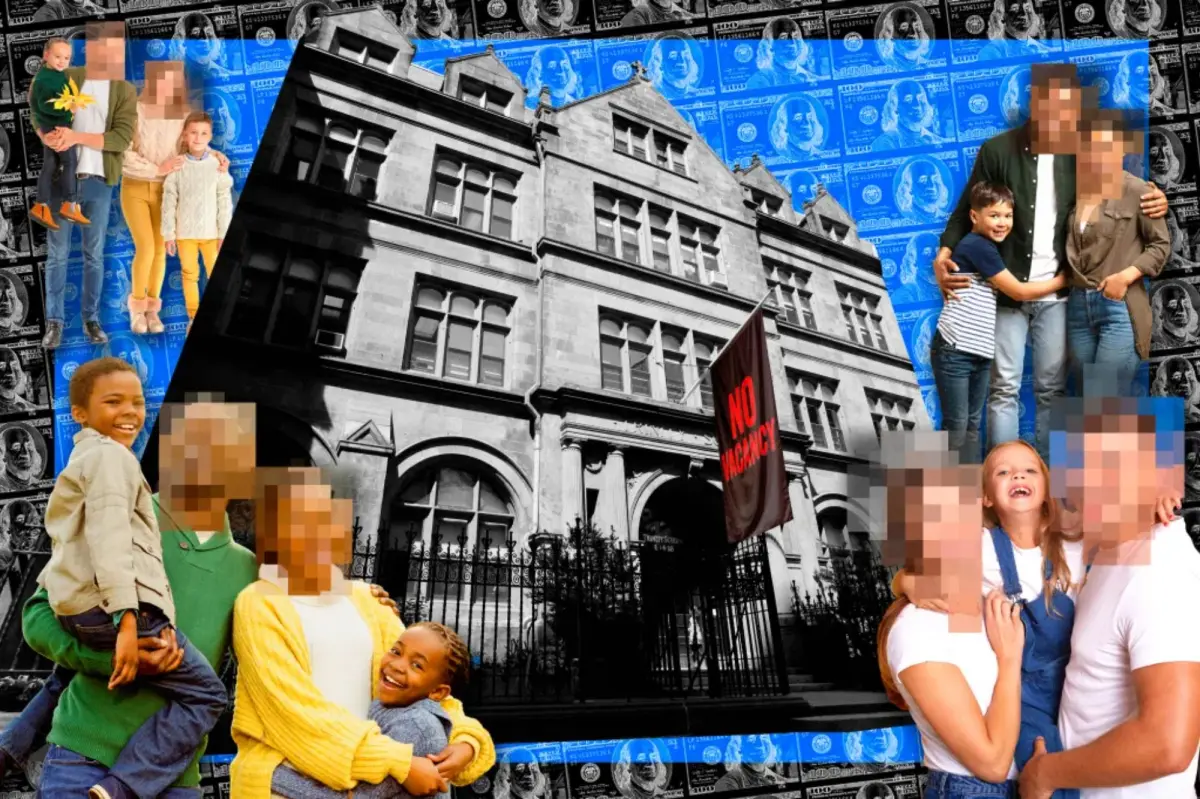
Navigating the cutthroat world of private school admissions in New York City has become a nightmare for many affluent parents this year, leaving even the most savvy and persistent families feeling utterly defeated. Picture this: you’ve spent countless hours crafting the perfect applications, attended endless interviews, and built up your toddler’s resume with extracurriculars, only to face a tidal wave of rejection letters or waitlists that stretch on indefinitely. I remember chatting with Sharon Decker, an education consultant who works closely with these families, and her words hit home – mothers are “losing their minds,” she said, their dreams of the ideal kindergarten dashed against the rocks of oversubscription. It’s not just disappointment; it’s a profound sense of injustice, especially when you’ve always gotten what you wanted in this city where privilege often opens doors. These parents, used to securing spots in exclusive preschools through connections or sheer determination, are now scrambling to reassess their priorities. For many Upper East Side moms – the kind who juggle board meetings and ballet lessons – this admissions season has exposed the fragility of their carefully curated lives. One mom I spoke to, a finance executive with a five-year-old son, described the process as “soul-crushing.” She applied to twelve schools, expecting smooth sailing based on their preschool successes, but ended up with seven flat rejections and four waitlists. Their only acceptance was from a school she hadn’t even prioritized, making her question every choice she made. The anxiety spills over into Facebook groups like Moms of the Upper East Side, where anonymous posts pour out frustration and sorrow. “Waitlisted for three schools and rejected from three,” one post lamented, echoing the sentiments of hundreds of others who feel the emotional toll of unfulfilled expectations. It’s humanizing to realize that beneath the designer strollers and gilded facades, these parents are just like anyone else – terrified of not doing right by their kids. The pressure to “keep up with the Joneses” is relentless, driving families to vie for spots in schools like Dalton or Spence, where competition has always been fierce but now feels insurmountable. Even schools once considered accessible, like Avenues or Brooklyn Friends, are turning away applicants left and right, leaving echoes of bitterness in online forums. “We’re a little bitter,” one waiting mother admitted, her words a quiet cry from the heart in a community where status quo is everything. This admissions frenzy isn’t just about elite schools; it’s about the deeper human desire for security and the best for our children, twisted into a high-stakes gamble that leaves winners and losers feeling equally adrift.
The roots of this admissions Armageddon trace back to the pandemic, when lockdowns gave rise to a “baby boom” that has now swelled the ranks of kindergarten-bound children. With more families delaying pregnancies or expanding due to prolonged isolation, the cohort hitting school age is significantly larger than in previous years, flooding application pools everywhere. Alina Adams, another admissions consultant I consulted, painted a vivid picture: whereas in old times, her clients paying full tuition – upwards of $70,000 annually at top spots – could count on 80-90% acceptance rates into solid institutions, this year it’s plummeted to about 50%. “I’m seeing waitlists at schools where families used to be a shoe-in,” she shared, her voice tinged with empathy for clients who’ve invested time, money, and emotions into this process. It’s not hard to empathize; imagine preparing your child for years, believing in the path to success, only to be told that spot isn’t yours. Public schools, once a reliable safety net for the wealthy in neighborhoods like Tribeca or Battery Park City, have become unpredictable factors. Concerns over Governor Hochul’s 2022 Class Size Law, capping kindergarten through third-grade classes at 20 students, have sparked fears of being “zoned out” of your assigned public school – a system once seen as a 99% sure thing. Parents are anxious, whispering about the new rules, and it’s no wonder: uncertainty breeds caution, pushing more affluent families into private school applications as backups. Mayor Mamdani’s talk of phasing out gifted and talented programs adds fuel to the fire, making parents question whether their high-achieving tots will get the stimulation they need in overloaded public classrooms. Decker noted how policy shifts amplify nervousness, turning admissions into a high-wire act. For parents, this isn’t just statistics; it’s real-life drama, with one mom recalling how she comforted her crying child after a batch of rejection letters arrived on the same day. The human cost is palpable – sleepless nights, strained marriages, and a nagging doubt about whether they’ve failed their kid already. Yet, it’s these very challenges that highlight the resilience of New York families; they’re not giving up, they’re adapting, pouring more resources into consultants and costly deposits just to hedge their bets. In the end, it’s a poignant reminder that even in a city of opportunity, the American dream takes on a uniquely personal, heart-wrenching twist when it comes to education.
When the decision letters arrived last month, the fallout was nothing short of a “bloodbath,” with stacks of disappointments landing in inboxes and mailboxes across Manhattan. Consultants like Adams and Shashou from Admit NY describe a landscape where “top-tier” schools – think Dalton, Spence, Trinity, or Brearley – remain ever-elusive, fielding up to 1,000 applicants for just 50 slots, half of which go to legacies, faculty kids, or siblings. But this year, the pain has spread, with mid-tier gems like Ethical Culture or Trevor Day equally prohibitive. For parents, this means concocting elaborate contingency plans, like holding kids back a year to reapply or forking over hefty $5,000-$15,000 deposits on lesser choices while praying for a waitlist spot to open up. One dad I know, a tech entrepreneur, likened it to a lottery – exhilarating yet excruciating – where months of preparation culminate in perhaps one slim acceptance. The emotional rollercoaster is intensified by advice from advisors: “The waitlist will move,” Adams assures, but “when” is anyone’s guess. Parents are leaning in, some opting to pay up front and potentially forfeit if a dream school beckons, a financial gamble that underscores their desperation. Humanize this by imagining the internal monologue of a mother fielding rejection after rejection; it’s not merely about prestige, but fear – fear that their child might miss the nurturing environment or social advantages that define success in NYC. Stories circulate of families uprooting lives, moving neighborhoods for better zoning, or even homeschooling briefly to revisit applications next year. Despite the anguish, there’s a silver lining in the human spirit: a sober realization that admissions is a game of chance, not entitlement. As one consultant put it, this year has “really scared people,” prompting a shift towards broader applications and humbler expectations. Parents are swapping horror stories over coffee, finding solidarity in vulnerability, transforming a competitive grind into a community of shared struggle.
Delving deeper into the personal stories reveals the raw vulnerability at the heart of this admissions ordeal. In the Moms of the Upper East Side group, with its 37,000 members, posts overflow with heartfelt confessions – “waitlisted for three, rejected from three,” one anonymous mum bared, her words reflecting weary optimism tinged with despair. Another shared, “waitlisted for four privates, and yes, I’m a little bitter,” capturing the sting of unmet aspirations. These aren’t faceless complaints; they’re the voices of real people grappling with dashed hopes, their timelines filled with canceled playdates as they pore over application forms, edit essays, and prep for interviews. One Manhattan mom, whose five-year-old son faced twelve applications, choked up recalling the seven outright nos and four foggy waitlists, with only a bottom-choice school saying yes – a spot she nearly skipped applying to. “I didn’t know what I was getting into,” she reflected, her fortune-cookie wisdom echoing the naivety that blindsides even seasoned parents. She suspects some schools use “waitlist” as a polite euphemism for rejection, softening the blow while keeping families tethered to false hope. Gratitude emerges too – for the preschool director who nudged them towards that one acceptance, now a lifeline with a deposit locked in. Yet the fear persists: what if it’s not the right fit? They plan to transfer in first grade, a risky maneuver born of necessity. Her final insight, about “keeping up with the Joneses,” rings true – the social pressure to land a “fancy tier-one school” feels like an unwritten law, driving families to overextend emotionally and financially. Conversations I had with similar parents reveal a tapestry of regret and resolve: some wonder aloud if they’d done things differently – more donations, earlier applications, or cultivating alumni connections. But beneath the what-ifs lies resilience; they’re doubling down on research, seeking mentors, and embracing the unpredictability as a rite of passage. It’s humanizing to see how this process strips away the façade of wealth, exposing universal parental fears – the dread of inadequacy, the longing for validation through our children’s milestones. In sharing these narratives, families find catharsis, turning individual heartache into collective empathy.
Lifting the lid on why admissions have grown so punishingly competitive uncovers a confluence of societal shifts that feel both inevitable and unjust. At its core, Whitney Shashou from Admit NY points to the pandemic baby boom, resulting in a “much larger cohort” of school-age children flooding the market, pure and simple supply-and-demand math gone awry. But politics complicate the equation, with Governor Hochul’s class size limits and Mayor Mamdani’s musings on gifted programs sowing seeds of doubt in parents’ minds. What once was a near-99% certainty of securing a zoned public school seat has morphed into a gamble, especially in affluent enclaves where public options are top-notch. Families are hedging bets by piling into private applications, turning a safety net into a bottleneck. Decker observed how administrative changes trigger waves of nervousness, compelling even die-hard public school advocates to diversify. The human angle here is relatable – picture a parent wrestling with ideology versus practicality, choosing private tuition over principle to ensure their child’s development doesn’t suffer. Stories abound of educators witnessing this shift, like one teacher noting how classrooms buzz with anxious chatter about admissions outcomes. Public school advocates express dismay, seeing it as a drain on resources; meanwhile, private institutions are overwhelmed, their selectors grappling with ethical dilemmas over whom to admit. For parents, it’s not abstract policy – it’s personal anguish, with one Tribeca dad I interviewed agonizing over whether his toddler’s gifted reading skills merit private intervention. The fear of missing out is palpable, prompting families to scrutinize every news cycle for policy updates, turning dinnertime chats into strategy sessions. Yet, from these tensions emerges growth: parents are advocating for better information, pushing schools for transparency, and finding solace in community forums where shared grievances foster stronger bonds. In humanizing this backdrop, we see not just a systemic issue, but a testament to parental love – the willingness to fight, adapt, and sacrifice for the future, even when the odds seem rigged against you.
As this turbulent admissions cycle winds down, parents are recalibrating for the future, armed with hard-earned wisdom and cautious optimism. Alina Adams predicts her clients will approach next year’s process with heightened caution, diversifying applications beyond “Harvard, Yale, and Princeton” equivalents to avoid total wipeouts. Some are committing to waitlists with faith in movement, while others secure spots in acceptable schools, ready to forfeit deposits if dreams materialize. A growing trend is holding back kindergartners for a replay, buying time and maturity in hopes of better outcomes. One mom shared her plan: after landing her son’s current school, she’s exploring transfer options come first grade, her “keeping up with the Joneses” ethos now tempered by pragmatism. Consultants urge diversity, advising against overloading on elites to mitigate risk. The MUES group buzzes with proactive tips – mock interviews, portfolio building, and even meditation apps for parental stress. Yet, for all the strategy, the emotional residue lingers; parents speak of lingering bitterness morphing into empathy, understanding that competition doesn’t equate to worth. Humanizing this reflection, envision communities forming support networks, where veterans mentor novices, sharing laughs over botched interviews and tears over rejections. Decker notes the silver lining: this ordeal taught humility, reminding families that life’s uncertainties extend to schools. As one dad put it, “We thought we could control everything, but this humbled us.” Looking ahead, experts foresee slight improvements, but the lesson sticks – adaptability and resilience define NYC parenting. For those emerging unscathed, there’s gratitude; for the waitlisted, unyielding hope. In weaving these threads, we glimpse the humanity in ambition: parents not as privileged automatons, but vulnerable guardians striving for paths of growth, one application at a time. The cycle may repeat, but for now, there’s peace in preparation, forged in the crucible of this unforgettable year.