




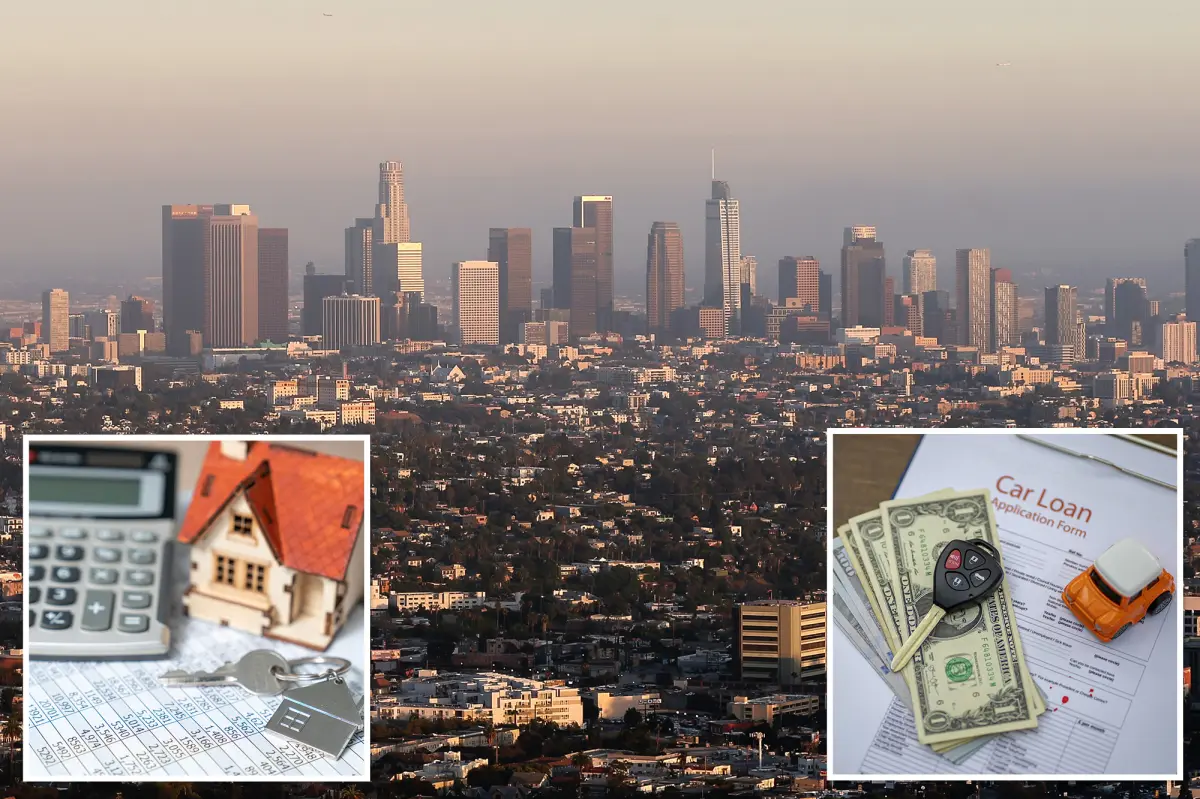
For millions of Californians, the start of a new month does not bring the promise of a fresh start, but rather a familiar, quiet anxiety as the kitchen counter fills with envelopes and the inbox floods with payment notifications. Opening a bill has become a test of emotional endurance in the Golden State, where the simple act of keeping the lights on, the car running, and a roof overhead requires a financial sacrifice that far outpaces most of the nation. According to the 2024 doxoINSIGHTS U.S. Household Bill Pay Market Size and Category Breakout report, California households are shellshocked by an average of $2,838 every single month just to cover their basic, recurring bills. Annually, this translates to an astonishing $34,056 slipping through the fingers of average families before they can even think about buying a carton of milk, putting gasoline in the tank, or saving for their children’s future. This staggering sum places California firmly as the second-most expensive state in the entire country for household expenses, shining a harsh light on the heavy financial tax of living in paradise and forcing residents to master the art of the economic tightrope.
To truly understand the weight of this financial burden, one must look at how California fares against the rest of the United States, where the grass is often far cheaper if not greener. Only the island oasis of Hawaii manages to outprice the Golden State, with households there coughing up a breathtaking $3,091 per month, or $37,092 annually, to maintain their slice of Pacific heaven. Meanwhile, the average American household pays a national benchmark of $2,126 monthly to keep their lives moving forward. This means that Californians are saddled with a painful $712 monthly premium over the average American, amounting to an extra $8,544 a year evaporated into thin air. That $8,544 represents more than just a dry statistic; it is the vacation that was never taken, the retirement account that remains underfunded, the medical procedure that was indefinitely postponed, or the emergency fund that sits empty when the transmission blows. In the national arena, California and Hawaii stand alone as the only two states where the monthly bill pile surpasses the $2,800 threshold, leaving their citizens to shoulder an economic reality that feels increasingly unsustainable.
While California and Hawaii lead this expensive charge, they are not alone in their financial misery, as a handful of other states also demand an incredibly high price of admission from their residents. Massachusetts secures the third spot on this costly podium, requiring its households to spend an average of $2,685 a month—which is still $153 a month, or $1,836 a year, cheaper than what Californians must pay. The rest of the top ten reads like a roster of economic giants and highly populated hubs, with Maryland ($2,569), Washington ($2,568), New Jersey ($2,563), Connecticut ($2,505), New York ($2,495), New Hampshire ($2,479), and Colorado ($2,473) rounding out the list of high-cost territories. Every single state in this top tier of expenses forces its population to pay at least 16.3% more than the national average just to maintain a baseline standard of living. This shared struggle across coastal and economically dense regions highlights a growing divide in the American experience, where living in centers of commercial innovation and cultural wealth demands a massive monthly toll that is steadily squeezing middle-class families out of the very places they helped build.
What makes this $34,056 annual drain even more alarming is what it does not include. The doxoINSIGHTS study focuses strictly on ten common, recurring household bills that form the backbone of modern survival: housing commitments like mortgages and rent, auto loans, utilities, various forms of insurance, cable, high-speed internet, mobile phone connections, and home security systems. This baseline does not account for the volatile costs of the grocery checkout line, where inflation has made a simple trip for weekly essentials feel like a luxury, nor does it factor in the fluctuating price of gasoline or the cost of healthcare, clothing, and school supplies. When you layer the true, everyday cost of living on top of these fixed monthly bills, the financial picture for the average California household transforms from challenging to outright overwhelming. It reveals a stressful reality where families must constantly negotiate which necessities to prioritize, transforming household budgeting from a practical chore into a high-stakes strategy game.
Furthermore, the nature of this financial struggle is not uniform; it morphs and changes color depending on which part of California a family calls home. In glamorous, sun-drenched coastal hubs like Los Angeles, San Francisco, and San Diego, the primary monster under the bed is real estate, with astronomical rent payments and impossible home prices swallowing the lion’s share of local incomes. However, if a family flees these coastal epicenters for the more affordable pastures of the Inland Empire or the agrarian vastness of the Central Valley, the financial pressure does not disappear—it simply shifts shape. In these inland regions, residents find themselves trapped in a different kind of wallet drain, characterized by brutal, multi-hour daily commutes that command astronomical gasoline budgets, steep auto loan payments, and heavily inflated car insurance rates. Whether it is a sky-high mortgage overlooking the Pacific or a crushing monthly commute bill on Interstate 10, California find a way to extract its toll, ensuring that no geographic corner of the state is entirely immune to the high cost of existing here.
In response to this grinding reality, communities, grassroots organizers, and state agencies are trying to patch the holes in the sinking ship, utilizing a complex web of assistance programs to keep vulnerable families afloat. Guided by metrics and data from organizations like the California Public Utilities Commission, state leaders keep a close eye on the effectiveness of relief efforts such as the CARE (California Alternative Rates for Energy) and FERA (Family Electric Rate Assistance) programs, which offer much-needed discounts on utility bills for low-income households. Simultaneously, programs like the Low Income Home Energy Assistance Program (LIHEAP) and dedicated initiatives through the California Department of Veterans Affairs (CalVet) work tirelessly alongside County Veterans Service Offices to provide a localized safety net for those who have sacrificed the most. While these programs offer invaluable lifelines, they also serve as a stark reminder of the systematic pressure on the average citizen. To live in California today is to love its natural beauty, its cultural diversity, and its boundless opportunity, while simultaneously engaging in a daily, exhausting battle against the relentless tide of bills that threatens to sweep the dream away.