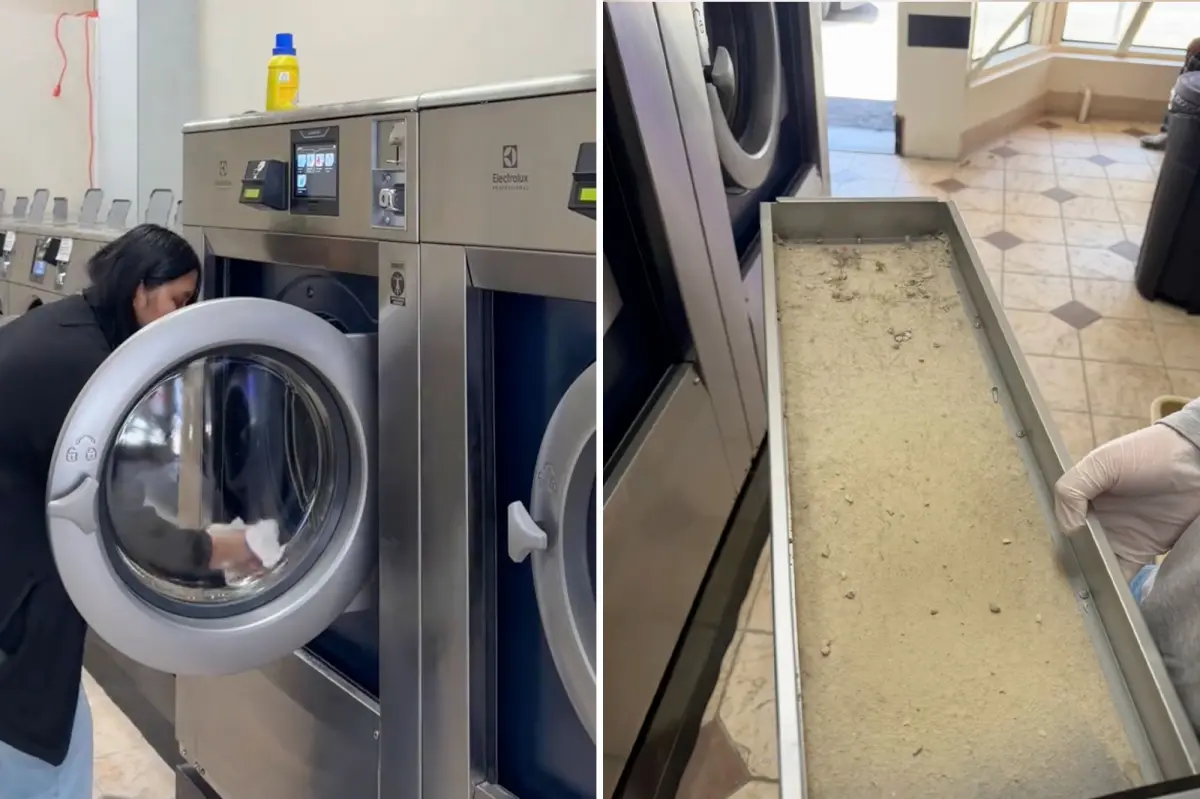
In the hushed, fluorescent glow of a typical San Francisco laundromat, the rhythmic drone of washing machines usually orchestrates a quiet symphony of domestic order. Soap suds churn, dryers hum, and patrons fold warm clothes with the absent-minded ease of a routine completed. But on a recent Wednesday, that peaceful rhythm was shattered by a gritty, abrasive silence. Dewi Redpath, the owner of Bali Laundry, stood frozen in the middle of her shop, staring at a sight that would make any small business owner’s heart sink. A customer, presumably returning from the grueling, transformative trek of Burning Man, had just walked in carrying what looked like the spoils of a desert war—a catastrophic haul of rugs, blankets, and clothing, all coated inches deep in the fine, ghostly pale sediment of Nevada’s Black Rock Desert. The customer had loaded the machines, paid their fee, and left. It wasn’t until the 60-pound commercial washer started its final spin cycle that the real damage became horrifyingly apparent. A cloud of chalky, suffocating dust erupted from the machine’s vents, coating the interior like a volcanic ashfall. The customer had successfully transferred the entire, overwhelming burden of the playa onto Redpath’s livelihood, effectively turning her pristine, hard-won equipment into a biohazard zone in a matter of minutes.
This is not your everyday dirt, the kind of mud you’d scrape off a hiking boot. This is the infamous “playa dust” of Burning Man—a geological nightmare born from the dried alkaline lakebed that hosts the festival’s temporary, surreal Black Rock City. As Redpath began the arduous process of wiping down the internal drums, she realized she was dealing with a material that is almost chemically designed to cause havoc. It is as fine as talcum powder, with particles so microscopically small that they can bypass the most intricate filtration systems and settle into the deepest, darkest recesses of machinery. But its true menace lies in its chemical composition. The dust is highly alkaline, often boasting a pH level comparable to that of bleach, making it inherently corrosive. When mixed with water, it doesn’t simply dissolve; it becomes a caustic, cement-like paste that cakes onto heating elements, clogs drainage pumps, and grinds its way into the delicate ball bearings of spinning drums. Redpath wiped a cloth across the interior surface—it came away with a greasy, gray smear that refused to budge. The dust had embedded itself into the very rubber seals and gaskets, threatening to destroy the integrity of the machines. As she scrubbed, she could feel the fine silt in her throat, coating her lungs with every breath, a grim reminder that this wasn’t just a superficial mess; it was a costly, invasive assault on her primary means of income.
The irony of the situation is so profound it almost feels intentional. Burning Man, at its core, preaches a gospel of radical self-reliance, civic responsibility, and communal effort. The festival’s own survival guide explicitly warns attendees about the corrosive nature of the dust, advising them to wash clothing immediately with hot water and a cup of white vinegar to break down the alkalinity before it destroys everything from car electronics to upholstery. Yet, this particular burner chose to bypass those instructions entirely. Instead of handling the messy, time-consuming responsibility of their own desert aftermath, they opted to offload the toxic slurry onto an unsuspecting local business. It is a staggering display of entitlement, a complete inversion of the community values they ostensibly celebrated just days prior. Redpath, who had spent hours—and would spend many more—with rags, vinegar, and a technician on speed dial, felt a visceral sense of betrayal. She runs a small neighborhood business, a place built on trust and clean, reliable service. Now, she was faced with a choice: eat the cost of a massive repair bill, or shut down for days to dismantle and deep-clean the machinery. The burners love to wax poetic about leaving no trace on the desert floor, but apparently, leaving a trace of your existence in the middle of someone else’s city is perfectly acceptable. The playa had followed them home, and they had decided that Redpath’s laundromat would be the sacrificial altar where that dusty plague would be laid to rest.
When Redpath posted her video of the dusty aftermath on TikTok, the internet did what the internet does best: it reacted with unbridled, cathartic fury. The comment section became a raging forum of validation, with hundreds of users echoing her frustration and condemning the irresponsible festival-goer. “Burners love to talk about their enlightened community and then do anti-social, irresponsible vandalism like this,” one seething commenter wrote, capturing the exact sentiment that had been boiling in Redpath’s chest. “They came to ruin yours so they wouldn’t ruin their own,” another struck the nail on the head, recognizing the selfish calculus at play. But perhaps the most chilling validation came from those familiar with the festival’s annual migration. Comments flooded in revealing that this is a pervasive, well-known problem. “Sue them,” demanded one person. “All of the car washes and laundromats near Burning Man have a no-Burners policy because of this. It’s a well-known hazard.” This testimony revealed that Redpath is far from alone; she is just another casualty in a long, dusty war between festival aesthetics and practical reality. The businesses in Reno and Sparks, the last major city before the desert, have long suffered this plague, putting up signs that explicitly refuse service to anyone arriving with visibly dusty gear. Now, the problem has migrated west, hitting the urban hubs of the Bay Area where the wealthier, more thoughtless attendees return home, bringing their environmental destruction with them.
The scale of this yearly invasion is staggering. This year, an estimated 70,000 people descended upon the Black Rock Desert, a temporary metropolis that suffers dust storms powerful enough to blot out the sun. When the gates open and the exodus begins, those 70,000 people don’t disappear into the ether. They drive out of the desert, carrying their tents, their art installations, their RVs, and their clothing—all saturated with that corrosive, clinging alkaline dust. They stream into nearby cities, and eventually, they fly or drive back to their homes in San Francisco, Los Angeles, New York, and beyond. For small business owners like Redpath, this means the damage isn’t just a singular act of carelessness; it’s a predictable, yearly logistical and financial burden inflicted upon the local service economy without consent. The dust doesn’t just ruin washers. It clogs residential plumbing, destroys apartment complex HVAC systems, and wreaks havoc on car interiors, costing communities millions in unscheduled maintenance. Yet, because the act is perpetrated by individuals scattered across a massive exodus, accountability is virtually impossible. The owner is left to eat the repair costs, the lost business hours, and the sheer psychological toll of dealing with a disaster they had no part in creating. It transforms a celebration of temporary community into a permanent, unwelcome tax levied on the people who stay behind.
In the end, the story isn’t just about a clogged washing machine; it’s a stark parable about the disconnect between ideals and actions. Redpath spent her entire evening on her knees, scrubbing, wiping, and praying that the technician could salvage her equipment before the weekend rush. The technician eventually came, dissembled the drums, and revealed the extent of the damage—a thick, white concretion that had effectively welded itself to the heating elements. It would take days, thousands of dollars in parts, and gallons of vinegar to bring the machines back to life. As she watched the technician work, a weary resignation settled over her. She could post a sign banning “Burners,” as others had done, but she knew that the truly responsible festival-goers were never the problem. It was the entitled few, the ones who believed the rules of the desert didn’t apply once they hit the asphalt, who poisoned the well for everyone else. The playa dust, that infamous, powdery menace, will always settle. The winds will blow, the festival will burn again next year, and the exodus will inevitably return. But as Redpath finally flipped the circuit breaker and heard the repaired washer spin up with a clean, smooth hum, she was left with a lingering question that echoes far beyond her laundromat floor: if we can spend nine days creating a beautiful, communal city in the desert, why is it so impossible to show basic respect for the community we return to? The answer, buried somewhere in the alkaline grit, remains as stubbornly opaque as the dust itself.