

Paragraph 1: The Quiet Surrender to Impermanence
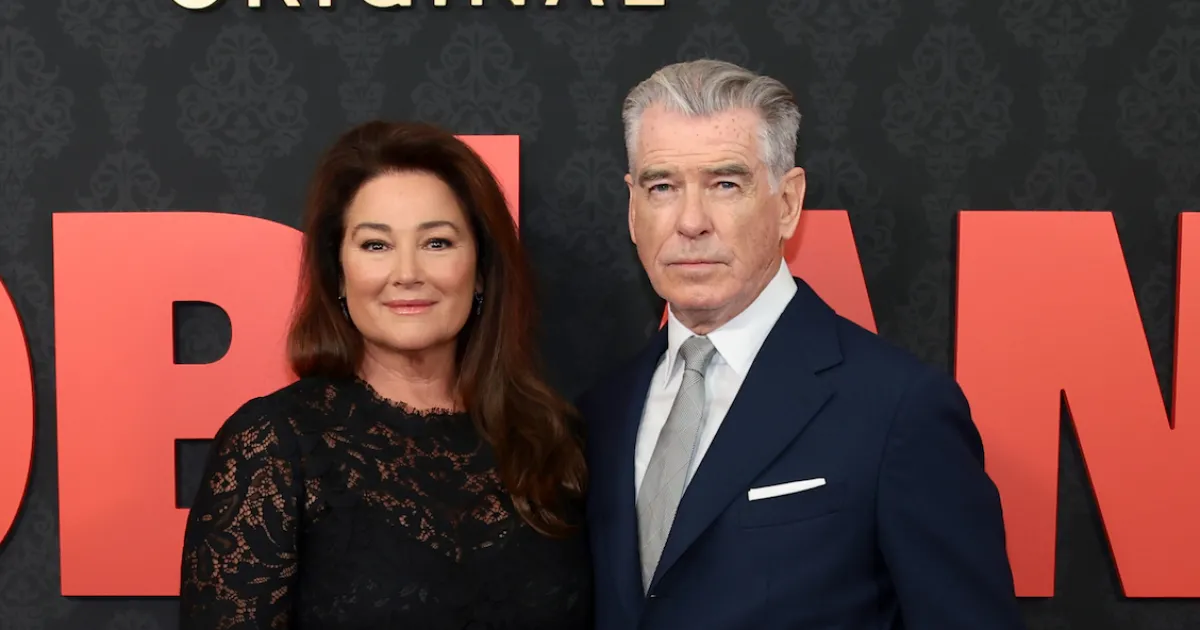
The Pacific Ocean, in all its sapphire glory, has been a constant companion to Pierce Brosnan and his wife, Keely Shaye Smith. For nearly three decades, their majestic Malibu mansion has stood as a bastion against the chaotic tides of Hollywood life—a sanctuary perched on the cliffs where the salt-laden air promises a measure of peace that the frenetic streets of Los Angeles can never offer. Yet, in a remarkably candid and uncharacteristically vulnerable interview with U.K. publication The Times on Friday, September 11, the 73-year-old actor revealed that he and his beloved wife are finally ready to surrender their $100 million estate. This decision is not born from a sudden disenchantment with the sprawling property, its hand-laid stone walls, or the panoramic views that would make any soul swoon. Rather, it stems from a profound, weary reckoning with the volatile, living earth upon which their dream home was constructed. “We’ve been spared by the fires a few times now. But I think it’s time to move,” Brosnan confessed, his words carrying the heavy resonance of a man who has lived long enough to understand that permanence is an illusion we build to comfort ourselves against the ticking of the geological clock. “Everything changes, everything falls apart.” This is not the dramatic exit of a fading action star seeking a new stage; it is the quiet, pragmatic surrender of a husband and father who has realized that no amount of architectural beauty or financial worth can shield you from the primal, gut-wrenching dread of living on a precarious fault line. With the endless water on one side and the brittle, drought-starved chaparral hills on the other, the Broscans have coexisted with an unspoken, simmering tension. “We live by this body of earth’s water on a fault in a ring of earthquakes. That creates a fear,” he added, stripping away the veneer of celebrity invincibility to reveal the raw, human anxiety of lying awake at night, straining to hear the subtle rumble of tectonic plates shifting beneath the floorboards, or catching the faint, ominous crackle of an approaching fire.
Paragraph 2: The Scars of the Palisades Inferno
That very fear was made manifest in the cruelest way possible just months prior to his announcement. In January 2025, the Palisades Fire erupted across the sprawling city of angels, devouring over 23,000 acres in a hellish, relentless rampage that transformed the midday sun into an eerie, apocalyptic twilight—a haunting orange glow that burned itself into the retinas of every Angeleno. The official statistics are staggering in their cold, numerical finality: more than 6,500 structures reduced to smoldering piles of debris, 975 damaged beyond recognition, and at least 27 precious lives extinguished in the blink of an eye. Yet, for those who lived in the shadow of the destruction, those numbers feel far too abstract to convey the gut-wrenching terror of loading a lifetime of memories into the trunk of a car while the sky above you falls apart in embers. The fire did not discriminate in its appetite; it devoured the sprawling estates of beloved celebrities like Billy Crystal, Milo Ventimiglia, Mandy Moore, and Tyra Banks, but it also swallowed the modest bungalows of schoolteachers, the cramped apartments of aspiring musicians, and the meticulously tended rose gardens of retired grandparents who had saved their entire lives for a piece of the California dream. In the chaos, Brosnan and Smith’s home, perched majestically above the surf, was once again “spared” by a fortunate shift in the wind or the heroic, tireless effort of the fire crews who stood as thin, exhausted lines of defense against the inferno. But survival leaves its own invisible scars. When you watch your neighborhood burn live on television, when you smell the acrid, toxic smoke seeping through the cracks of your windows, when you pack your passport, your wedding photos, and the baby shoes of your children just in case the call comes to evacuate, the very concept of “home” shifts irreversibly. You cease to be an owner of property and become a tenant of pure luck, living on borrowed time in a paradise that can turn to hell in a matter of hours. For the Broscans, this 2025 inferno was not merely a news headline; it was a visceral, unavoidable reminder that their time on that glittering bluff was finite. The gratitude they felt for their salvation was inevitably tinged with survivor’s guilt—a sobering, soul-searching awareness that they had simply won a game of Russian roulette they could not keep playing forever without losing something far more precious than bricks and mortar.
Paragraph 3: The Echoes of 2015 and the Fragility of Foundations
But the memory of January 2025 is not the first time the family has felt the searing breath of fire against their sanctuary. A decade prior, in February 2015, Us Weekly confirmed that their Malibu home had sustained approximately $1 million in damage after a fire spread rapidly from his garage to one of the interior rooms of the home. It took nearly 40 minutes for an army of 50 firefighters to respond, contain, and finally extinguish the blaze, a fierce battle against a destructive force that had snuck insidiously into their own private enclave. While the structure survived, the event left a permanent stain on their psyche—a physical scar on the walls and a psychological one on their sense of security. Imagine the acrid sting of smoke filling the air you breathe every day, the sight of charred beams where you once stored your tools or parked your car, the chaos of hoses and sirens disrupting the tranquil sounds of the ocean. That event was a harbinger, a whisper in the wind that the home they had built was not the impenetrable fortress they had imagined. Since then, every dry season, every heat wave, every gust of Santa Ana wind has carried with it an undercurrent of anxiety. The house, which once represented the ultimate achievement of a boy from Navan, Ireland, who rose to become James Bond, has slowly transformed from a symbol of permanence and legacy into a fragile shell of wood, glass, and stone that must be constantly defended against the elements. When Brosnan speaks of “everything falling apart,” he is not merely being philosophical; he is speaking of the inevitable decay of the physical world, the reality that even the strongest foundations will eventually crumble beneath the weight of time and disaster. The couple has learned that they cannot rely on the land to protect them; they must protect themselves from the land. It is an exhausting, relentless vigilance that wears down the soul, turning what should be a peaceful retreat into a fortified observation post.
Paragraph 4: The Shifting Tides of Community and Solitude
Beyond the physical threats of fire and earthquake, there is a more subtle, human reason for their desire to leave—the quiet erosion of community. “I think the two of us are somewhat reclusive,” Brosnan admitted, a statement that resonates deeply with anyone who understands the isolating nature of fame. The drive into the bustling heart of Los Angeles is long and winding, a trek that discourages casual visits and spontaneous get-togethers. Over the years, they have deliberately cultivated a small, intimate circle of friends, the kind of deep, trusting connections that require time and shared history to build. But as the decades have passed, that circle has begun to shrink in the most heartbreaking way possible. “People get divorced, they die, they move on. And we’re still here,” he reflected, his voice carrying a melancholy that is all too familiar to those navigating the later chapters of life. The neighborhood, once a vibrant community of artists, musicians, and actors, has changed. Neighbors who once waved from across the street have sold their homes or passed away, replaced by transient faces, security gates, and silence. The parties that once spilled onto the beaches have faded into distant memory, replaced by the quiet hum of the ocean and the restless wind. There is a profound loneliness that settles over a place where you have watched friends grow old, seen marriages dissolve, and attended memorials for the people who once filled your living room with laughter. When Brosnan looks at his mansion now, he does not just see a house; he sees a museum of ghosts, a collection of memories that are growing increasingly heavy to carry. The reclusiveness that once felt like a protective shield now feels like a cage. The long drive to town, which once felt like a welcome buffer from the paparazzi, now feels like a barrier to the world. In many ways, the decision to leave is an acknowledgment that a chapter is closing—that the life they once knew in that specific point on the map no longer exists outside of their own shared history.
Paragraph 5: The Enduring Flame of a Remarkable Marriage
However, if the walls of their Malibu home are beginning to feel ephemeral, the foundation of their marriage remains unshakeable, a testament to a love that has burned bright and steady for nearly three decades. Their story is one of profound healing and second chances. Brosnan met Keely Shaye Smith in 1994, just three years after the devastating loss of his first wife, Cassandra Harris, who succumbed to ovarian cancer in 1991. The grief of losing a partner is a wound that never fully closes, but in Keely, Pierce found a new dawn. Before her death, Cassandra and Pierce had welcomed their son Sean in 1983, and he had also lovingly adopted Cassandra’s children, Charlotte and Chris, from her previous marriage, embracing the role of father with an open heart. When Keely entered his life, she brought with her a warmth that helped heal the fractures left by tragedy, and they eventually tied the knot in a beautiful ceremony in 2001. Their marriage has been a quiet marvel in an industry known for its fleeting romances. In a December 2023 interview with Fox News, Brosnan was asked about the secret to their longevity, and his answer was disarmingly simple yet deeply profound. “We like each other a lot. We love each other a lot,” he said. “And we’ve been down the road, and we’ve seen many, many hardships as families do, as we all do.” It is that initial phrase—”we like each other”—that holds the key to their enduring bond. Beyond the passion and romance, there is a deep, abiding friendship, a genuine enjoyment of each other’s company that survives the mundane routines of daily life. “But watching someone grow up with you and grow old with you is a very spiritual journey,” he continued. “To watch each other change … whatever it may be, the hair [or] the waist … it’s [about] the love in the heart.” This is the true wealth they possess, one that far exceeds the monetary value of their cliffside estate. Through fires, earthquakes, the challenges of blended families, and the relentless scrutiny of the public eye, they have remained each other’s constant. While the house may be lost to time, the love they have nurtured and the shared history they have written is an indestructible force that no fire can burn and no earthquake can shatter.
Paragraph 6: Carrying Home Within Their Hearts
In the end, the decision to leave Malibu is not an act of defeat, but a profound act of wisdom and self-preservation. It takes a great deal of courage to walk away from a place that has held so much of your life, to admit that the ground you stand on can no longer offer the safety you need to thrive. As Brosnan spoke of the “fear” that has taken root in their lives, it becomes clear that this move is about reclaiming their peace of mind. They are choosing the sanctity of their union over the prestige of their address. As they begin the process of disentangling themselves from the physical structure, they will inevitably pack up the photographs, the inherited treasures, the faded surfboards, and the handwritten recipe cards. They will load up their vehicles with the tangible memories of three decades, leaving behind the weight of the walls but carrying the warm essence of the life they built within them. For Pierce Brosnan, who has faced unimaginable personal loss and has lived multiple lives in the public eye, the lesson is clear: home is not found in a plot of land, but in the eyes of the person you wake up next to. As they look for a new sanctuary—perhaps somewhere with less volatility, or perhaps just a new view of the same relentless ocean—they carry with them the quiet knowledge that the greatest legacy they have built is not a mansion that can be reduced to ash, but a family, a marriage, and a love story that has weathered every storm. The waves will continue to crash against the Malibu cliffs long after they are gone, and the earth will continue to shift beneath the golden hills. But Pierce and Keely will be somewhere else, holding hands, looking at a new horizon, finally unburdened from the fear that has loomed over them. They have learned that the most powerful act of human resilience is knowing when to let go of what holds you back, trusting that the love you carry in your heart is the only home you will ever truly need. It is time to move, yes, but it is also time to embrace the beautiful, terrifying, and ultimately liberating truth that nothing is permanent—except the love they have given to each other.