

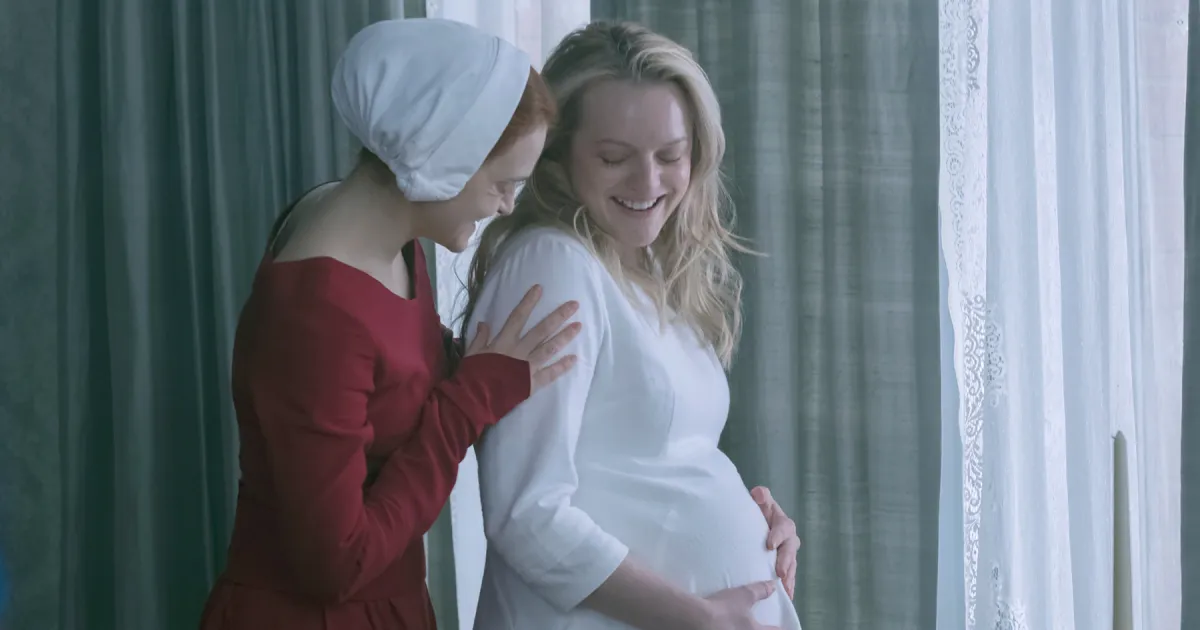
Hey, if you’re a fan of Margaret Atwood’s dystopian worlds—especially The Handmaid’s Tale—you’ve probably been wondering how the sequel, The Testaments, made its way to the screen. This spin-off series went through some significant cast shakeups, which makes sense given the time jump: it’s set 15 years after the original story. Cast changes are common in adaptations, but in this case, they had to age characters, redefine roles for practicality, and keep the essence of Atwood’s world intact. It’s like reshaping a favorite puzzle piece to fit into a new design—exciting, but with fresh challenges.
The original book, The Testaments, hit shelves in 2019 and dives deeper into the tyrannical regime of Gilead, where fertility rates have plummeted, forcing women into roles like “handmaids” to repopulate the land. Atwood picks up the threads left by the first novel, which inspired a hit TV show running from 2017 to 2025. Imagine a world that’s eerily plausible, blending government oppression with religious fervor, and you’ll get a sense of the chilling atmosphere. This sequel doesn’t just continue Offred’s tale; it explores three new perspectives, breathing life into the collapse of such a regime through fresh eyes.
At its heart, The Testaments follows Agnes, a young woman raised in Gilead, and Daisy, a Canadian teenager, as they secretly compile and smuggle out evidence against Gilead’s atrocities. Disguised as “Pearl Girls”—elite brides-to-be—they infiltrate Canada, while Aunt Lydia, that stern enforcer played by Ann Dowd in the original, provides insider intel from within. It’s a story of rebellion and revelation, showing how these women chip away at Gilead’s iron grip. Atwood cleverly weaves in themes of secret societies and forbidden knowledge, making you root for their daring escape plans. You can’t help but feel the tension as they risk everything for truth.
When I first read Atwood’s explanation back in 2019, it hit me hard. She told journalists that The Testaments wasn’t about Offred anymore—her story had a new arc via these characters. “We know from The Handmaid’s Tale that Gilead vanishes,” she said, noting how the regime collapses over time. It’s fascinating how she wanted to dissect that downfall: how do oppressive systems crumble? Through Agnes and Daisy’s actions, and even Lydia’s shaded contributions, the book ponders regime mortality. Atwood’s curiosity about dystopias’ endgame makes the sequel not just a follow-up, but a profound meditation on change and resilience.
Fast-forward to the TV adaptation, which premiered in April 2026, and creator Bruce Miller (who helmed The Handmaid’s Tale) shared how they honored the book while adapting it. “We’re not sticking rigidly to the book’s timeline,” he explained to reporters. “Characters’ ages had to shift for practicality, so we redefined Daisy to fit our modern take.” They expanded on vague book elements—like deepening side plots—turning seeds into full blossoms. Miller emphasized staying true to Atwood’s vision, only deviating with good reason: “Her storytelling works for a reason; we mine that gold.” It’s smart adaptation work, blending fidelity with fresh twists.
As for the cast flips, they reflect those practical adjustments. Take Agnes MacKenzie: Jordana Blake played June’s daughter Hannah (a.k.a. Agnes) as a kid in the original show. In The Testaments, she’s now a teenager, and Chase Infiniti steps in seamlessly. Similarly, Jason Butler Harner originally portrayed Agnes’ dad, Commander MacKenzie, bringing stern authority to the role. Now, it’s Nate Corddry taking over as the family patriarch, bringing contemporary energy. These changes aren’t just swaps—they refresh the characters for the new timeline, keeping fans engaged while aging the story appropriately. If you’ve binge-watched the originals, seeing these shifts is like reuniting with old friends who’ve grown up a bit. Overall, The Testaments promises to be a gripping extension of Gilead’s saga, with strong performances and Atwood’s sharp social commentary at its core.