

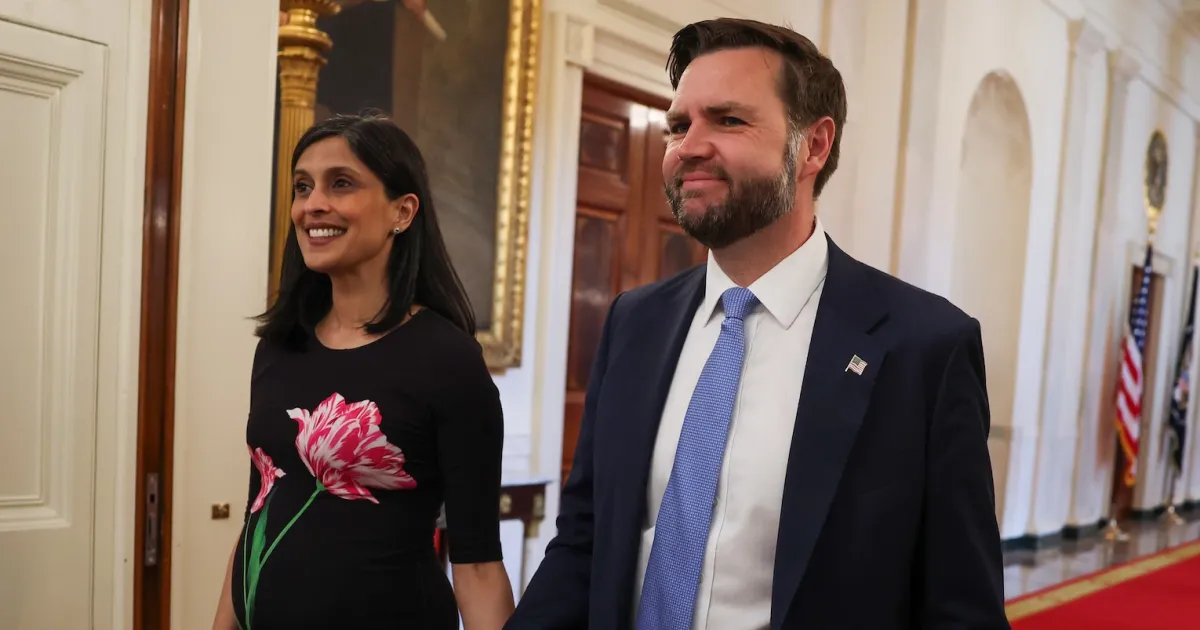
In a remarkably candid, deeply human moment that pulls back the curtain on the private struggles of one of America’s most prominent and polarizing political figures, Second Lady Usha Vance shared a profound revelation about her husband, Vice President JD Vance, and his long, winding path toward personal healing. Speaking with national correspondent Robert Costa on CBS’s Sunday Morning, Usha, a highly accomplished attorney who has quietly observed her husband’s intense inner evolution, reflected on his arduous journey to overcome his past, disclosing that conventional psychological therapy had failed to provide him with the peace he so desperately sought. In an era where modern psychotherapy is widely championed as the undisputed gold standard for processing trauma and emotional distress, Usha offered a refreshing and honest counter-narrative, explaining that the clinical environment of a therapist’s office simply could not penetrate the protective walls her husband had built over a lifetime of survival. “It’s not that therapy doesn’t work for other people,” she clarified, validating the experiences of others while confirming she had once told her husband that while therapy had ultimately failed him, the church had succeeded. According to Usha, JD lacked the specific kind of vulnerability and trust required to surrender to the therapeutic process; he felt fundamentally out of place and uncomfortable digging through his emotions in a sterile, clinical setting. He was a man searching for a blueprint on how to live, how to be a good husband, and how to anchor his identity for the remainder of his life, but he found the modern therapeutic language of self-actualization to be hollow and unyielding. This intimate marital insight highlights an essential, often overlooked truth about human recovery: that healing is a deeply individualized, mysterious endeavor. For some souls, the path to wholeness cannot be paved with secular theories, but instead requires an anchor that is spiritual rather than medical, communal rather than clinical, and ancient rather than contemporary, leading them away from modern expectations and back to the traditional sanctuaries of faith.
To truly understand JD Vance’s resistance to modern therapy and his profound attraction to the structured world of religious faith, one must journey back to the turbulent soils of Middletown, Ohio, where his chaotic upbringing left deep, lasting psychological imprints. Raised in the heart of the Rust Belt, a region plagued by socioeconomic decline and the devastating wave of the opioid epidemic, Vance’s early life was defined by chronic instability, a revolving door of parental figures, and the painful struggle of a mother battling severe substance abuse. As he recounted in his own words during the interview, his youth was characterized by a constant, unsettling movement—bounced between divorced parents who separated when he was a toddler, and occasionally raised by his fiercely protective maternal grandparents. In an environment where the tectonic plates of his domestic life were constantly shifting, survival meant maintaining a state of hyper-vigilance, an emotional posture that makes the vulnerability of conventional therapy feel incredibly dangerous and counterintuitive. For a child who grew up amidst household chaos, chaos becomes a baseline, and the quiet, unstructured space of a therapist’s office can feel less like a sanctuary and more like another unpredictable trap. This systemic, childhood disruption left Vance with a profound hunger for something permanent, a desperate craving for a foundational truth that was “rooted” and “grounded” in something far larger than his immediate, fragile circumstances. He was searching for a structure that could withstand the storms of human frailty, a set of unchanging rules and a historical lineage that could offer him the safety and predictability that his biological family had failed to provide. His eventual turn toward religion was not a sudden intellectual pivot, but rather the culmination of a lifelong, exhausting search for an emotional anchor—a rescue mission for a boy from Ohio who desperately needed to believe that there was an enduring, stable order to a world that had always seemed completely broken.
This relentless, lifelong search for spiritual and emotional grounding finally culminated in 2019 when Vance, at the age of thirty-five, made the momentous and deeply personal decision to convert to Roman Catholicism, finding in the ancient liturgy and rigorous intellectual tradition of the Church the definitive anchor he had spent his entire life seeking. This spiritual homecoming was not a solitary journey; it was navigated alongside his wife, Usha, who, despite having been raised in a devout Hindu household, possessed the profound empathy and clarity to recognize her husband’s unique metaphysical needs. With a spouse’s deep intuition, Usha understood that JD’s complex inner landscape required something far more demanding and structured than modern self-help; his soul needed the historical depth, moral discipline, and deep sacramental nature of Catholicism to finally quiet the residual anxieties of his chaotic childhood. The Catholic faith offered Vance much more than a mere collection of superficial beliefs; it provided him with a comprehensive, cohesive worldview, a rich intellectual lineage stretching back through centuries of saints, theologians, and philosophers, and a rigorous moral framework that demanded deep personal accountability. In the quiet, candle-lit sanctuaries of the Church, enveloped by ancient rituals, the aroma of incense, and the timeless, predictable rhythm of the liturgy, Vance finally discovered the sense of safety and spiritual belonging that had so frustratingly eluded him during his attempts at clinical therapy. This conversion represents a beautiful, deeply human paradox: a young man who emerged from a highly fractured, non-traditional, and deeply unstable Appalachian background ultimately finding his ultimate peace and psychological stability within one of the world’s oldest, most traditional, and highly structured hierarchical institutions. For Vance, the Catholic Church became a spiritual fortress, offering him not only a profound sense of self-understanding and a pathway toward personal redemption, but also an unwavering, unchanging framework upon which he could confidently build a life of purpose, moral responsibility, and lasting peace.
However, the profound spiritual peace that Vance discovered within the sacred walls of the Catholic Church has not exempted him from the messy, complex, and often incredibly harsh realities of modern American politics, where his deeply held religious convictions frequently collide with his high-stakes political alliances. As the Vice President and a primary intellectual architect of the nationalistic “America First” movement, Vance has found himself thrust into a fascinating, highly public theological paradox, occasionally standing at stark, undeniable ideological odds with the supreme earthly leader of his own global faith, Pope Francis. The Catholic Church, under its current leadership, has consistently championed a global moral agenda that focuses heavily on the compassionate treatment of migrants, environmental stewardship, social welfare, and a peaceful, diplomatic approach to international conflicts—stances that frequently clash directly with the hardline border policies, fossil-fuel advocacy, and militaristic foreign policies championed by the Trump administration. When confronted with these glaring discrepancies, particularly regarding controversial topics like immigration reform and global military intervention, Vance has had to perform a highly sophisticated intellectual and political tightrope walk, defending his policies without alienating his fellow Catholics. Instead of allowing this friction to destabilize his newly found spiritual grounding, he has publicly embraced a pragmatic, highly compartmentalized perspective, noting that disagreements between devout laymen and the Vatican on matters of public policy are not only inevitable but entirely normal. By asserting that the Pope’s role is to advocate for pure moral ideals while the state’s role, as led by figures like Donald Trump, is to govern within the messy realities of national security and economic survival, Vance attempts to bridge the chasm between his private faith and his public duty, demonstrating the complex, often agonizing intellectual negotiations required of modern religious politicians who must somehow serve both their heavenly creator and their earthly political movements.
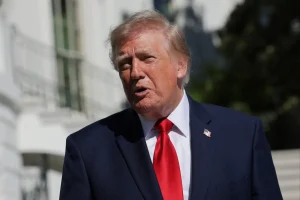
This delicate, high-wire balancing act becomes infinitely more difficult, public, and psychologically fraught when Vance’s own political benefactor, Donald Trump, launches direct, highly personalized, and vitriolic public attacks against the very spiritual authority that Vance looks to for his ultimate emotional and moral grounding. The tempestuous relationship between Trump and the Vatican has long been a source of intense public intrigue, but it reached a particularly hostile and dramatic peak when the former president took to his social media platform, Truth Social, to launch a blistering, unapologetic tirade against Pope Francis, accusing the pontiff of being “weak on crime” and “terrible for foreign policy,” while simultaneously criticizing the Church’s alleged compliance with COVID-19 lockdown measures. For a devout Catholic convert like Vance, who spent decades desperately searching for an unwavering, sacred authority to escape the sheer unpredictability of his early life, witnessing his political leader openly humiliate and condemn the spiritual head of his chosen faith creates an incredibly tense, deeply uncomfortable, and profoundly challenging personal dynamic. To serve as the loyal, primary defender of a political movement led by a figure who publicly disparages the global guardian of one’s soul is to inhabit a space of constant, quiet, and painful cognitive dissonance. This painful friction exposes the raw, highly transactional, and often completely ruthless nature of modern American political coalitions, where deeply cherished personal values must frequently be carefully managed, minimized, or strategically reinterpreted behind closed doors to maintain unity and power. For Vance, navigating this political alliance is not merely a matter of policy alignment, but a supreme, ongoing test of his personal character, spiritual resilience, and intellectual integrity, forcing him to daily walk the razor’s edge of dual loyalty—balancing the volatile, transactional demands of a temporal political empire with the quiet, absolute, and eternal demands of the faith that saved him from the abyss.
Ultimately, the deeply human, highly compelling narrative of JD Vance’s spiritual evolution, his public rejection of standard secular therapy, and his complex, high-stakes navigation of faith amidst intense political warfare offers a fascinating, multi-layered window into the universal human struggle for peace, identity, and belonging in an increasingly fractured world. His journey serves as a powerful, highly relevant reminder that the human soul remains a wild, mysterious, and deeply sovereign entity, often rejecting the neat, clinical solutions prescribed by modern society in favor of older, far more demanding, and deeply communal pathways toward redemption, healing, and absolute truth. In an increasingly secularized global culture that often views traditional religious institutions with deep intellectual skepticism or outright political hostility, Vance’s profound transformation stands as a powerful testament to the enduring, irreplaceable power of ancient faith to mend a deeply broken heart, quiet a hyper-vigilant mind, and provide a rigid, beautiful structure to a life that was once entirely defined by domestic warfare and absolute social chaos. Yet, as he continues to climb the highest, most unforgiving peaks of American political power under the shadow of a deeply volatile president and an increasingly critical, socially conscious Vatican, his life also serves as an endlessly intriguing, highly cautionary case study in the immense challenge of living out those sacred, intensely personal convictions on the ruthless, compromised stage of national governance. Whether kneeling quietly in the candle-lit peace of a Roman Catholic parish or aggressively defending controversial, nationalistic policies on the global stage, Vance remains a deeply complex, thoroughly human figure—a boy from the forgotten, struggling hollows of Ohio who ran through the fires of childhood trauma, turned his back on the sterile, modern solutions of his contemporaries, and continues to desperately seek grace, stability, and an eternal sense of home in a chaotic world that refuses to stand still.