



Prince Albert II of Monaco: Resilient Royal Amid Health Challenges
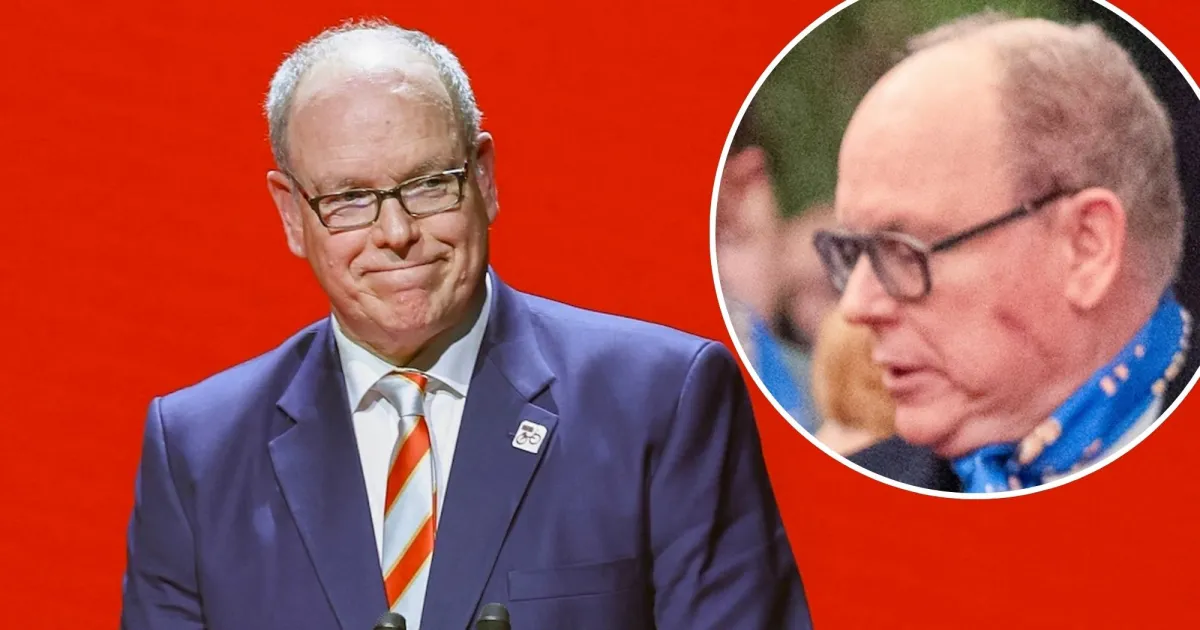
Prince Albert II of Monaco recently appeared in public with a noticeable facial scar, marking his return to royal duties after undergoing a medical procedure. The 67-year-old sovereign attended the opening of the 48th International Circus Festival at the Chapiteau de Fontvieille in Monaco on January 16, accompanied by his nephew Louis Ducruet and niece Camille Gottlieb. Despite the visible scar on his left cheek, the Palace quickly reassured the public that this was merely the result of a routine dermatological procedure to treat a benign condition. “The procedure required a few stitches,” stated the Prince’s Palace of Monaco, emphasizing that “the Sovereign Prince’s schedule of activities continues as normal.” True to this commitment, Prince Albert traveled to Vatican City the very next day to meet with Pope Leo XIV, demonstrating his dedication to maintaining diplomatic relations and his official responsibilities despite personal health matters.
During his significant Vatican visit, Prince Albert engaged in meaningful discussions with both the Pope and Archbishop Paul Richard Gallagher, the Holy See’s Secretary for Relations with States and International Organizations. The Vatican confirmed that their conversations centered around “the good diplomatic relations between the Holy See and the principality of Monaco” and acknowledged “the historic and significant contribution of the Catholic Church to the principality’s social life.” Their dialogue extended to topics of mutual concern, including environmental care, humanitarian assistance, and the defense of human dignity. This meeting highlights Prince Albert’s commitment to strengthening Monaco’s international relationships and addressing global challenges even while recovering from his recent medical procedure, showcasing his resilience and dedication to his role as sovereign.
The Monegasque royal family has faced several health challenges in recent years, with Prince Albert’s wife, Princess Charlene, experiencing perhaps the most serious ordeal. The 47-year-old princess fell gravely ill while visiting South Africa in 2020, suffering from complications related to persistent ear, nose, and throat issues. Her condition necessitated multiple surgeries throughout the spring and early summer of 2021, eventually forcing her to temporarily withdraw from public life as she battled exhaustion. The princess’s extended absence from Monaco prompted widespread concern and speculation about her health and the state of the royal marriage. Fortunately, Princess Charlene recovered sufficiently to resume her public duties in 2022, though her experience highlighted the intense scrutiny royal families face during personal health crises and the balance they must maintain between privacy and public transparency.
Prince Albert himself has not been immune to health challenges, having earned the unfortunate distinction of becoming one of the first members of a royal family to test positive for COVID-19 in March 2020. Despite his diagnosis, the palace issued a statement assuring that the prince was “not worrying at all” about his condition as he received treatment at Princess Grace Hospital. Throughout his convalescence, Prince Albert continued working and used his position to encourage Monaco’s residents to “respect the measures of confinement and to limit contact with others to a minimum.” When his distant relative, then-Prince Charles (now King Charles III), was diagnosed with COVID-19 shortly afterward, speculation arose that the two royals might have infected one another at a recent function. However, Prince Albert clarified to French radio network RTL, “I was at a roundtable for his foundation, but we never shook hands. I was at the other end of the table, way far away… We nodded hello to one another, so I don’t think I can really be accused of contaminating him.”
The mention of King Charles III brings attention to another royal health challenge that has captured global attention. The British monarch has recently been battling an unspecified form of cancer following his diagnosis in early 2024. In a rare and candid television speech about cancer prevention delivered in December 2025, King Charles emphasized the critical importance of early detection, stating that “early diagnosis quite simply saves lives.” He shared positive news about his own health journey, telling viewers, “Today I am able to share with you the good news that thanks to early diagnosis, effective intervention and adherence to ‘doctors’ orders,’ my own schedule of cancer treatment can be reduced in the New Year.” The King’s openness about his condition has been viewed as both personally significant and publicly beneficial, potentially encouraging others to seek timely medical attention for concerning symptoms.
The health challenges faced by Prince Albert, Princess Charlene, and their royal counterparts around the world highlight a fundamental truth: despite their privileged positions, royalty remains vulnerable to the same health concerns that affect millions of ordinary people. Their experiences with illness, recovery, and resilience offer a reminder of our shared humanity beyond titles and crowns. For Prince Albert specifically, his recent facial scar and swift return to duty reflect the modern royal approach to health issues—acknowledging them transparently while demonstrating commitment to public service even during personal difficulty. As Monaco’s sovereign continues his recovery and maintains his royal duties, he joins other contemporary monarchs in navigating the delicate balance between personal health management and public responsibility, all while under the watchful eyes of a global audience that remains fascinated by the human stories behind the royal façades.