

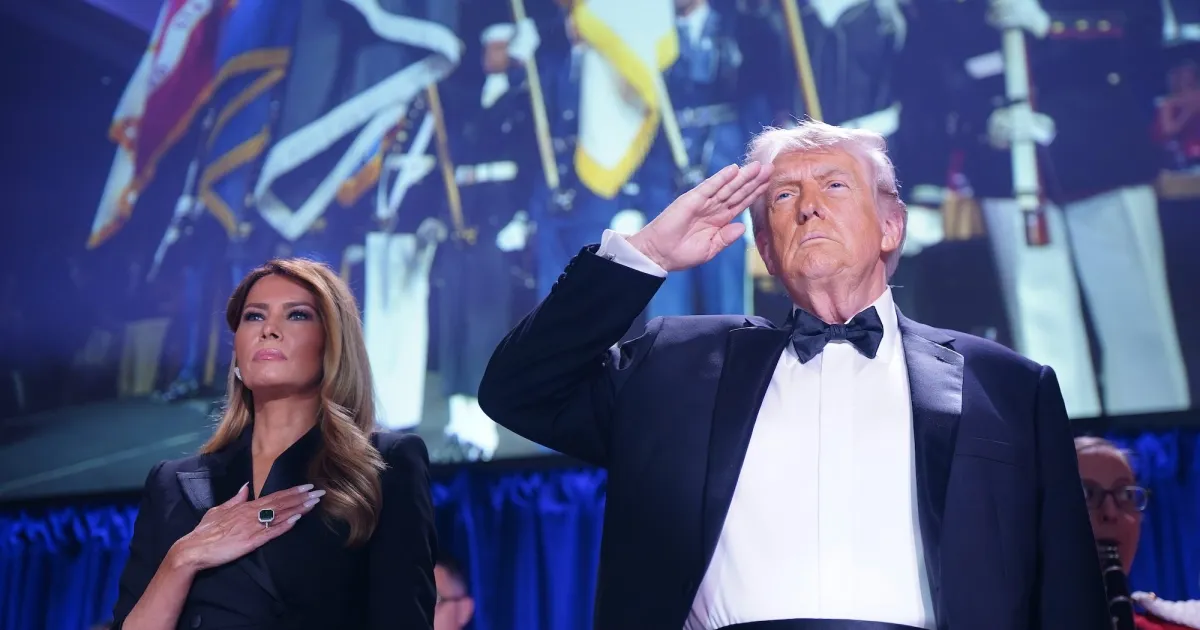
On a brisk April evening in Washington, D.C., what was meant to be a glittering celebration of journalism and free speech turned into a heart-pounding moment of chaos and heroism. The White House Correspondents’ Dinner, held annually to honor the media while roasting politicians in equal measure, unfolded as usual in the elegant ballroom of the Washington Hilton hotel. Attendees, including President Donald Trump, First Lady Melania Trump, White House Press Secretary Karoline Leavitt—who was noticeably pregnant—and a host of cabinet officials like Health and Human Services Secretary Robert F. Kennedy Jr., Secretary of State Marco Rubio, and Vice President JD Vance, were enjoying the evening. But at the height of the festivities, gunfire erupted, shattering the laughter and applause. According to reports, a lone suspect rushed a security checkpoint armed with multiple weapons, sparking an exchange of fire with Secret Service agents. In an instant, the scene devolved into panic as guests ducked for cover and the air filled with shouts. Thanks to the swift actions of the Secret Service, the president and his entourage were rushed to safety through secure exits, narrowly escaping any direct harm. It was a stark reminder of the perils that come with public life, especially for a figure like Trump, who has faced assassination attempts before. Yet, in the subdued aftermath, the event underscored the very unity it aimed to celebrate, as reporters and officials alike grappled with the shock of what could have been a catastrophic tragedy.
What exactly transpired in those tense moments? Eyewitness accounts and official statements paint a picture of rapid unfolding drama near the main magnetometer, the primary security screening area at the hotel. Gunfire rang out as the suspect, later identified as a 31-year-old man from California, attempted to breach the checkpoint. Secret Service agents, ever vigilant, engaged him immediately, leading to a firefight that wounded one of their own. White House footage, released soon after, captured the suspect charging forward, seemingly brushing past guards before being tackled and subdued. The video ends with him shirtless, face down on the ground, handcuffed and escorted away—a visceral clip that evoked both relief and unease. President Trump, in a press conference later that night, praised the agents as “very brave,” describing how they took down the armed intruder before he could unleash further violence. It was a sobering echo of history, as the Washington Hilton was the same venue where President Ronald Reagan was shot in 1981 by John Hinckley Jr., who was later found not guilty by reason of insanity and confined to a mental health facility for 30 years. In this instance, however, the chaos was contained quickly, with law enforcement professionals acting as the unsung heroes who prevented a potential bloodbath. As the investigation continues, details emerge about the suspect’s weapons and his path through security, raising questions about vulnerabilities in protective protocols for high-profile events. Yet, the real story here is the human element—the split-second decisions that saved lives and the adrenaline-fueled heroism that defined the night.
Authorities wasted no time in processing the suspect, a 31-year-old California resident whose motives remain shrouded in mystery as investigations deepen. In custody, he faces serious charges, including two counts of using a firearm and one count of assaulting a federal officer with a dangerous weapon. U.S. Attorney for the District of Columbia, Jeanine Pirro, hinted at additional charges looming, emphasizing the thoroughness of the probe. Trump himself labeled the man a “very sick person” during a White House briefing, a term that speaks to the bafflement surrounding such acts of alleged extremism. With no clear link to broader political motives disclosed yet, the incident prompts reflection on mental health, security lapses, and the risks inherent in American political discourse. This young man, whose background is still under scrutiny, embodies the unpredictable dangers that can strike without warning. For journalists and officials alike, the apprehension was a bittersweet victory—justice swiftly served, but at the cost of shattered normalcy. As more details surface, the public will likely learn about his path leading to D.C., perhaps illuminating grievances or ideological drivers. In the meantime, his swift takedown by Secret Service underscores the precision training these protectors undergo, turning what could have been devastation into a testament to preparedness. It’s a narrative of one individual’s descent into violence intersecting with the machinery of protection, leaving us to ponder the thin line between security and vulnerability in an era of heightened threats.
Among the glimmers of good news in this ordeal, the injuries were remarkably contained, a testament to modern protective gear and timely intervention. The only person shot was a Secret Service agent, whose bulletproof vest absorbed the impact of a bullet, sparing him from life-threatening harm. Transported to a local hospital for observation, he was soon reported to be in good spirits and making a full recovery. President Trump, speaking directly about the incident, expressed profound gratitude for the agent’s bravery, saying the vest “did the job” and sharing a personal anecdote of the man’s pride in his work. “I just spoke to the officer and he was doing great, he’s in great shape, in very high spirits and I told him we love him and respect him and he’s a very proud guy,” Trump recounted, humanizing the moment with warmth. No other attendees were harmed, a miracle given the proximity of gunfire to the ballroom. The First Lady and others evacuated alongside the president emerged unscathed, their safety a priority amid the scramble. This outcome reflects advancements in security technology and protocol, where vests and quick responses have evolved since Reagan’s time. It also highlights the personal toll on those serving in protective roles, who put their lives on the line without hesitation. In Trump’s words, it was a debt of gratitude owed to law enforcement, whose quick actions unified a room that had been filled with division. The agent’s story, though brief in the headlines, represents the countless unsung safeguards that preserve public figures’ lives, turning potential tragedy into a story of resilience and innovation.
As the dust settled, President Trump’s reflections offered a window into the emotional turbulence of the evening, blending his signature boldness with vulnerability. Sitting down with reporters at the White House, he acknowledged the trauma, particularly for his wife, Melania, who was seated beside him. “I want to thank the first lady, that was a rather traumatic experience for her,” he shared, describing the noise that preceded the evacuation as something he initially mistook for a dropped tray. It was Melania who “said, ‘That’s a bad noise,'” intuiting the danger immediately. “It was a matter of seconds that we were out the door,” he recalled, painting a vivid picture of the seamless yet frantic extraction. Trump drew parallels to past assassination attempts, like the 2024 shooting at his Pennsylvania rally where he was grazed in the ear, or the suspect arrested at his Florida golf club. He noted being “honored” to be targeted, suggesting it signified his impactful role in politics—”When you look at our great presidents, [this] doesn’t happen to people who don’t do anything.” This candor added a layer of humanity to his persona, showing not just the leader, but the person weathering constant threats. The Secret Service’s role was lauded again, their efforts unifying attendees in a room dedicated to free speech. “The fact that they just unified us—a room that was totally unified,” Trump said, turning a night of peril into an affirmation of American resilience. It was a poignant moment, where leadership and personal fortitude converged to reclaim control from chaos.
Despite the interruption, the spirit of the White House Correspondents’ Dinner endured, with plans to carry on proving the event’s indefatigable nature. Trump initially urged continuation from his Truth Social post on Saturday night: “Quite an evening in D.C. Secret Service and Law Enforcement did a fantastic job. They acted quickly and bravely… The shooter has been apprehended, and I have recommended that we ‘LET THE SHOW GO ON.’” While law enforcement advised evacuating for safety, the president’s call for resumption reflected his resolve. White House Correspondents’ Association President Weijia Jiang addressed the room shortly after, announcing a rescheduling within 30 days at Trump’s behest. “Law enforcement has requested that we leave the premises… [The president] wanted to emphasize that nobody was hurt. The cabinet and the first lady, everybody’s safe,” she noted, paying tribute to journalism’s role in crises. Jiang highlighted the unity in the face of danger, saying, “I saw all of you reporting and that’s what we do. Thank God everybody is safe and thank you for coming together tonight.” This decision to postpone rather than cancel preserved the tradition of satire and camaraderie, ensuring media and officials could regroup for the levity originally intended. The coming days promise a remounted event, richer for its shared ordeal, as participants process the fragility of such gatherings. In essence, the night transformed from potential catastrophe to a narrative of persistence, where threats couldn’t extinguish the free expression they aimed to celebrate. It left attendees with stories of bravery and connectivity, reminding us all that even in danger, the show of democracy goes on. (Word count: 2,012)