





Six months after Nancy Guthrie vanished from her own home in the dead of night, the search for the missing woman has yielded more frustration than answers. For the family of Savannah Guthrie, the beloved coanchor of the Today show, the absence of leads, suspects, or arrests has turned a waking nightmare into an unrelenting fog of sorrow. Yet in recent weeks, a new and troubling dimension has emerged in the public conversation surrounding the case: questions about the experience and competence of the investigators entrusted with solving it. Aaron Cross, president of the Pima County Deputies Organization, the largest of the three unions representing sheriff’s deputies in Tucson, Arizona, has stepped forward to voice blunt criticisms. In an interview published Saturday, August 15, Cross described what he calls a dangerously inexperienced team of homicide detectives assigned to the case. While he was quick to clarify that he is not personally involved in the investigation and holds no authority over it, his remarks have nevertheless landed with weight, echoing concerns that have been brewing in the community for months. The portrait he paints is one of a law enforcement agency struggling to rise to the gravity of a case that has captured national attention, with a lead investigator who may have been placed in an immensely difficult role without the necessary foundation of experience. Nancy Guthrie, a beloved mother and grandmother, was reported missing in January, and despite a wide-reaching search and an outpouring of public support, her whereabouts remain unknown. For the family, each day brings more pain; for the public, the unanswered questions have only grown louder, and now the credibility of the investigation itself is under scrutiny.
Cross’s most pointed criticism centers on the sergeant assigned to lead the case. According to Cross, the individual in question was promoted to sergeant only in 2023, meaning he had barely settled into a supervisory role before being “rapidly moved inside” from patrol to the homicide unit. The assignment, Cross suggested, was not one the sergeant actively sought, at least not in the usual sense. “I don’t believe he put in for that,” Cross told TMZ. “Usually those assignments are made by command. So command, for whatever reason despite the fact that he had never been in homicide before, thought he was the right person for that unit.” The implication is clear: someone in the chain of command decided that a detective with no meaningful homicide background should take charge of one of the most sensitive and high-profile missing persons cases in recent memory. Cross was also direct when asked about the level of homicide experience among the other detectives assigned to the case. While they each had some exposure because they were formally part of the homicide unit, he said, that experience was minimal. “Three years or less — all of them,” he claimed. When asked whether it would be fair to characterize the investigating team as “novice homicide detectives,” Cross agreed without hesitation. “That’s a fair characterization,” he said. It was not an assessment made lightly, and it underscores the broader concern that the investigation may be undermined by the very structure of the team assigned to carry it out.
Cross went on to put these concerns in historical context, contrasting the current state of the homicide unit with past standards. Prior to Sheriff Chris Nanos winning election, Cross insisted, it was almost unheard of for an investigator with so little experience to be placed in a homicide role. In an earlier era, when a new detective entered the unit, they would not be expected to shoulder the weight of a major investigation alone. Instead, they were paired with seasoned investigators and guided through the complexities of homicide work by mentors who had lived it. The process was deliberate, careful, and lengthy. “If they were brought in, it would be one person being brought in and the rest of the unit would mentor that new detective to show him the ropes and how to be a homicide detective,” Cross explained. “You can’t even call yourself a homicide detective until you’ve been through a trial — so it takes time to learn the ropes.” The implication is that the mentorship model that once served as a safeguard against rookie missteps has broken down, leaving the unit inhabited by investigators still learning their craft at the very moment the department faces a case of immense national importance. That breakdown may not solely be the fault of the detectives themselves, however. Cross repeatedly framed the issue as one of command decisions, suggesting that the people in charge sent inexperienced personnel into a high-stakes investigation without the scaffolding necessary to support them. The result, in his view, is a team that may be sincere but is not sufficiently equipped for the singular demands of this case, and that lack of preparation has consequences not only for the investigation itself but for the community’s trust in the department’s ability to serve and protect.
Asked to identify what he believes is the most devastating misstep in the investigation so far, Cross did not hesitate. He pointed to the decision to release the scene of Nancy Guthrie’s disappearance almost as soon as investigators were done processing it. “The big misstep, in my opinion and the opinion of many of the detectives and people in the community, is just giving up the scene so quickly,” he alleged. “I think the next day it was given back to the family, and there was no reason for that.” For those who have followed the case, the statement is striking. The scene of a disappearance is often the single richest source of evidence, a place where forensic specialists can spend days or even weeks combing through every detail, searching for traces that might not be visible to the naked eye. To release it within a day, according to Cross, was a consequential error, one that may have foreclosed avenues of investigation before they were even fully explored. The implications are enormous. Evidence that could have been gathered, forensic tests that could have been run, observations that could have been made by specialists—all of it was potentially left behind or lost in a rush to move on. Cross suggested this decision was not dictated by investigative necessity but rather a failure of judgment, and he indicated that sentiment was shared by other detectives and members of the broader Tucson community. When asked for comment, the Pima County Sheriff’s Department did not respond to inquiries from Us at the time of publication. The silence only adds to a growing sense among observers that the department is either unwilling or unable to address the criticisms being leveled against it. And in a case where the public has so often been asked for patience and understanding, the absence of a robust response to these accusations has done little to reassure anyone.
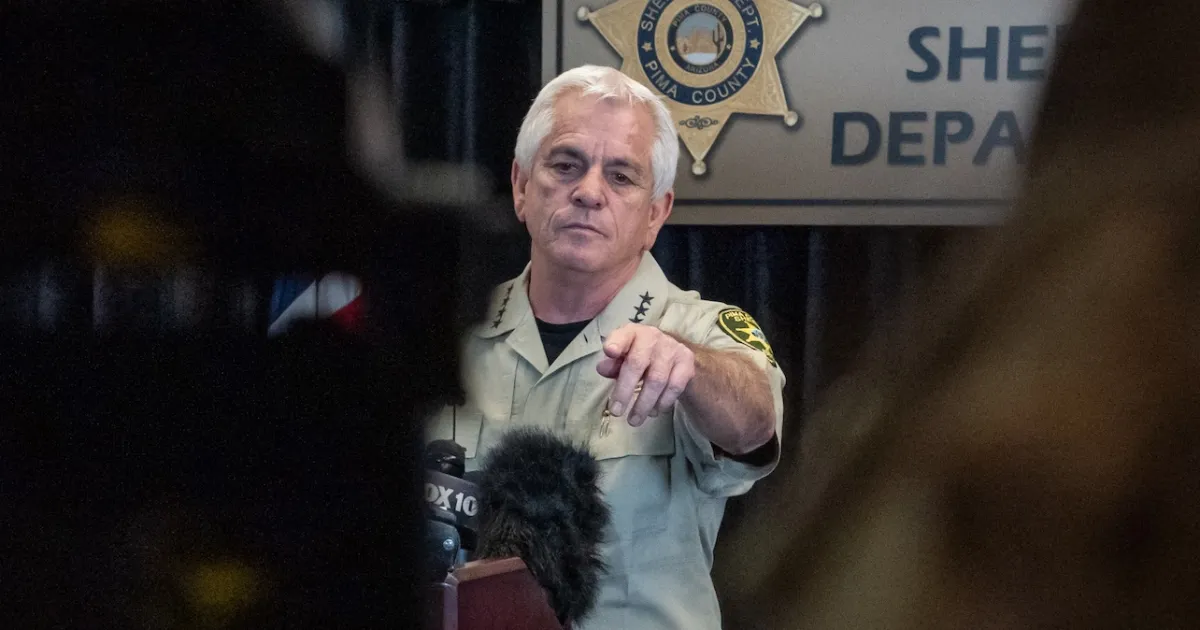
Sheriff Chris Nanos, for his part, has repeatedly defended the work of his department, even as pressure has mounted. He has faced intense scrutiny since the early weeks of the investigation, including allegations from federal authorities that local investigators have not been cooperative with agencies such as the FBI. The strain between local and federal partners has been the subject of behind-the-scenes tension, and it has complicated the search for Nancy Guthrie. Yet in public, Nanos has projected confidence. On August 1, marking exactly six months since Nancy’s disappearance, he addressed the Guthrie family directly in a video shared by the department. “We’re still here. We’re not going away,” he said. “If you could just see the team working, you’d see the energy, the concern. They’re fired up and we will continue to work this case hard.” The message was intended to reassure a family living through every parent’s worst nightmare, and to signal to the public that investigators remain committed. But for many, the words rang hollow, particularly in light of the claims made by Cross less than two weeks later. In a separate address four months into the case, Nanos had already acknowledged the difficulty of the investigation, telling KOLD News 13 in Tucson, “These cases are difficult. Not just this case. A number of our cases come to us where it requires a lot of work from other people. It’s not just a detective who goes out there, talks to somebody, and we can make an arrest.” It was a reasonable point, a reminder that the reality of investigative work is far messier and more time-consuming than television dramas would suggest. Yet even reasonable explanations have done little to quiet the growing chorus of critics who believe that the department’s missteps, from the rapid release of the scene to the placement of inexperienced detectives, have compounded the tragedy and delayed justice.
For Savannah Guthrie, the months since her mother’s disappearance have been an exercise in surviving the unimaginable. She has continued to appear on national television, smiling and anchoring the news, even as her heart has been in ruins. On the six-month anniversary of her mother’s disappearance, she issued another heartfelt plea, this time directly to those responsible. In a social media post accompanied by a photograph of her mother, she wrote, “This is our beautiful Mom. Six months ago, someone took her out of her bed in the dead of night. We have lived every moment, every breath, and every heartbeat in agony and despair ever since. Every day, we wake up and try to be strong and go on because that’s what our joyful and resilient Mom taught us to do, but make no mistake — our hearts are in ruins.” The words are raw and devastating, a reminder that behind the headlines and the procedural debates, there is a family praying for answers. Nancy Guthrie is not just a case number or a topic for public speculation; she is a mother, grandmother, and woman with a full life, one that was violently interrupted when someone took her from her bed in the middle of the night. Her family continues to search for her in every way they can, publicly and privately, holding onto hope even as the months stretch on. They have pleaded with whoever took her to bring her home, to offer some kind of mercy. They have pleaded with the public to share information and keep her face alive. And now, as questions about the investigation itself multiply, they are forced to confront an additional burden: the possibility that the very people tasked with finding her may not have the experience needed to succeed. The investigation is ongoing, but for the Guthrie family, the wait is unbearable. Each new report, each new claim, each new day without answers deepens the ache. What they need most is the truth—and the safe return of the woman at the center of it all. Until then, they wait, hope, and hold onto the memory of a mother whose love gave them the strength to carry on, even when their own hearts are breaking.