


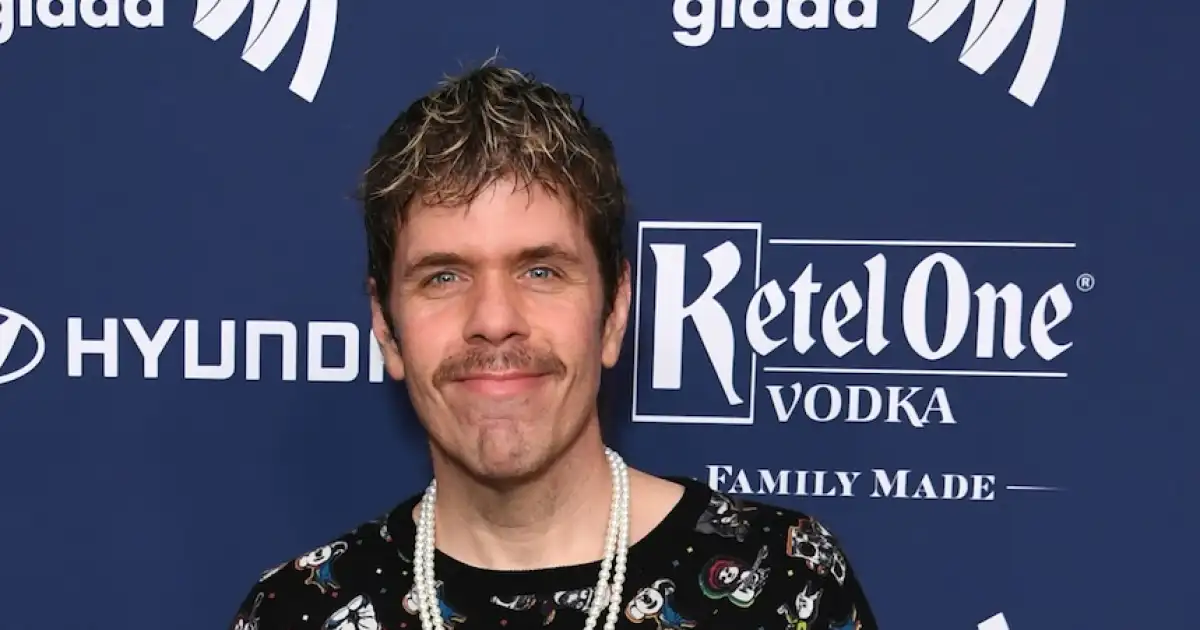
The delicate boundary between the glittering, superficial facade of internet celebrity and the raw, silent agony of an individual’s internal struggle was shattered on a Tuesday that began like any other, but ended in absolute shock for the global online community. Mario Armando Lavandeira Jr., known to millions globally by his professional moniker Perez Hilton, became the center of an agonizing and deeply public mental health crisis that unfolded live on social media. During a broadcast on the video-sharing platform TikTok, the 48-year-old pioneer of modern celebrity journalism appeared in a state of profound, unmistakable distress—naked, visibly bloodied, and actively engaging in acts of self-harm. The graphic and deeply unsettling nature of the stream immediately sent waves of panic and concern across various digital networks, transforming casual viewers, who had logged on expecting typical entertainment, into frantic, real-time lifelines. Witnessing a fellow human being in the throes of an acute psychiatric emergency, concerned netizens bypassed the usual digital detachment that characterizes online interactions, flooding local emergency services with desperate calls for help and initiating a rapid law enforcement response. The horrifying incident served as a stark, visceral reminder of the immense pain that can hide behind a well-known public persona, leaving a digital audience accustomed to his energetic commentary frozen in collective worry as the stream went dark and the reality of a human life in jeopardy took precedence over the transient world of internet gossip. This sudden crisis illustrated the profound vulnerability of creators who live their lives under the unforgiving glare of the public eye, where personal suffering can sometimes escalate to a breaking point before a shocked global audience. It also highlighted the immediate, empathetic reflex of everyday people who, when confronted with the raw reality of another person’s suffering, chose action over apathy, reaching out across the digital void in a collective effort to save a life.
Upon receiving the deluge of frantic reports from distressed viewers across the country, deputies from the Miami-Dade Sheriff’s Office moved with urgent precision to locate the residence of the struggling blogger in Florida. Arriving at the scene, law enforcement officers were met with the harrowing reality of a family in crisis, quickly making contact with relatives present at the home who confirmed that Lavandeira was isolated and alone inside his room. In moments of such acute psychiatric vulnerability, where the risk of self-inflicted harm is critically high, standard policing tactics must yield to highly specialized, empathetic intervention strategies that prioritize the preservation of human life above all else. The Miami-Dade Sheriff’s Office demonstrated this modern, compassionate approach by prioritizing de-escalation over physical confrontation, choosing to establish a careful, non-threatening perimeter that created necessary time, physical distance, and open channels for potential communication. Rather than rushing the premises—a heavy-handed approach that can often exacerbate the panic of an individual experiencing a severe mental health crisis and lead to tragic outcomes—the deputies tactfully disengaged their physical presence while maintaining rigorous, continuous surveillance of the situation. This calculated patience allowed the volatile atmosphere to cool slightly, showcasing a profound understanding of mental health emergencies where the primary objective is always to foster safety through psychological support rather than physical force. By prioritizing de-escalation, the responding deputies sought to de-center authority and instead offer a pathway toward communication, recognizing that a person trapped in the terrifying grip of a psychological breakdown requires patience, gentleness, and professional clinical understanding rather than aggression or swift containment. This tactical delay was a vital, life-saving decision, allowing the storm of the crisis to pass through its most dangerous peak while keeping the individual secure from external escalation.
The tense, highly delicate standoff with personal despair eventually transitioned into a relief-laden resolution late Tuesday evening, as authorities successfully made contact and secured the safety of the internet personality. The Miami-Dade Sheriff’s Office confirmed that the individual was safely recovered without further physical injury and was subsequently transported by Miami-Dade Fire Rescue to a local hospital, where he could receive the immediate, professional clinical care and psychiatric evaluation required to stabilize his condition. Crucially, the law enforcement and emergency response extended far beyond mere physical containment and transportation; the department’s specialized Crisis Response Unit, alongside licensed mental health professionals, remained actively deployed on the scene to wrap their arms around the traumatized family members left in the wake of the incident. This holistic approach recognizes that a mental health crisis is rarely an isolated event involving just one person, but rather a systemic earthquake that deeply impacts the immediate support network and loved ones who witness the trauma. By providing immediate resources, psychological first aid, and structured guidance to those left at the home, the crisis teams ensured that the long and challenging process of healing could begin not just for the patient in the hospital ward, but also for the children and family members who carried the immediate, heavy weight of the evening’s terror. This coordinated effort between emergency medical services, mental health experts, and law enforcement represents a gold standard in crisis response, ensuring that the immediate physical threat is mitigated while simultaneously addressing the profound emotional and psychological aftershocks felt by the entire family unit. The transition from a chaotic, public-facing digital broadcast to the quiet, sterile, and supportive environment of a medical facility marked the critical first step away from the edge of tragedy and toward the structured path of rehabilitation, clinical support, and personal recovery.
As news of the sudden hospitalization spread rapidly across the entertainment industry, the complex machinery of public relations was forced to pivot from professional representation to deep, authentic personal concern, highlighting the stark reality of managing a client who is, above all, a human being in deep pain. Golden Artists Entertainment, represented by co-CEOs Dante Rusciolelli and Rebekah Kochan, released a poignant, measured statement to major media outlets like TMZ and Variety, acknowledging the deeply disturbing content circulating online while admitting their own inability to establish direct contact with Hilton during the height of the crisis. Their words painted a vivid picture of a management team gripped by anxiety, focusing entirely on the health and safety of their client and his young family rather than damage control, reputation management, or career preservation. In an era where public figures are often viewed merely as brands, commodities, or endless content generators, the statement served as an earnest, humanizing plea, urging both the media and the public to suspend speculation, cease the spread of the traumatic footage, and afford the family the quiet, uninterrupted privacy necessary to process such a profound trauma. Simultaneously, TikTok acted swiftly to dismantle the account and scrub the distressing footage from its servers, a vital and necessary step in preventing the perpetuation of trauma for both the victim and the millions of users exposed to the algorithmically distributed crisis. This collective effort to protect Lavandeira’s dignity in his lowest moment underscore the responsibility that media platforms and professional associates share in safeguarding individuals during their most vulnerable times. It serves as a reminder that behind the usernames and public personas are real people who deserve grace, boundaries, and protection when their mental health falters under the weight of existence.
To fully understand the gravity of this moment, one must look past the colorful, often controversial persona of “Perez Hilton” and see the man behind the moniker: Mario Armando Lavandeira Jr. Born and raised in Florida, Lavandeira redefined the landscape of media and celebrity culture in the mid-2000s, pioneering a raw, unfiltered, and highly disruptive style of blogging that paved the way for modern social media stardom and the influencer economy. Yet, behind the bright lights of fame, the relentless scrutiny of the public eye, and the polarizing nature of his early career lies a deeply complex human trajectory marked by intense personal evolution, public reckonings, and the quiet joys of fatherhood. Now 48, Lavandeira’s most defining and cherished role is not that of an internet provocateur or media mogul, but of a devoted single father to his three young children—Mario, aged 13, Mia, aged 11, and Mayte, aged 8. The stark contrast between the loving, supportive domestic life he has worked tirelessly to cultivate for his children and the raw vulnerability displayed during his darkest hour highlights the silent, invisible battles that many individuals wage against mental illness behind closed doors. This painful juxtaposition proves that no level of success, notoriety, wealth, or external achievement can ever truly insulate a person from the profound, crushing weight of psychological suffering. It reminds us that beneath the armor of success, we are all fragile beings susceptible to pain, and that the duty of care we owe to one another as human beings transcends the roles we play on the public stage, calling us to offer empathy to a father who is fighting to heal for himself and for the children who look up to him.
This tragic incident serves as a powerful, public wake-up call regarding the critical intersection of digital media, public visibility, and mental health advocacy in our modern, hyper-connected society. It underscores the vital truth that mental health crises do not discriminate; they affect the famous, the infamous, and the anonymous alike, often exacerbated by the isolating echo chamber of the internet where connection is broad but frequently shallow. As the community collectively wishes Mario Armando Lavandeira Jr. a safe, thorough, and compassionate recovery, his struggle highlights the profound importance of destigmatizing mental illness and ensuring that immediate, life-saving help is always within reach for those in their darkest hours. For anyone currently navigating their own silent storm, feeling overwhelmed by despair, or contemplating self-harm, it is crucial to remember that you do not have to carry this immense burden alone, and reaching out is a profound act of courage. Compassionate, professional assistance is readily available 24/7 through the national Suicide & Crisis Lifeline by calling or texting 988, or visiting 988lifeline.org, offering a vital reminder that even in the deepest darkness, there is always a path back to safety, support, and light. By sharing this story with empathy rather than sensationalism, we can help shift the cultural narrative from judgment to support, reminding everyone that mental health care is a fundamental human right and that recovery is always possible with the right resources. Let us carry this lesson forward, fostering a more compassionate world where people feel safe to drop their masks and ask for help before the weight becomes too heavy to bear, cultivating a society that values human life and emotional well-being above entertainment and digital metrics.