


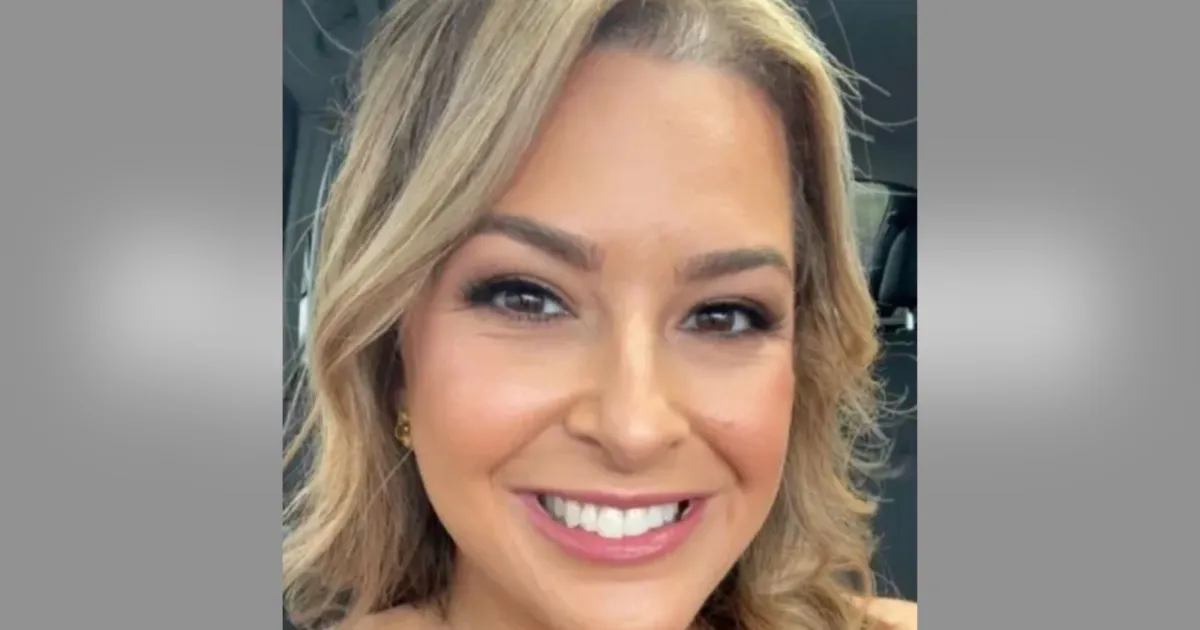
When someone you love shares the devastating news that they have been diagnosed with terminal brain cancer, the world tilts on its axis. Instinctively, the human heart responds with an outpouring of grief, fierce protectiveness, and an immediate desire to help ease the burden in any way possible. For the family, friends, and community members of Vanessa O’Rourke, a 37-year-old Pennsylvania woman, this nightmare became their reality when she revealed she was battling glioblastoma, an aggressive and invariably fatal form of brain cancer. Mobilizing with a sense of urgency born of profound affection, those closest to her offered not just their tears and emotional support, but their hard-earned money to help keep her afloat. Yet, behind this tragic facade lay a cold, calculated betrayal of the highest order. O’Rourke was not dying; instead, investigators allege she was weaponizing her loved ones’ empathy to orchestrate an elaborate and heartless financial scam.
The mechanics of this deeply personal deception unfolded over several months, specifically spanning from October 2015 to July 2016. During this time, O’Rourke painted a grim picture of her deteriorating health, claiming that her survival hinged on securing expensive medical treatments, covering basic living expenses, and traveling abroad to receive highly specialized, experimental care. To facilitate her scheme, she launched a GoFundMe campaign that preyed directly on public goodwill. Moved by her desperate pleas, approximately 140 compassionate individuals—ranging from lifelong friends to distant acquaintances and empathetic strangers—united to raise nearly $12,000. No one questioned the validity of her suffering; indeed, in the face of such a terrifying diagnosis, questioning a loved one’s integrity is simply unthinkable. Every dollar donated represented a sacrifice, a token of hope sent by people who genuinely believed they were helping a vibrant young woman buy a little more precious time on this earth.
The deception reached a cruel pinnacle when O’Rourke announced she would be traveling to Australia to undergo cutting-edge medical trials that were unavailable in the United States. To her supporters, this journey represented a desperate, final grasp at survival, and they watched her departure with bated breath and hopeful prayers. However, federal authorities later revealed a sickening truth: there was no medical clinic, no experimental therapy, and no fight for life. Once O’Rourke touched down in Australia, she allegedly bypassed the medical system entirely, using the hard-won donations of her loved ones to finance a life of personal leisure, vacationing, and everyday indulgences. While those back home in Pennsylvania fretted over her condition and quietly mourned her projected fate, O’Rourke was allegedly basking in the sun, treating the money meant for life-saving oncology care as her personal travel fund.
The house of cards finally collapsed in May 2018, when a federal grand jury in the United States District Court for the Eastern District of Pennsylvania indicted O’Rourke on 15 counts of wire fraud. By the time federal investigators had pieced together the trail of fraudulent medical claims and financial transactions, O’Rourke had vanished into thin air, prompting the issuance of a federal warrant for her arrest. The revelation sent shockwaves through her tight-knit community. The physical and emotional exhaustion of supporting a dying loved one was abruptly replaced by a dizzying sense of violation. For the 140 victims, the loss was not merely financial; it was a deeply traumatizing betrayal that left them questioning their own judgment and the fundamental trustworthiness of those around them. O’Rourke had traded her family’s peace of mind and her friends’ trust for a temporary escape, leaving a trail of broken hearts and empty wallets in her wake.
Law enforcement officials have not minced words regarding the severity and moral depravity of O’Rourke’s alleged actions. In a scathing statement, former U.S. Attorney William McSwain characterized the allegations as nothing short of “nauseating,” pointing out that O’Rourke chose to prey upon the innate kindness of decent people who only wanted to help someone in their darkest hour. He emphasized that there was never any medical emergency—only a calculated web of “lies, greed, and callous manipulation.” Echoing this profound disgust, Michael J. Driscoll, the Special Agent in Charge of the FBI’s Philadelphia Division, labeled the scheme “reprehensible.” Driscoll noted that utilizing a fabricated terminal illness to exploit open hearts and open wallets represents a low point in financial crime, reiterating the FBI’s unwavering commitment to holding O’Rourke accountable for choosing to fund her personal lifestyle through such merciless deceit.
Today, the search for Vanessa O’Rourke continues as a high-priority, active investigation led by the federal government. The FBI has persistently renewed its public appeals, taking to social media platforms and issuing wanted notices to ensure that her face and crimes are not forgotten by the public. Beyond the immediate justice sought for her 140 victims, authorities emphasize that charity schemes like O’Rourke’s inflict a broader, insidious damage on society by sowing seeds of doubt that make people hesitant to donate to genuine, life-saving causes in the future. As O’Rourke remains a fugitive, potentially living under a false identity or continuing her deceptive patterns elsewhere, the FBI urges anyone with information regarding her whereabouts to contact their local FBI field office, the nearest American embassy, or a foreign consulate. The hope is that through public vigilance, this long-standing manhunt will finally draw to a close, delivering a long-overdue sense of closure and justice to the community she so cruelly exploited.