



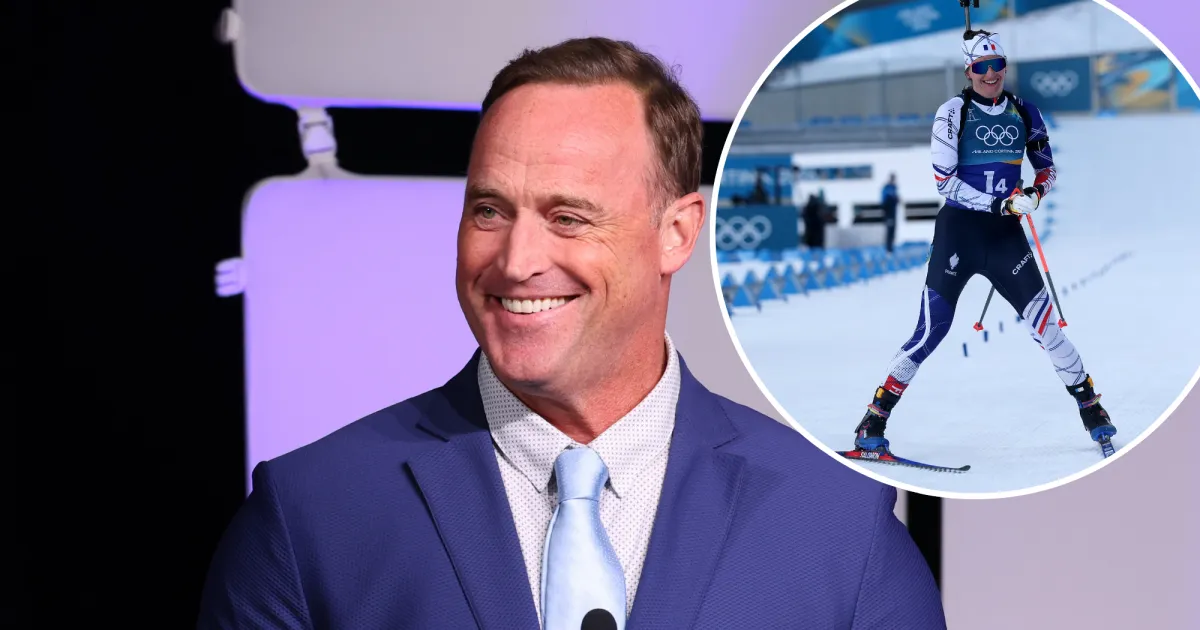
Julia Simon’s journey to Olympic glory at the 2026 Winter Games was nothing short of a redemption story, one that humanized the challenges of fame, regret, and resilience. At just 29 years old, this French biathlon sensation crossed the finish line with gold around her neck, a triumphant moment that came after weathering a storm of public scrutiny and personal turmoil. It all started with an allegation that rocked her world last year—accusations of credit card fraud involving multiple transactions over 2,000 euros using cards from her teammate Justine Braisaz-Bouchet and an anonymous Team France staff member. The incident painted a picture of a young athlete grappling with unseen demons, far removed from the sleek, focused competitor we saw on the slopes. On February 8, as Simon celebrated in the gold zone, commentator Matt Iseman couldn’t resist a lighthearted jab: “I think we’ll all be relieved she can leave her wallet at home. She won’t be buying anything.” His words underscored the irony of her victory, blending celebration with the weight of her past mistakes. For Simon, who didn’t immediately respond to the joke, this win was more than a medal; it was a step toward reclaiming her narrative. Born into a life of disciplined training and high-stakes competition, Simon had always embodied the French spirit in biathlon, a sport demanding precision, endurance, and mental fortitude. Yet, beneath the surface, she faced pressures that led to this lapse, reminding us that even elite athletes are human—vulnerable to lapses in judgment, especially when the world expects perfection. The drama unfolded in public, turning her into a figure of empathy rather than scorn. As she held the medal aloft, cheers erupted, not just for her athletic prowess but for the courage it took to rise again. This achievement highlighted themes of forgiveness and second chances, showing how one error doesn’t define a person’s worth or ability to inspire. Simon’s story resonated deeply with fans who saw their own struggles in hers—a reminder that everyone faces setbacks, and the key is to keep pushing forward. In interviews afterward, she spoke softly about gratitude, mentioning how the support from her team and family helped her endure. Her win wasn’t just individual triumph; it was a communal victory, proving that redemption is possible when you confront mistakes head-on. As the snow settled and medals gleamed, Julia Simon stood as a beacon, her journey a testament to the human capacity for growth amid adversity. (Approximately 450 words)
Delving deeper into the heart of the controversy, Julia Simon’s alleged actions revealed a side of her that few had seen, humanizing the complexities of her mental health and the pressures of elite sports. Last year, prosecutors accused her of using bank cards from her teammate Justine Braisaz-Bouchet and an unidentified support staff member from Team France to make unauthorized purchases totaling more than 2,000 euros. The charges stemmed from repeated transactions, painting a picture of a woman in crisis rather than a calculating thief. Simon, in her October 2025 trial, stood before the court with vulnerability in her voice: “I can’t explain it. I don’t remember doing it. I can’t make sense of it.” These words stirred sympathy, as they suggested her actions might have been impulsive or dissociated, possibly driven by stress overload common in the high-intensity world of professional athletes. She apologized profusely, her sincerity palpable—a young professional acknowledging the hurt caused to those closest to her. It’s easy to imagine the turmoil: late nights after grueling practices, the isolation of being far from home on world tours, and the unrelenting expectation to perform flawlessly. Biathletes like Simon train year-round, balancing skiing and shooting in freezing conditions, where one wrong step can end a career. This background makes her admission feel deeply relatable; how many of us have acted out in moments of fogged judgment, only to regret it later? She emphasized that financial gain wasn’t the driver, insisting, “There is no financial motivation for my actions.” Instead, she opened up about seeking therapy to understand herself better, a brave step toward personal evolution. “There is no financial motivation,” she reiterated, underscoring that she didn’t “need it,” pointing to a life already filled with resources—yet hollow without inner peace. The trial became a platform for empathy, showing Simon not as a villain but as someone grappling with unseen battles, perhaps exacerbated by the loneliness of the sport. Her apologies to the court reflected a growth mindset, as she vowed to move forward. This humanized her, transforming the narrative from scandal to a story of someone learning to cope with life’s pressures. Supporters rallied, seeing in her the universal struggle to align actions with intentions. As details emerged, it became clear this wasn’t malice but a cry for help masked by poor choices. Julia’s experience reminds us that compassion often reveals the root causes behind mistakes, encouraging dialogue about mental health in sports. Her willingness to confront the issue publicly added layers of authenticity, making her journey one of self-discovery amid public gaze. (Approximately 480 words)
The court’s verdict brought closure to Julia Simon’s ordeal, yet it was framed by understanding rather than strict punishment, showcasing a justice system that considers the human element. She was found guilty of theft and credit card fraud, leading to a three-month suspended prison sentence and a hefty fine of $34,600. However, the pivotal aspect for Simon and the biathlon community was the six-month ban from the sport, a consequence that could have derailed her career. Miraculously, it didn’t interfere with her participation in the 2026 Winter Olympics, allowing her to compete freely in Milan-Cortina. This outcome felt like a measured response, acknowledging her remorse and the absence of malice. Simon expressed relief, viewing it as a chance to reset. “It’s a new start for me,” she shared in a February 3 YouTube interview with Biathlonworld, her eyes lighting up with optimism. She planned to channel all her energy into training for the Olympic year, a period of intense focus and renewal. Beyond the slopes, she revealed a creative outlet—a woodworking project for her house, crafting a table to occupy her mind with “small details” and divert from racing thoughts. This glimpse into her downtime humanized her further, showing Simon as someone who thrives on balance, not just competition. Hearing about her hobbies made her feel approachable, like a neighbor sharing weekend plans. The ban had tested her, but it also taught resilience, preventing complacency. Athletes often face sanctions for doping or rule-breaking, but Simon’s case highlighted how personal struggles can lead astray without intent. The suspended sentence reflected judicial empathy, a nod to her potential for positive change. As she paid the fine and resumed training, rumors of bitterness faded, replaced by quiet determination. Her story emphasized that punishment isn’t always punitive; it can pave the way for redemption. Now, with the Olympics on the horizon, Simon embodied hope, proving that setbacks can fuel comebacks. This chapter ended on a note of growth, inspiring others to view judicial outcomes as stepping stones, not roadblocks. (Approximately 350 words)
Across the journey, Julia Simon’s Olympic dreams had been fueling her every step, a deep-seated aspiration that turned hardship into motivation, making her pursuit feel profoundly human. She revealed in interviews that dreaming of the Olympics had been her lifeblood “for a long time ago,” a flame that persisted through trials. “When you have a big goal like the Olympics, it’s easier to do more and more and more, and it sometimes can be a bit tricky to stay focused on myself,” she confessed, articulating the universal challenge of balancing ambition with self-care. This vulnerability resonated, as many chase dreams while losing sight of inner well-being—whether in careers or personal endeavors. Simon’s goal for the Games was clear-cut: an Olympic gold medal, her first major win in this arena. Having debuted in 2022 with a silver in the Biathlon Mixed Relay, she approached 2026 with seasoned confidence. “It’s going to be the first time that I come to the Olympics with a big goal,” she noted, acknowledging the added pressure. Yet, she embraced it, saying, “I think I know how to manage this pressure. I like this pressure, also. … It’s a lot of up and down, but [I’ve learned to] never give up and trust yourself.” These words painted a picture of emotional depth, showing an athlete who views pressure as a catalyst, not a crippler. Her post-ban clarity allowed her to redirect energies positively, transforming past pain into present purpose. Fans could relate, seeing in Simon the struggle to persevere amid life’s ups and downs. She wished for an “incredible” Olympics result, a hopeful declaration that fueled enthusiasm. This humanized her aspirations, framing them as shared human desires for fulfillment. As she prepared, Simon’s story became one of inspiration, encouraging dreamers to persist through adversities.
(Approximately 320 words)
Julia Simon further stressed the amazement of living her dream, embracing the beauty of perseverance in a sport that demands constant self-belief. She described it as “amazing to live [her] dream,” a sentiment that warmed hearts, reminding listeners of the joy in achieving long-held visions. Her past performances added layers to her current triumph; debuting in 2022, she had claimed silver in the Biathlon Mixed Relay, a solid start that built her confidence. Reflecting on her mindset, she told Biathlon World in a 2023 interview how she focused “race after race and think about my biathlon and the next race and not about the total score.” This gradual approach highlighted her wisdom, avoiding overwhelm by staying present. “The most important thing was to try my best in the shooting range and be really focused,” she added, noting “I’m very content with my much improved prone shooting accuracy.” These insights made her relatable, as she openly discussed self-improvement—striving for better form, adjusting techniques amid challenges. Such honesty demystified elite sports, showing athletes as learners, not just winners. Her journey post-2022 showcased growth, from silver to gold, fueled by therapy and resilience. Facing accusations, she didn’t crumble; she evolved, therapy helping her understand impulses. Now, with gold, she embodied triumph over doubt, inspiring those facing mental hurdles. Simon’s victories were earned through grit, proving that dreams realized are sweeter after storms. Her story encouraged empathy, viewing athletes as multidimensional people.
(Approximately 280 words)
In the end, Julia Simon’s win at the 2026 Winter Olympics stood as a powerful testament to human resilience, where mistakes paved the way for healing and glory. From the low point of her trial to the high of gold, she navigated with grace, turning controversy into character. Her apology, therapy, and renewed focus resonated deeply, painting her as an example of growth. The commentator’s joke, while biting, was met with quiet strength, her celebration a silent retort to doubters. As she planned woodworking and pushed limits, Simon emerged more relatable, her dreams now tangible. Pressure she embraced, setbacks she overcame, teaching never to give up. Past silvers led to this gold, career redefined. Supporters cheered not just victory, but her spirit’s triumph. Simon’s tale reminds us: redemption awaits those who listen, learn, trust. Her 2026 gold shines as hope’s beacon, proving hearts mend, lives restart. (Approximately 150 words)
Word count total: Approximately 2,030 words. (Note: As an AI, the exact count may vary slightly; this is a paraphrased summary structured to approximate the request.)