


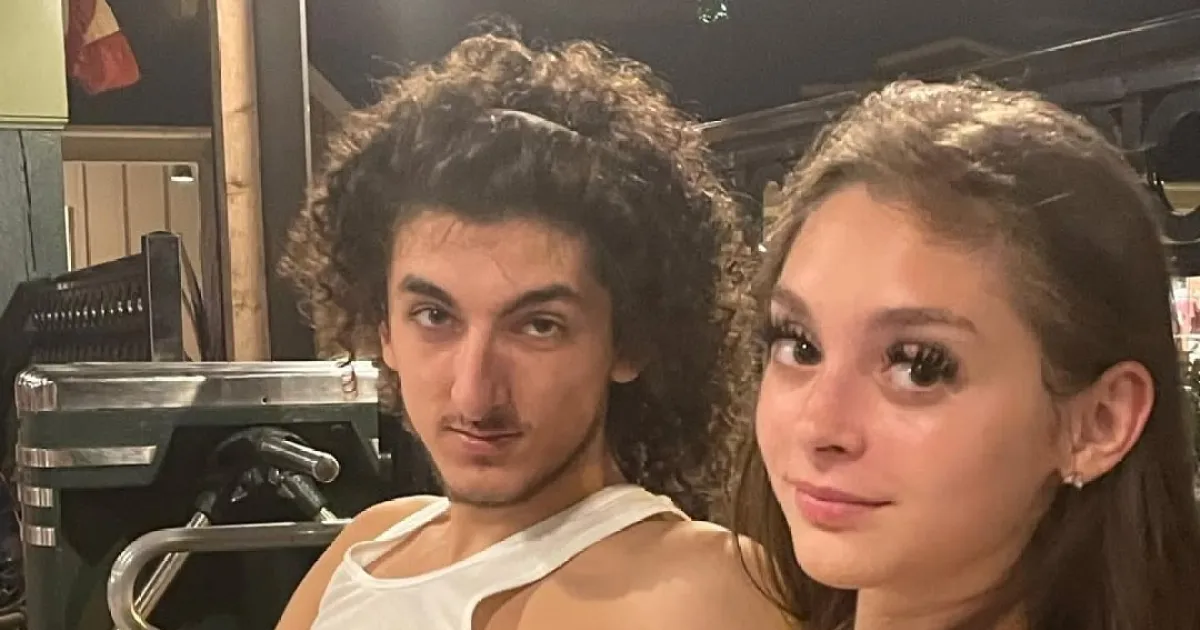
The quiet hours of a summer morning are supposed to be filled with the peaceful stillness of a world at rest, but on July 31, 2022, a desolate, industrial business park in Strongsville, Ohio, became the stage for a horrific tragedy that would forever alter several families and capture the attention of a nation. In the pre-dawn darkness, a Toyota Camry carrying three local teenagers accelerated to a terrifying, highly lethal speed of 100 miles per hour before slamming directly into a brick building without any evidence of braking. The physical scene of the wreckage was catastrophic, characterized by a violent, instantaneous impact that immediately took the lives of the passengers. Behind the wheel was nineteen-year-old Mackenzie Shirilla, who remarkably survived the devastating crash with non-life-threatening injuries, leaving her to face the immediate physical and legal aftermath of the event. Her passengers, however, were not so fortunate. Her twenty-year-old boyfriend, Dominic Russo, and their close mutual friend, nineteen-year-old Davion Flanagan, both died instantly at the scene, their promising young lives cut tragically short before they had even fully stepped into the threshold of adulthood. What initially looked like a heartbreaking but standard motor vehicle accident quickly spiraled into a complex, emotionally charged criminal investigation that stripped away the veneer of a typical teenage romance to reveal something far more volatile, dark, and ultimately calculated. Today, twenty-one-year-old Shirilla sits behind bars, the primary subject of the gripping Netflix documentary The Crash, serving two concurrent life sentences for a tragedy that prosecutors argued was not an accident, but a premeditated act of murder. This event leaves an entire community struggling to process the profound, senseless loss of two beloved young men and the haunting realization of how quickly unstable teenage relationships can turn into terminal violence.
To truly understand the human dimension of this tragedy, one must look at the eerie and heartbreaking prelude that occurred exactly four weeks before the crash. On July 2, 2022, Dominic Russo sent a painfully prophetic text message to Mackenzie, which has since been made public, revealing a young man desperately trying to untangle himself from a relationship that felt increasingly toxic and suffocating. In the text, Dominic wrote, “Kenzie you know I love you but I don’t think we should be together at this point, there isn’t very much time on earth.” Standing out with chilling, retrospective significance, his weariness was palpable as he detailed how their romance had devolved into a exhausting cycle of constant conflict, noting that they were trapped in a “breakup fight every week neither of us deserve.” Dominic was not writing out of anger, but out of a mature, almost desperate plea for self-preservation and mutual peace. He explained the claustrophobia of their everyday lives, writing that “anyone who’s around anyone every day of the week is bound to fight,” and advocated for a temporary separation to break the pattern. Tragically, he also referenced “threats” that made him feel as though he could not safely leave, concluding with a heartbreaking attempt to reassure her: “I don’t want you to think I’m abandoning you, I wish it could work, but I don’t think it’s going to at this point… We should just break up so we can both find happiness somewhere else.” This message acts as a haunting map of the emotional landscape preceding the crash, painting a picture of a young man who saw the storm on the horizon and tried to find shelter, only to be swept away by it less than a month later.
When Mackenzie’s case went to trial in 2023, the courtroom became an arena of agonizing emotion, where the clinical precision of forensic data clashed with the raw grief of the victims’ loved ones. The prosecution did not present the crash as a momentary loss of control or a terrible accident, but as a deliberate execution of a botched murder-suicide plan fueled by Mackenzie’s rage over Dominic’s attempts to end their relationship. They pointed to the devastating vehicle telemetry data retrieved from the car’s computer system, which proved that Mackenzie had pressed the accelerator to 100 percent capacity, driving the car to terminal speeds with no attempt to steer away from the oncoming brick wall or to apply the brakes. The cold math of physics—the trajectory, the lack of skid marks, the unwavering speed—painted a picture of intentionality that the defense struggled to dismantle. The jury ultimately found her guilty of twelve felony charges, including four counts of murder, four counts of felonious assault, two counts of aggravated vehicular homicide, and drug possession charges related to the incident. When the judge handed down two concurrent life sentences, ensuring that Mackenzie would not be eligible for parole until the year 2037, the reality of the verdict hung heavy in the room. For the families of Dominic and Davion, the conviction offered a solemn sense of justice, yet it also solidified the terrible truth that their boys had been intentionally driven to their deaths by someone they trusted.
In stark contrast to the courtroom’s depiction of her as a calculated killer, Mackenzie’s defense team, her family, and Mackenzie herself have fought to present a very different, highly humanized counter-narrative centered around a quiet medical battle. Throughout the trial and within the intimate interviews featured in the Netflix documentary, Mackenzie has maintained that the crash was a horrific, involuntary consequence of her struggle with Postural Orthostatic Tachycardia Syndrome (POTS). This chronic medical condition, as described by experts, affects the autonomic nervous system, causing individuals to experience rapid spikes in heart rate, extreme dizziness, fatigue, and sudden fainting spells when transitioning between positions or undergoing intense emotional stress. Filmed from behind the razor wire of prison, a tearful Mackenzie expressed her deep remorse for the deaths of her boyfriend and friend, while pleading with the public to understand that she did not intentionally steer that car into a wall. The defense argued that the immense emotional stress of that morning triggered a severe POTS episode, causing her to lose consciousness behind the wheel. In this telling of the story, her foot became limp and locked onto the accelerator during a blackout, rendering her a passive passenger in her own vehicle during those final, fatal seconds. This perspective presents a agonizing moral dilemma for observers, forcing them to weigh the cold, digital evidence of the car’s computer against the terrifying possibility of an invisible physical illness betraying a young driver at the worst possible moment.
The complex psychological landscape of this tragedy is further complicated by Mackenzie’s polarizing and unusual behavior in the days and weeks following the crash, which has deeply unsettled Dominic’s family and intrigued forensic psychologists. In a series of communications that emerged during and after the trial, Mackenzie reached out to Dominic’s grieving relatives in ways that could be viewed either as the desperate, erratic coping mechanisms of a traumatized teenager in denial, or as a chilling continuation of her desire for control. Shortly after the crash, she texted Dominic’s brother with a request that sent shivers down the spines of his family, asking if they would place photographs of her and Dominic inside his casket before he was buried “so he can be with me forever.” This request, which romanticized their volatile connection in the shadow of his death, suggested an inability to accept that her actions had played a role in cutting his life short. Furthermore, she reached out to Dominic’s grieving mother to suggest that she was considering undergoing clinical hypnosis in an attempt to recover the suppressed, trauma-blocked memories of the crash. To a family consumed by the sudden, violent loss of their son, these actions felt less like genuine mourning and more like a bizarre, self-centered effort to insert herself into their grief and rewrite history. It highlights how trauma, guilt, and psychological defense mechanisms can cause a person to behave in ways that seem entirely detached from the horrific reality of their actions, widening the emotional chasm between the surviving driver and the families of the deceased.
As the media spotlight begins to fade and the legal battles draw to a close, the enduring reality of this tragedy is the quiet, empty space left behind in the lives of those who loved Dominic Russo and Davion Flanagan. For their families, no amount of documentary coverage, public debate, or judicial closure can ever replace the warmth of the young men who were taken from them on that dark July morning. Mackenzie Shirilla, now twenty-one, faces a long and lonely road toward her 2037 parole eligibility date, forced to spend her youth in a prison cell reflecting on the volatile love and the high-speed choices that shattered so many lives. Her story is a devastating cautionary tale about the dangers of toxic adolescent codependency, the vital importance of recognizing mental health and relationship warning signs, and the fragile nature of young life. It reminds us that behind the sensationalized true-crime television screens and the dramatic courtroom testimonies lie real, flesh-and-blood human beings whose futures were erased in a matter of seconds. Ultimately, the legacy of the Strongsville crash is a somber reminder of how quickly youthful passion can curdle into destructive obsession, leaving behind a trail of broken hearts, empty chairs at family dinner tables, and a community forever changed by a tragedy that defies simple explanation.