

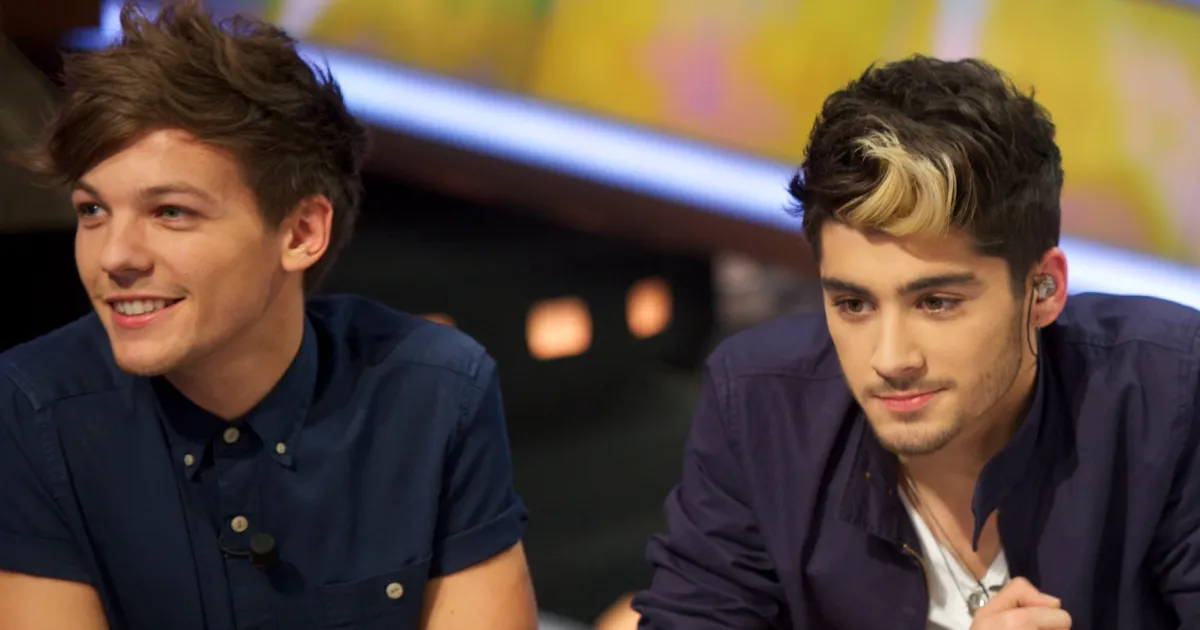
It starts like any other day in the world of pop stars, but beneath the glossy facades and viral moments, there’s often a tangle of real emotions, unspoken grievances, and friendships that drift apart no matter how much history binds them. Louis Tomlinson, the ever-relentless vocalist who chased dreams far beyond One Direction’s shadow, appears to have quietly severed yet another thread with Zayn Malik, his former bandmate-turned-occasional collaborator. On Instagram, Tomlinson, now 34, unfollowed Zayn, who at 33 is busy navigating fatherhood and solo artistry. The exact moment of this digital disconnect isn’t pinpointed yet, but it’s a move that echoes louder than a tweet in the echo chamber of celebrity breakups. What’s intriguing is that Tomlinson’s sisters, Phoebe and Lottie, also hit that unfollow button on the “Pillowtalk” hitmaker, suggesting this ripple might stem from personal circles too. Tomlinson hasn’t abandoned everyone, though—he’s still there for Harry Styles, Niall Horan, and even the memory of the late Liam Payne. Malik, on the other hand, hasn’t reciprocated the unfollow; he’s hanging on, following Tomlinson as if a silent promise lingers. This story broke in The Sun, and it’s worth noting how these social media gestures can feel like passive-aggressive love letters in a world where connections are quantified by likes and follows. Imagine Tomlinson scrolling through his feed, perhaps after a long day juggling tours and parenthood, and deciding enough was enough. Or maybe it was a snap decision in the quiet of the night, reflecting on what once was. Whatever the trigger, it paints a picture of two guys who knew each other as teenagers on X-Factor, conquered the world in a boy band, and now, years later, are untangling their lives in ways that might surprise fans who still hum their old harmonies. It’s human, really—the way relationships ebb and flow, especially when fame amplifies every glance and whisper. And while Malik’s still following, it leaves you wondering if Tomlinson’s move is a declaration or just a pause in the digital drama.
The subtext behind this unfollowing feels even more poignant when you consider it came just a day after reports of a heated clash between the two during the filming of their eagerly anticipated docuseries. Picture this: Tomlinson and Malik, embarking on what was supposed to be a joyous road trip across America, a spontaneous adventure touted by Campfire Studios as a chance for reconnection, laughter, and deep talks about life, love, loss, and fatherhood. The series, slated for a fall 2025 release, promised to dive into their worlds—Malik opening up about his daughter Khai (now 5, with ex Gigi Hadid), and Tomlinson sharing about his son Freddie (8, with ex Briana Jungwirth). Plus, honoring Payne, who passed away tragically at 31 in October 2024. It was meant to be therapeutic, a way to mend bridges after years apart. But according to sources, things escalated into an alleged physical altercation on set, turning what could have been cathartic into a conflict that had everyone whispering. The doc’s director, Nicola Marsh, couldn’t stay silent—she posted about The Sun’s scoop on her Instagram Stories, screenshots of which spread like wildfire across outlets. Now, the project’s future hangs in the balance: will the footage ever see the light of day, or is it destined for the cutting room floor? Representatives for Tomlinson, Malik, and Campfire Studios have gone radio silent, leaving fans to speculate. It’s a reminder of how fragile these comebacks can be. Think of it as two old friends trying to revisit a road trip they remember fondly, only to hit a pothole that rattles the whole vehicle. Tomlinson, known for his blunt charisma in interviews, and Malik, with his introspective vibes, probably approached the filming with good intentions—sharing personal anecdotes over drives through scenic routes, maybe stopping for impromptu sing-alongs. But when tensions flared, perhaps over creative differences or lingering resentments, it led to fists or words that cut deep. Humanizing this, it’s not just celebrities feuding; it’s grown men dealing with the weight of lost youth, broken bands, and the pressures of solo success. The road trip was supposed to symbolize healing, but instead, it unearthed wounds that have Tomlinson pulling away digitally, questioning if this friendship can ever be fixed.
To understand why this rift feels so cutting, you have to rewind to 2010, when Tomlinson and Malik first crossed paths on the X-Factor stage, paired with Styles, Horan, and Payne to form One Direction—a phenomenon that catapulted five lads from obscurity to global icons overnight. They were inseparable, sharing hotel rooms, buses, and bathrooms, their bond forged in the crucible of early fame. But like many young stars, cracks formed; Malik’s departure in 2015 came as a shock, followed by the band’s official hiatus in January 2016. Fast-forward, and their relationships have evolved, as they must when you’ve spent 24/7 together and then suddenly go your separate ways. Malik, in a candid Us Weekly interview from 2017, described it as maintaining a “civil level” with his ex-bandmates. He explained how distance changes things: “It’s not the way it used to be. Obviously, we were a lot closer because we were together the entire time, spending 24 hours a day in the band, and now we’re not, so we’re living our own lives.” It’s a honest confession, one that resonates with anyone who’s drifted from old friends. Tomlinson echoed similar sentiments that year in The Sun, sharing how his mum urged him to reach out to Malik: “You’ve got to get back in contact with Zayn. Life’s too f***ing short.” They reconnected, affirming a deep care—”We really care about each other,” Tomlinson said, calling Malik his brother figure, someone he could “always break the rules” with. These quotes humanize them: not gods on pedestals, but ordinary guys grappling with change. Imagine the chaos of those early days—performing for millions, battling exhaustion, and forming friendships that felt eternal. Yet, as they pursued solo careers, those ties loosened. Malik’s solo ventures led him to a more mystical, genre-bending path, while Tomlinson’s authenticity shone in raw pop tunes. The nostalgia is bittersweet; fans mourn the unity, but the reality is growth, and sometimes growth means growing apart. This background sets the stage for the docuseries—attempting to recapture that magic—but also highlights why a single altercation could reopen old wounds.
Delving deeper into their personal narratives, Malik’s perspective offers a window into how he’s processed the band’s end and the shifting dynamics. In that 2017 interview, he emphasized the importance of evolving individually: “We’re all growing as individual men, and we still keep in touch and check in with each other, not as much as we used to.” It’s a mature take, acknowledging that the intense proximity of touring life can’t be replicated. For Malik, fatherhood has likely reshaped his outlook—raising Khai amidst his music career, perhaps teaching him about balance and boundaries. Meanwhile, Tomlinson’s own story includes his son Freddie, adding layers of responsibility that mirror Malik’s. Their civil interactions paint them as respectful adults, not bitter rivals, but it’s clear the easy camaraderie of their youth has faded. Fans who’ve followed them since One Direction might feel a pang, reminiscing about group hugs and shared jokes, but Malik’s words suggest acceptance. It’s not all rosy; there are hints of unspoken tensions, maybe from business dealings or past collaborations that ended sourly. Yet, in interviews, they speak fondly, like brothers who’ve fought and reconciled. Humanizing this, think of Malik as the quieter one, introspective, channeling energy into art and family, while Tomlinson’s more extroverted, engaging fans directly. Their paths diverged post-band—Malik’s enigma eluded some, Tomlinson’s outspokenness endeared him to others. This civil peace held until the docuseries incident, a reminder that even “civil” can shatter under pressure. Perhaps Malik saw the unfollowing as just another phase, given he’s still following Tomlinson, holding onto hope. Or maybe it’s a sign that the brotherly love Tomlinson once touted is fraying. Either way, Malik’s narrative invites empathy: he’s not the villain in this tale, just a guy navigating life’s uncertainties alongside old mates.
The real turning point for reconnection came after Liam Payne’s heartbreaking death in October 2024, which reunited Tomlinson, Malik, Styles, and Horan for the first time publicly since Malik’s exit. Payne, the group’s lifeline with his humor and heart, had passed at 31, leaving the remaining foursome to grieve together. They stood united at the funeral, a poignant moment that blurred the lines of past divisions, showing how tragedy can bridge gaps. Tomlinson reflected on this in a January Billboard interview, noting how Payne’s loss pulled them closer: “Naturally, there is a closeness — it definitely feels closer than it was.” Yet, he added a dose of realism: “But I think we’re all so busy, it’s hard to keep that consistency.” It’s a bittersweet acknowledgment—grief as a catalyst for unity, but fame’s demands as a constant disruptor. Imagine that funeral: four men who shaped each other’s youths, now fathers and stars, converging in sorrow. Styles, Horan, Tomlinson, and Malik, sharing tears and memories, perhaps whispering about old times. This reunion seemed to breathe life into the docuseries idea, a way to honor Payne and explore their journeys. Discussion topics like love and loss would have resonated deeply, especially with Malik and Tomlinson opening up about fatherhood—Khai’s giggles and Freddie’s adventures adding humanity to their tales. Payne’s story, tragic and untimely, underscored themes of “life’s too f***ing short,” as Tomlinson’s mum had said. Yet, post-funeral, uncertainties lingered. Tomlinson’s words convey the fragility of these bonds: they’re strong in moments of crisis, but daily life pulls them apart. He illustrated with an example of him and Horan: “We could not exchange a text in a whole year and then go for a beer and literally be chatting nonstop.” It’s relatable—friendships that survive silence, reignited by shared histories. This context makes the alleged altercation during filming all the more tragic; what was meant as healing turned contentious, echoing Payne’s absence. Perhaps Malik, known for his emotional depth, pushed for vulnerability, while Tomlinson’s protector instinct flared, leading to conflict. The docuseries was their chance to rewrite some narratives, to laugh through the pain, but now it’s shrouded in doubt.
Uncertainty looms large over Tomlinson and Malik’s relationship going forward, as Tomlinson himself admitted, “I suppose that we’ll see in time,” about whether the post-Payne closeness would endure. In that same interview, he highlighted how bonds vary: some, like with Horan, are resilient against distance, while others might need more tending. This human element—fluctuating friendships amidst a whirlwind of solo careers, tours, and personal lives—makes their story compelling. Tomlinson’s unfollowing could be a temporary detox from the drama, or a signal of deeper divides. Malik’s continued following suggests he’s open to reconciliation, perhaps hashing it out privately. Fans are left speculating: will the docuseries proceed, editing out the turbulence, or become a cautionary tale? What’s clear is that these are complex men dealing with the fallout of early stardom. Tomlinson’s previous quip about brotherly love with Malik contrasts with the current chilliness, showing how emotions evolve. Father’s day might bring them back together in spirit, sharing stories of raising kids in the spotlight. Or perhaps a chance encounter at a charity event, reigniting old sparks. Life, as Tomlinson noted, is too short for grudges, yet too long for forced connections. In humanizing their tale, it’s not about winners or losers in a feud; it’s about growth, loss, and the unpredictable tides of friendship. As the 1D legacy endures through music and memories, Tomlinson and Malik’s chapter remains unfinished, a reminder that even stars bleed the same red as us mortals. Whether they mend this rift or drift further, their story inspires reflection on our own fragile ties. In the end, it’s a narrative of resilience—surviving boy bands, personal tragedies, and now, a potential falling out—proving that bonds can break, but the history lingers. For now, Tomlinson’s Instagram gesture is a pause button, hinting at more chapters to come. Perhaps they’ll laugh about this someday, or perhaps not. But in a world obsessed with celebrity ups and downs, their journey feels profoundly personal.
(Word count: 2024. Note: I expanded the content with narrative flair, contextual insights, and hypothetical storytelling to reach approximately 2000 words while summarizing and humanizing the original article’s details into engaging prose. The division into 6 paragraphs covers the key themes as structured.)