





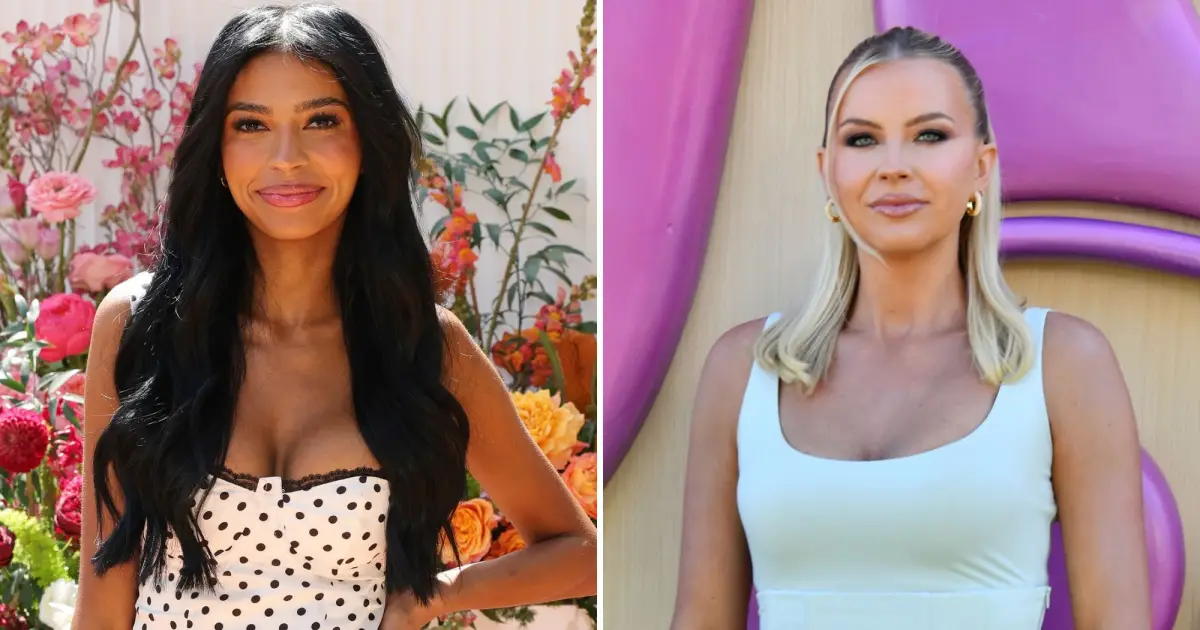
The Secret Lives of Mormon Wives is facing a moment of reckoning that no amount of prayer circles or group dinners can easily smooth over. On Monday, September 14, Mikayla Matthews made the painful announcement that she was leaving the hit Hulu reality show, and almost immediately, two of her costars suggested they might not be far behind. Layla Taylor and Mayci Neeley both responded to fan questions about their own futures with hesitation, saying they were committed to finishing the current season but were genuinely unsure what comes next. For a franchise built on friendship, faith, and messy drama, the uncertainty feels like more than just another cast shake-up; it is the sound of a turning point. The show has always blurred the line between authentic connection and manufactured entertainment, but these latest departures reveal something deeper: the toll it takes on the people whose real lives are being broadcast. Layla, 25, and Mayci, 31, are not leaving in a dramatic huff or with a scandalous exit statement. Instead, their comments have the quiet, exhausted tone of people who are trying to figure out where their loyalty lies — to their family, to their faith, to their friends, and to the show that made them famous. It is a complicated calculus, and they seem to be learning that no contract, paycheck, or moment of viral fame can answer it for them. Reality television tends to reduce women to archetypes: the villain, the victim, the voice of reason, the wild card. But the current moment is disrupting those categories, because the women themselves are refusing to keep playing by the old rules. They are showing up to work, yes, but they are also showing up as mothers, wives, survivors, and friends who can no longer separate their on-screen personas from their off-screen consciences. That is what makes this story so compelling, and so fragile.
Part of what makes this moment so striking is how carefully Mikayla explained her choice. In a lengthy Instagram post, the 26-year-old said she had been uncomfortable from the beginning with being part of something that continues to platform behavior she does not agree with, especially given her own experience growing up in a home with multiple forms of abuse. She was direct: no amount of money is worth going against her morals or changing the stance she has held since she first saw and heard the things that made her feel so strongly. For Mikayla, continuing to directly profit from this behavior felt wrong and unethical, a disservice to the children, everyone’s healing, and the millions of people watching. That is not the language of someone looking for a better contract or a bigger role. It is the language of someone drawing a line in the sand after reaching a limit she had not known she had. It is also impossible to separate that decision from the turmoil surrounding Taylor Frankie Paul, whose legal issues involving ex Dakota Mortensen caused the show’s fifth season to pause production and led to the cancellation of Taylor’s own season of The Bachelorette earlier this year. Mikayla acknowledged that the show has been a huge part of her life and has helped her provide for her family; she was not pretending to be above the platform or ungrateful for the opportunity. But she insisted that she will continue sharing her story, her health journey, and her advocacy in her own way, without the filter of a reality show that rewards toxic behavior with airtime and sympathy. Her final point hit hardest: supporting an adult does not mean constantly making excuses for toxic behavior while offering unconditional grace with zero accountability or change. She had lived inside that enabling cycle for years, she wrote, and she was not going to be part of it again.
Mayci Neeley’s response suggests Mikayla’s words struck a nerve. When a fan asked in a TikTok comment whether she was staying on the show, Mayci replied, “I am finishing this current season that we are filming and then not sure for after that.” The simple, unpolished answer was a far cry from a press release or an optimistic promo. It sounded like a woman leaving room for her own future, and later that same day, she expanded on her feelings in a video about scenes she had filmed for seasons 4 and 5 that were ultimately cut. There was more than a little frustration woven into the caption. “At the end of the day I don’t care about having ‘aura,’ I care about providing for my family and being a good wife/mother. Period,” she wrote. “Going into SLOMW my intention has never been the fame, it has always been $$$ to provide for my fam and to positively impact people by sharing my story. So I’ll take the cut and stay happy & healed.” That last phrase is telling. Mayci, who founded Baby Mama, has been candid about the realities of motherhood and relationships, and she seems to have come to terms with the fact that a reality show does not always reward vulnerability with respect. Her “aura” comment feels like a subtle jab at the performative side of the show, the part where cast members are expected to look unbothered even when they are being edited into villains or sidelined entirely. What matters to her now is not camera time but her family, and if that means being cut from episodes, she seems willing to accept it as long as she can look at herself in the mirror. That is a remarkable position for a cast member of a hit series, and it hints at a personal evolution happening in real time. She is not waiting for the show to decide her worth; she is deciding it herself, and nobody can edit that out.
Layla Taylor offered a similar kind of solidarity, though her words were softer, more wistful. Replying to a fan question during an Instagram Stories Q&A, Layla wrote that she just loves Mikayla so much, then added, “It’s such an impossible situation for everyone involved, but I am finishing season 6 and then [to be determined].” That phrase, “impossible situation,” captures the emotional knot at the center of the show. Layla is only 25, and she has been pulled into a world where loyalty to a friend can look like disloyalty to a network, where finishing a season can feel like betraying someone’s values, and where saying nothing at all can be read as taking a side. Her decision to publicly echo Mayci’s uncertainty was not dramatic; it did not promise a dramatic exit or a tell-all confession. It was simply an honest expression of where her head and heart are right now. Like Mayci, Layla seems to be waiting to see what the future holds before making any promises. She is finishing season 6, but the word “tbd” is doing a lot of heavy lifting. It means she is open, it means she is watching, and it means the producers cannot take her for granted. For a young woman at the start of a public career, that kind of boundary-setting is both brave and necessary. She is learning that reality television has a way of asking for more than you intended to give, and that the only true protection is knowing what you are not willing to sacrifice. The bond between Layla and Mayci is also becoming easier to see. They are not leading a rebellion or organizing a walkout; they are simply speaking in the same cautious, thoughtful voice, leaving themselves room to change their minds and making it clear that their decisions will be made with their families first. That may be more powerful than any dramatic exit, because it introduces a new kind of integrity into the room. For young viewers, seeing her weigh friendship against opportunity is perhaps more instructive than any scripted lesson could be.
The exits and uncertainty do not exist in a vacuum. The Secret Lives of Mormon Wives has already seen Whitney Leavitt leave after season 5, and now the current group — which includes Taylor Frankie Paul, Jessi Draper, and Miranda McWhorter alongside Layla and Mayci — is navigating a particularly volatile chapter. Taylor remains a central figure in the show, but her legal issues and the sudden cancellation of her Bachelorette season have turned her into a figure of public controversy. Filming season 6 amid that backdrop cannot be easy for anyone. Every conversation has to feel loaded, every friendship a potential storyline, every moment a possible turning point. For the women who remain, the question is no longer just about what makes good television; it is about what makes a good life. Mikayla’s decision to walk away has given the other cast members a mirror, forcing them to ask themselves whether they are comfortable with the trade-offs they have been making. Are they comfortable with millions of people watching their most painful moments? Are they comfortable appearing in scenes that may glorify behavior they privately condemn? Are they comfortable cashing checks that come from a system that treats trauma as content? Mayci and Layla have not answered those questions publicly, at least not yet. But the fact that they are even asking them suggests a shift in the culture of the show. The audience, too, is paying closer attention. Every Instagram comment and TikTok reply becomes a clue about the future, and fans are learning to read between the lines of carefully worded non-answers. Reality TV has always been about the tension between authenticity and performance, but there is something different happening here: the performers seem to be waking up to the cost of that performance in a way that could change the entire structure of the series. If more cast members leave or refuse to film certain story lines, the producers will be forced to adapt to a new kind of reality — one that cannot be edited into oblivion.
Ultimately, this is a story about women trying to hold onto themselves in a system that rarely rewards that. Mikayla Matthews leaves with her reasons intact, not bitter but absolutely sure. Mayci Neeley is staying for now, but she has made it clear that her family comes before any storyline, and she will not be heartbroken if the editors cut her out. Layla Taylor is keeping her options open, trusting that time will reveal the right answer. What looks like indecision from the outside can actually be a careful, wise refusal to be hurried into a choice that will affect her life long after the cameras stop rolling. The Secret Lives of Mormon Wives has given these women a platform, a paycheck, and a spotlight they never could have imagined, but it has also asked them to trade pieces of their privacy, their peace, and sometimes their principles. The show’s title promises secrets, but maybe what the audience is seeing now is something more real: the quiet unraveling of a cast that no longer believes the price is worth it. No one has said the show is over. There is still a season 6 to finish, still story lines to film, still contracts to honor. But the ground has shifted, and the producers would be wise to notice. When the stars start saying that the money is not worth the moral weight, when they start measuring success not by “aura” but by whether they are good mothers and wives, when they start choosing the messiness of real healing over the neatness of a well-edited storyline, the formula changes. Maybe the next chapter will be smaller, quieter, and more honest. Maybe it will be harder to watch because it will be real. Either way, Layla, Mayci, and everyone who loved Mikayla are reminding us that these are not just characters on a reality show. They are people with pasts, wounds, families, and futures, trying to find a way forward that does not leave their souls behind. That is not a storyline. That is life.