


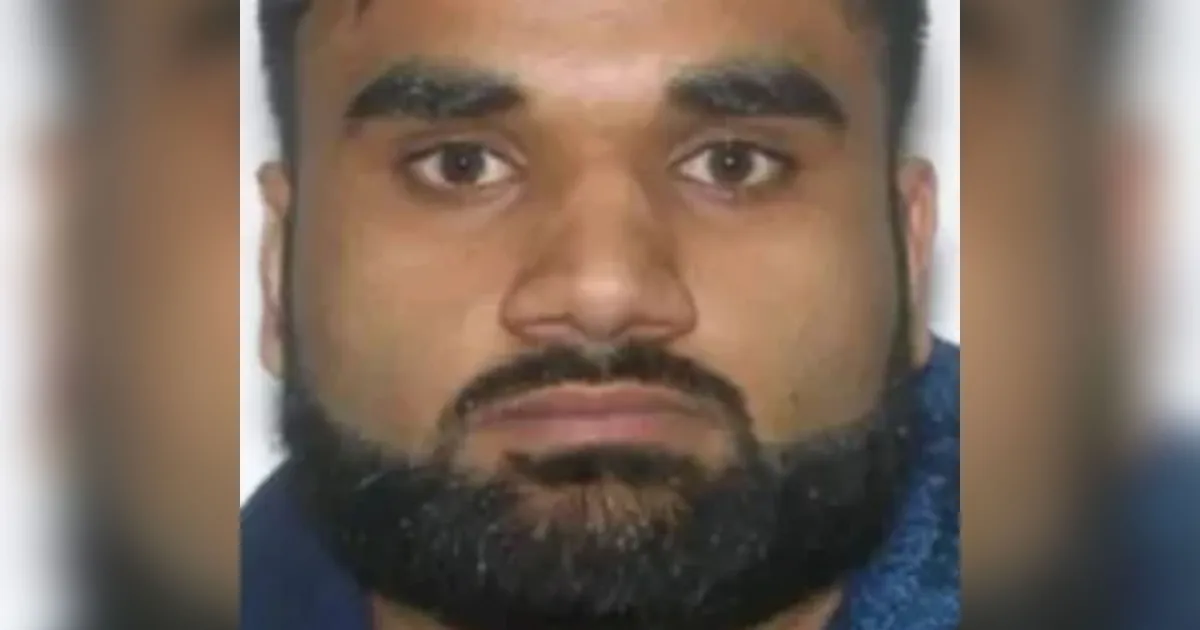
On a crisp Monday in late September, the FBI delivered what might be the most unwelcome kind of birthday or ordinary Tuesday surprise for a young man who had grown accustomed to living in the shadows. Satinderjeet Singh—known to those who follow his trail as Goldy Brar—woke up to find his face splashed across the nation’s consciousness as the newest addition to the FBI’s Ten Most Wanted Fugitives list. And not merely for a minor infraction. The Bureau announced a staggering $1 million reward for information leading to his arrest, painting him as the alleged operational mastermind behind a transnational crime syndicate’s brutal activities spanning two countries. The official language was clinical, almost cold: Singh, 33, is “extremely violent, armed, and dangerous,” with known haunts stretching from sunny California to the sprawling provinces of Canada. But behind the sterile phrasing lies a story far more human—one of alleged assassinations, a cross-border drug war, and a shadowy criminal empire that has sowed fear from South Asian communities in Vancouver to the streets of Los Angeles.
To understand who Singh truly is, one must peel back the layers of his carefully constructed double life. To the outside world, he might have appeared as just another young man with ties to two nations, moving fluidly between the United States and Canada. But federal investigators paint a far darker portrait. Singh, they allege, rose through the ranks to become a high-ranking lieutenant in the Lawrence Bishnoi Organized Crime Group, a syndicate that has become synonymous with extreme violence and ruthless ambition. The Canadian government took the unusual step of designating the entire organization as a terrorist entity as recently as September 2025—a label that carries immense weight and reflects the group’s sophisticated, menacing reach. Singh’s loyalty to the gang’s imprisoned leader, Lawrence Bishnoi—who currently sits in an Indian prison—is described as absolute. He is, in essence, the man on the ground, the operational enforcer who translated the boss’s directives into bloodshed. His purported ability to move between jurisdictions, to embed himself in diaspora communities, and to coordinate criminal enterprises across borders speaks to a disturbing level of skill, making him not just a fugitive, but a ghostlike figure who has allegedly managed to stay one step ahead of international law enforcement for years.
The alleged crimes tied to Singh and his associates read like a screenplay too grim for fiction, and they begin with a brazen act of political violence. Both Singh and the jailed Lawrence Bishnoi stand accused of orchestrating the June 2023 assassination of a prominent political and religious figure from India, identified in court filings only by the initials “H.S.N.” The killing unfolded in broad daylight outside a Sikh temple in British Columbia, Canada, where two gunmen ambushed the man, cutting him down in a hail of bullets that sent shockwaves through the Sikh diaspora worldwide. It was a message, a warning, and a grim demonstration of the group’s international reach. But the violence did not stop there. Between March 2024 and July 2025, federal prosecutors allege the Bishnoi group pivoted to the drug trade with breathtaking audacity, stealing an astonishing 520 kilograms of cocaine from rival gangs based in the Los Angeles area. This wasn’t just theft; it was a hostile takeover executed through intimidation and the barrel of a gun, an aggressive power grab designed to flood the streets with narcotics while crippling the competition. The FBI noted that this gang cultivated a climate of fear wherever it operated, using violence not just as a tool but as a terror tactic aimed at the Indian diaspora communities across the globe.
In the eyes of the law, Singh is not merely a suspect; he is a central figure in one of the most sweeping criminal indictments in recent memory. He was one of 37 defendants named in a massive federal case unsealed in Los Angeles, a sweeping racketeering indictment that sought to dismantle not one but three transnational organized crime networks operating out of India. The charges against Singh are formidable: racketeer influenced and corrupt organizations conspiracy—commonly known as RICO—conspiracy to interfere and attempted interference with commerce by extortion, and conspiracy to distribute and possess with intent to distribute controlled substances. These aren’t just technical charges; they carry the potential for life in prison. But the prosecution’s case is about more than just Singh. It represents an unprecedented legal push to untangle a web of corruption, violence, and narcotics that has stretched across continents. First Assistant U.S. Attorney Bill Essayli framed the development as a matter of national resolve, stating that placing Singh on the FBI’s Ten Most Wanted list underscores the administration’s determination to bring the full force of the law upon transnational criminal gangs. Yet, even as the net tightens, authorities acknowledge that five of the 37 defendants remain at large, with Singh being the most high-profile among them—a testament to the difficulty of tracking a man who seems to have no fixed address, no predictable pattern, and no shortage of protectors.
Beneath the legal jargon and the FBI’s methodical language lies a deeply human story that touches the lives of ordinary people far from the courtroom. The violence Singh is accused of orchestrating has a chilling, real-world effect on the South Asian diaspora—a community that has flourished in cities like Vancouver, Surrey, and Los Angeles. These are families who immigrated seeking safety, opportunity, and peace, only to find themselves looking over their shoulders, fearing that a criminal gang’s reach could extend across the globe to their own doorsteps. The killing of H.S.N. outside the Sikh temple was particularly devastating, striking at the very heart of a religious community that cherishes its places of worship as sanctuaries. That a man could be gunned down on those sacred steps sends a message that resonates far beyond the immediate crime. The FBI’s warning for the public to avoid interacting with Singh is not a mere formality; it reflects a genuine concern that this is a man who has allegedly demonstrated a willingness to use lethal force without hesitation. For the families of his alleged victims, and for the communities that live in fear of his gang’s influence, the hunt for Singh is not a spectator sport—it is a matter of justice and the ability to reclaim a sense of safety that was torn away in an instant.
As the search continues, the FBI is making a direct appeal to the public, and the million-dollar reward is no empty gesture. It is a reflection of the gravity of the situation and the desperation to end a chapter of violence that has plagued two nations. The Bureau understands that in a world of tight-lipped loyalties and whispered threats, someone out there knows where Satinderjeet Singh is hiding. Someone has seen him, heard his name, or recognized his face. And so, the FBI is asking anyone with information—no matter how trivial it might seem—to step forward. Tips can be called in to 1-800-CALL-FBI, or submitted online at tips.fbi.gov. The agency’s warning is stark: do not approach him, do not confront him, do not attempt to detain him. He is considered armed and extraordinarily dangerous. Instead, they urge you to be the voice that tips the scales, to make the call that brings a reign of terror to a close. For the people of the Indian diaspora, for the families in California and Canada who have lived under the shadow of this organization, the arrest of Singh would be more than a victory for law enforcement—it would be a chance to breathe freely again, to walk out of their homes without fear, and to believe that justice, though slow and sometimes seemingly impossible, truly has a long reach. The million-dollar question is not just about the reward money; it is about whether someone will have the courage to pick up the phone and end the nightmare once and for all.