

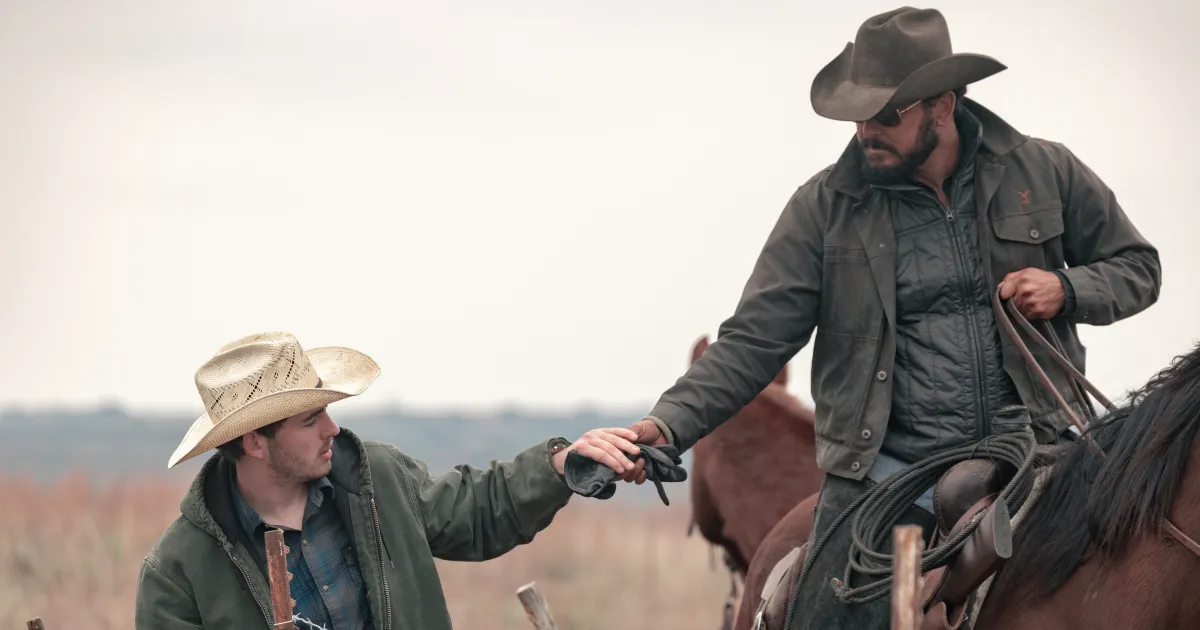
When Finn Little, the promising twenty-year-old actor who has spent crucial formative years growing up before the eyes of the global Yellowstone audience, drops a cryptic warning about the upcoming season finale of the spinoff series Dutton Ranch, it is far more than standard promotional hype; it is a vivid reflection of the high-stakes, ruthless storytelling that has come to define this modern television empire. In a contemporary media landscape where professional stability is notoriously fleeting, starring in a Taylor Sheridan-inspired drama means constantly living on a knife’s edge, where any character’s narrative journey could be violently and abruptly cut short at a writer’s whim. During a recent joint interview with his talented twenty-six-year-old co-star Natalie Alyn Lind, the young actor playfully stoked the mounting anxiety of the fanbase, jokingly questioning whether three or perhaps four major characters would meet their ultimate demise in the impending season closer. Lind, navigating the conversational minefields of modern spoiler culture with seasoned charisma, maintained a carefully tight-lipped posture, teasingly offering conflicting assurances that while nobody dies, perhaps everybody dies, or indeed, they are already all dead. This lighthearted, mischievous banter between two young rising stars underscores an essential, deeply human reality of working on a high-end dramatic series: the shared, looming threat of seasonal character mortality serves as a powerful bonding agent behind the scenes, forcing an ensemble cast to find humor and camaraderie in their collective professional precarity while keeping an eager audience suspended in a state of perpetual, agonizing suspense.
To truly understand the gravity of these playful warnings, one must look closely at the monumental scale of the cultural phenomenon that birthed Dutton Ranch and its sister series. When Yellowstone first arrived on the Paramount Network back in 2018, it did not merely revive the classic American Western genre; it fundamentally revolutionized it, blending the sweeping, beautiful landscapes of the frontier with the sharp corporate backstabbing of a Shakespearean family tragedy. By the time the flagship series reached its highly anticipated conclusion in 2024, it had established a sprawling multi-generational universe, expanding rapidly with companion pieces like CBS’s gritty crime drama Marshals and the atmospheric high-stakes survivalism of Dutton Ranch, which made its dramatic premiere in May. For the actors who step into this harsh, unforgiving world, there is an immense psychological weight that comes with carrying such a prestigious television mantle. They are not merely reciting dialogue in a rugged setting; they are the caretakers of a modern mythos that commands the deep emotional investment of millions of fans worldwide, where survival is never guaranteed and allegiance is a commodity bought with blood. Consequently, the constant threat of character death in a show like Dutton Ranch is not a cheap narrative gimmick designed to manipulate ratings during sweeps week, but rather an unyielding, organic law of nature within this fictional universe, ensuring that each new script delivery is met by the cast with a potent mixture of creative excitement and quiet, professional apprehension.
Perhaps no performer in the ensemble understands this delicate dance with television mortality better than veteran character actor Marc Menchaca, whose fifty years of life and rich history in the industry have gifted him with a brilliantly pragmatic, highly humorous outlook on his own career longevity. Portraying the rough-around-the-edges character Zachariah on Dutton Ranch, Menchaca has frankly admitted that the possibility of his character being written off the show is a constant, lingering worry, particularly given his own self-described “pretty good track record” of meeting untimely demises in previous roles. The occupational hazards of his career took on a hilariously personal and endearing dimension when his wife, the incredibly accomplished Game of Thrones alumna Lena Headey—who is certainly no stranger to orchestrating and enduring incredibly brutal, shocking on-screen deaths herself—lovingly assembled a themed “death reel” as an unconventional gift for his milestone birthday. The compilation, which ran a staggering ten minutes in length and yet failed to capture all of his various fictional passings, stands as a charming testament to the chaotic, highly unpredictable life of a working actor. Menchaca candidly recounted the relatable anxiety of scanning newly arrived scripts with a sense of urgency, frantically reading ahead to make sure Zachariah survives the next scene, and half-jokingly strategizing that his best course of action was to stay on everyone’s good side on set to buy himself just a little more time on the ranch.
This delicate balance between professional survival and narrative necessity was similarly highlighted by Juan Pablo Raba, who shared a wonderfully candid and vulnerable anecdote about the exact moment he felt the cold sweat of a sudden television exit washing over him. While opening the script for the pivotal sixth episode of the season, Raba was startled to read a scene in which his character is suddenly confronted by Chet pointing a gun directly at him, a shocking development that instantly triggered a spiral of professional panic and existential reflection. His immediate, internal response—a mix of fond appreciation for the job and a quiet, humorous frustration that nobody from the production office had called to warn him beforehand—expertly captures the emotional roller coaster that modern television actors must ride with every episode they film. Raba’s self-deprecating confession that his first thought was “well, it was nice while it lasted” shines a light on the genuine vulnerability of putting one’s creative and financial destiny entirely in the hands of a writers’ room tasked with delivering shocking plot twists. It demonstrates that these actors are not merely detached professionals collecting a paycheck, but are deeply invested creators who build intimate bonds with the complex human beings they portray, making the sudden threat of a violent plot twist feel like an abrupt and premature eviction from a collaborative artistic home they have come to love.
The persistent anxiety shared by the cast of Dutton Ranch is not an isolated phenomenon, but rather a carefully calculated, vital engine of prestige television designed to keep viewers in a state of high-intensity emotional captivity. In an entertainment landscape saturated with comfortable, formulaic procedural dramas where the status quo is safely restored at the end of every hour, the Western dramas pioneered within this universe have successfully reclaimed the thrilling, unpredictable danger of live theatre. Here, no character—regardless of how central they may seem to the narrative or how beloved they are by the audience—is truly safe from the Grim Reaper, establishing a rigorous creative environment where comfort is actively rejected in favor of raw, unvarnished tension. By keeping the actors themselves in the dark about their characters’ ultimate fates until just before the cameras begin to roll, showrunners are able to capture a genuine, unfiltered vulnerability in the performances that simply cannot be manufactured through rehearsal. This high-wire act elevates the viewing experience from simple television consumption into a shared, highly interactive cultural event, where fans gather online to meticulously dissect every line of dialogue, interview clip, and social media post for clues about who will survive, transforming a Friday night broadcast into a communal, high-stakes spectator sport.
As the highly anticipated season finale of Dutton Ranch approaches on Paramount+, the air of mystery surrounding the fate of the characters remains as thick and impenetrable as a winter storm rolling over the rugged Montana foothills. The playful banter, real-life anxieties, and enduring hopes of Finn Little, Natalie Alyn Lind, Marc Menchaca, and Juan Pablo Raba serve to remind us of the immense human machinery operating tirelessly behind the scenes of our favorite programs, where real people invest their hearts, labor, and creative spirits into worlds of make-believe. Whether the upcoming finale ultimately delivers a devastating cinematic bloodbath that leaves the ranch permanently scarred by tragedy, or offers a surprising, hard-fought reprieve for some of our favorite characters, the journey itself has already cemented the series as an incredibly worthy and compelling successor to the legendary Yellowstone name. In the end, the enduring, cross-generational appeal of these rugged, conflict-ridden stories lies not just in the shocking plot twists or the explosive action sequences, but in our shared human fascination with resilience—our universal desire to watch flawed, realistic people struggle against impossible odds, fighting to hold onto their land, their families, and their dignity in a world that is constantly trying to tear them down.