


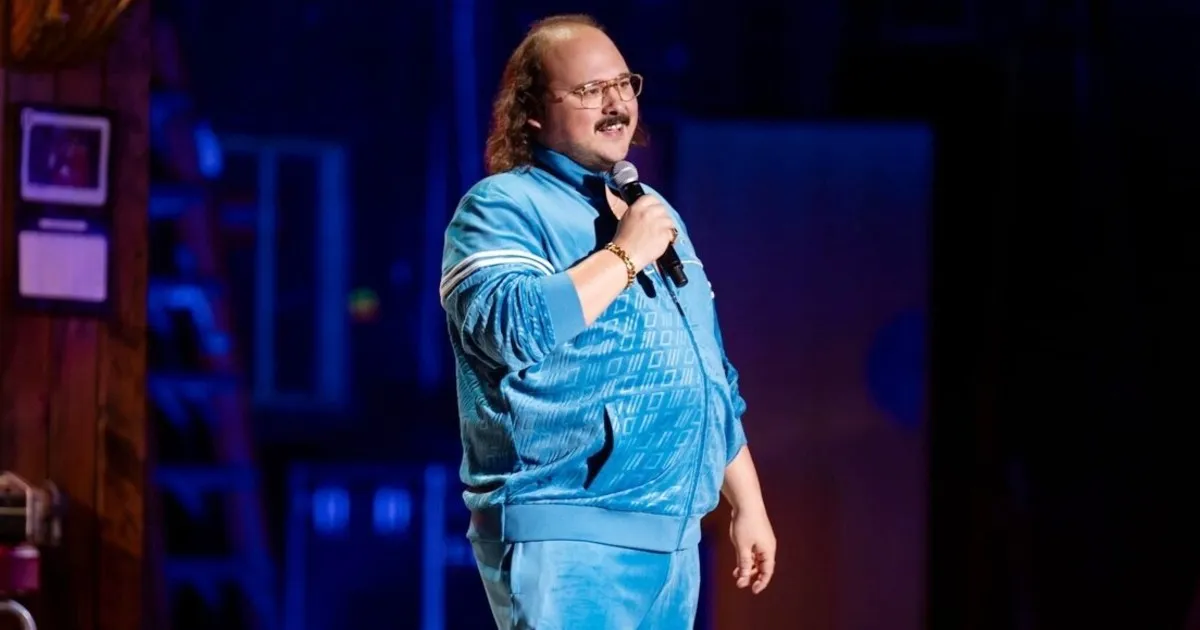
Hasan Minhaj has always understood that the line between truth and performance is where the most compelling comedy lives. But in 2023, that line became the subject of intense public scrutiny when a New Yorker article accused him of fabricating stories about racism from his previous stand-up specials. The piece sent shockwaves through the comedy world and beyond, casting a shadow over a career built on personal, emotionally charged storytelling. For any artist, such an accusation could be devastating, but Minhaj did not retreat into silence. Instead, he waited, gathered his thoughts, and responded with a carefully crafted video that pulled back the curtain on his creative process. With graphics, timelines, and receipts, he laid out his side of the story, explaining how he had compressed, rearranged, and heightened certain details for emotional impact. It was a defense not just of his reputation, but of the very nature of stand-up comedy as an art form—where exaggeration and narrative shaping have always been part of the craft. The controversy raised difficult questions: What does it mean for a comedian to tell “true” stories? Where does artistic license end and deception begin? For Minhaj, the answer was clear: he was not a journalist reporting facts, but a storyteller reaching for deeper emotional truths, using his own life as raw material.
In 2024, Minhaj returned to the stage with new material that directly confronted the controversy, turning his downfall into a masterclass in self-irony and resilience. The special, filmed before a live audience, opens with him addressing the allegations head-on, disarming the crowd with a disarmingly simple confession. “I got caught embellishing for dramatic effect,” he says, and then delivers the punchline that reframes the entire scandal: “Same crime your aunt is guilty of over Thanksgiving.” It is a perfect Minhaj moment—smart, self-aware, and deeply relatable. He acknowledges that he was accused of doing what storytellers have always done, and he refuses to be ashamed of it. Instead, he elevates the conversation, using humor to dismantle the outrage. The audience laughs, but there is also a moment of recognition. What family dinner hasn’t featured a relative stretching the truth to make a story more vivid? What human being hasn’t adjusted the details of their own past to better capture the way a moment felt, rather than exactly how it happened? By drawing that connection, Minhaj reminds us that the impulse to embellish is not a character flaw but an essentially human one—a way of making sense of our lives and making our experiences meaningful to others. He turns the scandal into a meditation on memory, fact, and the strange alchemy of personal narrative.
What makes Minhaj so compelling as a comedian is that his sharp intelligence never comes at the expense of warmth. He can dissect complex social issues with the precision of a policy expert, yet he delivers his observations with a boyish enthusiasm and a smile that makes even the harshest critiques feel like an invitation to laugh together. Throughout the new special, he moves fluidly between topics, tackling race, class, and politics with a fluency that feels both urgent and effortless. He does not lecture; he invites. He does not mock; he nudges. This balance is rare in comedy, where performers often fall into the trap of either being too angry to be funny or too jokey to be meaningful. Minhaj somehow manages to be both incisive and endearing, the kind of comedian who can sear you with a truth and then hand you a tissue to wipe your tears of laughter. His stage presence is commanding, yet intimate—he talks to the audience as if they are old friends catching up over coffee, but with the structural precision of a master performer. He knows exactly when to pause, when to accelerate, when to drop his voice to a whisper, and when to erupt into one of his signature physical gestures. It is a performance that feels spontaneous, but every beat is carefully designed to hit the heart and the funny bone simultaneously.
One of the most memorable segments of the special is his brilliant invention of a new cultural category: “Beige-istan.” With a sweeping gesture, he maps out the American social landscape: “There’s white America. There’s Black America. Then there’s Beige-istan. That’s just everybody. Indians, Latinos, Filipinos, wherever the f*** Bruno Mars is from. Beige-istan.” The joke lands on multiple levels. It is, first of all, a hilarious riff on the way Americans categorize racial and ethnic groups, and the absurdity of lumping together vastly different cultures into a single box. But it is also a poignant observation about the lived experience of being “not white, not Black”—a liminal space shared by millions of immigrants and their children, who navigate a mosaic of identities without a single neat label. In Beige-istan, everyone bonds over shared experiences: navigating their parents’ expectations, translating for relatives, being mistaken for someone else’s nationality, discovering that their lunchbox odds and ends are the subject of playground curiosity. Minhaj celebrates this space rather than lamenting it. His Beige-istan is not a melting pot where differences dissolve, but a vibrant, sprawling region where people carry their own cultures while forging a new, shared one. It is a place where Santa is white, Jesus is white, and God is white in every movie, but where the neighbors down the street have a shrine to Ganesha or a Dia de los Muertos altar in their living room. By coining the term, Minhaj gives voice to a generation of Americans who have long felt outside the familiar binary of American race relations—and, in doing so, makes them feel seen, understood, and utterly amused.
The special also showcases Minhaj’s willingness to hold everyone accountable. He skivers both the left and the right with the same unflinching gaze, refusing to let any political tribe off the hook. He points out the contradictions and hypocrisies that he sees in every corner, and he does so with a kind of joyful irreverence that makes it impossible to accuse him of being a partisan hack. For the left, he has gentle jabs about performative outrage and the pace of cultural change. For the right, he has sharper barbs about hypocrisy and spectacle. But his critiques are never cruel or dismissive; they are grounded in a genuine desire to see the country do better. This is the hallmark of great satire—it seeks to heal by exposing the absurdity of our divisions. Minhaj seems to understand that in an increasingly polarized America, the role of the comedian is not to take sides but to point out that both sides are often riding the same ridiculous horse. His observations feel accurate because they are rooted in real life, in the changing demographics of a country that is becoming more diverse, more complicated, and more interconnected. He speaks not as an outsider but as a participant, someone who is living through the same confusion and hope as his audience. He is not afraid to laugh at himself, at his community, at his own contradictions, and in doing so, he invites everyone to share in the catharsis of self-recognition.
Ultimately, “Hasan Minhaj: Off With His Head” is more than a response to controversy—it is a reclaiming of his own narrative. The title itself is a defiant wink, a reference to the public appetite for scandal and the call for heads to roll in the age of outrage culture. But by the end of the special, it becomes clear that Minhaj has not lost his head; he has only sharpened it. He emerges as a storyteller with a deeper understanding of what his art means, and with a renewed commitment to telling the truth as he sees it—not the literal truth of a court transcript, but the emotional truth of a human life transformed into something universal. The controversy, in the end, becomes just another story to tell, another chapter in the long, messy process of becoming. The special is streaming on Netflix, but it deserves more than a casual watch. It is an invitation to sit with questions about honesty, art, and the stories we tell ourselves and each other. It asks us to consider whether the stories we remember are ever really “true,” and whether that even matters if they make us feel less alone. Minhaj’s laughter is a bridge across the divide between fact and feeling, and in a world desperate for connection, that may be the most honest thing of all.