






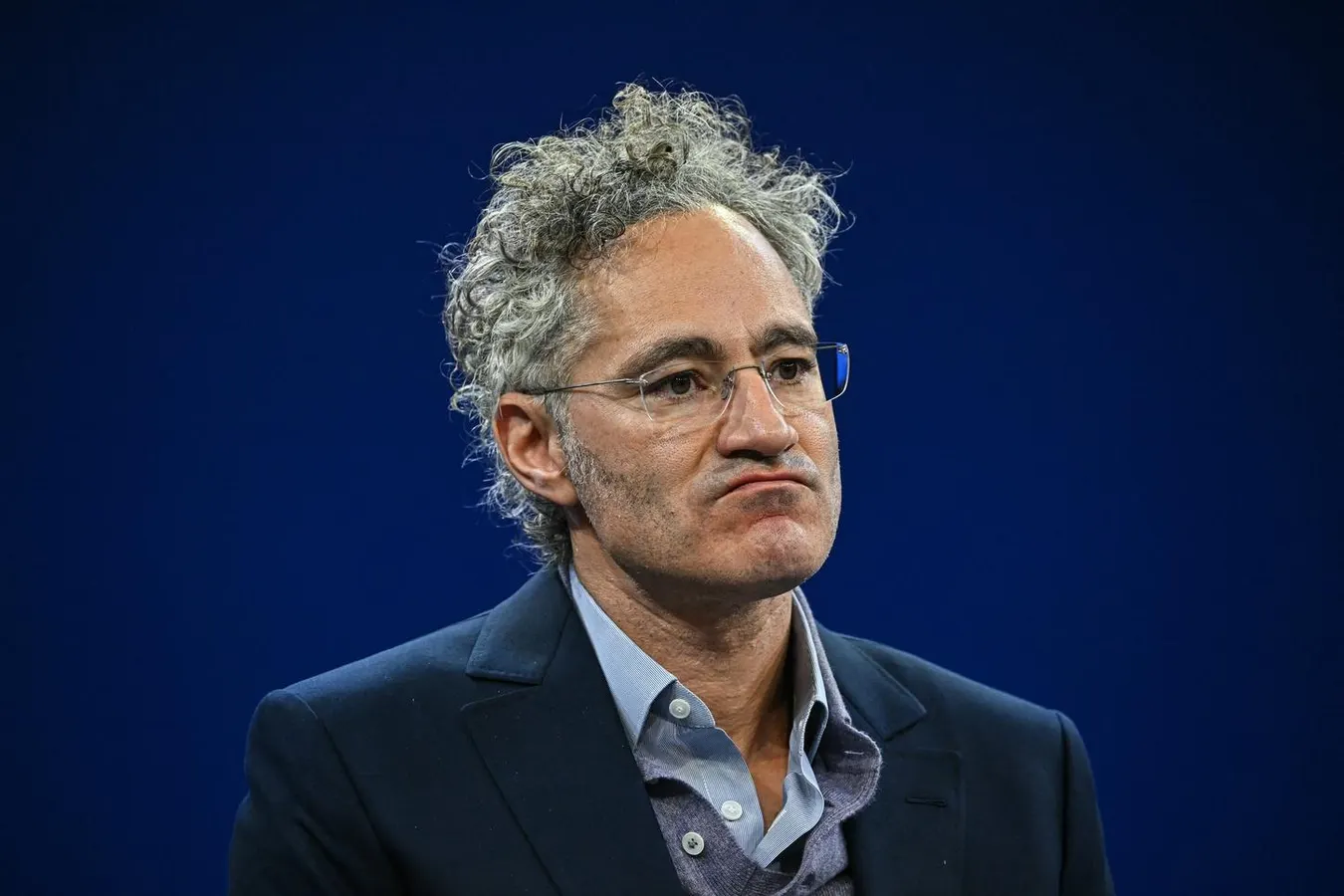
In an era of highly polished, media-trained Silicon Valley executives who speak in carefully curated platitudes, Palantir CEO Alex Karp’s recent appearance on CNBC felt like an unfiltered lightning rod. Known for his eccentric style and fierce patriotism, Karp did not mince words during a heated interview on Wednesday, labeling the current trajectory of the artificial intelligence industry as nothing short of “effing insane.” His outburst was not merely a performance for the cameras, but a calculated, raw defense of American national security, corporate sovereignty, and the distinct philosophy that has long set Palantir apart from its tech-sector peers. Karp appeared on the network to discuss his company’s massive new partnership with Nvidia—a collaborative effort engineered to help the United States government and its closest allies deploy highly secure, advanced AI systems without compromising sensitive infrastructure. Yet, instead of sticking to standard promotional talking points, Karp used the platform to pull back the curtain on the quiet desperation running through the American business landscape, claiming that the executives he speaks with behind closed doors are secretly “livid” with how mainstream AI developers are handling their clients and their data.
The crux of Karp’s frustration lies in what he describes as an predatory business model pioneered by the current titans of generative AI. He accused leading AI firms of imposing an extortionate “wealth tax” on the corporate world by demanding exorbitant licensing fees while simultaneously stripping companies of their most valuable asset: their proprietary data. Under the guise of helping businesses modernize, these tech giants stand accused of vacuuming up corporate intellectual property to train, refine, and commercialize their own proprietary AI models, effectively forcing enterprise clients to fund their own eventual obsolescence. When CNBC’s anchors, visibly taken aback by his intensity, noted that he sounded exceptionally angry, Karp leaned into the friction, stating that his outrage was not personal but a direct manifestation of the collective frustration brewing within boardroom meetings across the country. By acting as the self-appointed megaphone for these silent, grievance-stricken executives, Karp positioned the newly minted Palantir-Nvidia alliance not just as a business venture, but as a crucial rescue mission designed to liberate corporate America from the exploitative practices of the Silicon Valley elite.
This commercial exploitation, however, paled in comparison to Karp’s deepest and most systemic concern: the existential threat of relying on commercial tech conglomerates to secure the nation’s defense. He expressed profound alarm at the idea of Washington outsourcing America’s tactical military dominance to the politically homogenized consensus of Northern California. Pointing to the distinct cultural and ideological divide between mainstream Silicon Valley and the defense establishment, Karp bluntly asked the audience whether the country was truly prepared to delegate the future of its battlefields to companies whose values are often divorced from national defense realities. Palantir has long embraced a fiercely pro-military, pro-Western stance—a philosophy that initially made it pariah in a tech landscape dominated by utopian anti-war sentiment, but has since proven prescient as global conflicts intensify. By rejecting the sanitizing rhetoric of peacetime software development, Karp emphasized that wartime preparedness requires a level of security, reliability, and ideological alignment that generic, consumer-facing AI models simply cannot provide.
The market’s reaction to Karp’s fiery, uncompromising defense of his company’s vision was swift and overwhelmingly positive, with Palantir’s stock surging by more than 9% as of Wednesday morning. This dramatic rise in share value serves as a powerful validation of Karp’s unorthodox leadership style and the long-term viability of the company he cofounded alongside billionaire venture capitalist Peter Thiel and Stephen Cohen. Today, Karp commands a personal fortune valued at an astronomical $12.3 billion, a testament to Palantir’s journey from a highly confidential, state-funded surveillance startup to a publicly traded powerhouse worth tens of billions of dollars. Since its unconventional direct listing on the New York Stock Exchange in 2020, Palantir has defied conventional Wall Street skepticism by proving that specialized data integration and national defense software are not niche operations, but the foundational pillars of 21st-century statecraft. The success of the Nvidia deal further solidifies this status, demonstrating that even the hardware giants of the AI revolution recognize the necessity of Palantir’s secure software layer to safely bridge the gap between raw compute power and critical government operations.
The anxiety Karp expressed on air is deeply rooted in the chaotic and highly contested regulatory battles currently unfolding between Washington and Silicon Valley’s leading AI labs. In recent months, public friction has intensified as the federal government struggles to establish oversight over frontier models developed by the likes of OpenAI and Anthropic. The Pentagon’s relationship with these firms has been particularly volatile; only this past March, the Department of Defense designated Anthropic as a “supply chain risk” after the startup refused to lift built-in restrictions that prevented its technology from being utilized for domestic surveillance or fully autonomous weapons systems. In the wake of that dispute, the Pentagon turned its attention toward OpenAI, sparking a wave of concern among civil liberties advocates and AI ethics experts who fear the rapid militarization of consumer-grade neural networks. Adding to this regulatory pressure cooker, the executive branch has stepped in with mandates demanding that tech companies submit their frontier models to federal scrutiny prior to public release. In response, OpenAI recently announced that its highly anticipated advanced models would undergo a restricted rollout, limited strictly to a pre-approved group of trusted government partners before any widespread public release.
This complex chess match between federal authority and private technology was cast in a new light late Tuesday when the Commerce Department made the strategic decision to lift strict export controls on Anthropic’s advanced Claude Fable 5 and Mythos 5 models. Under the stewardship of Commerce Secretary Howard Lutnick, the government worked intimately with Anthropic to inspect, refine, and fortify these tools, ultimately clearing them for international deployment in an effort to maintain United States dominance in the global digital landscape. This decision underscores the delicate walk-on-eggshells dynamic between Washington and the private sector, wherein the state must balance national security anxieties against the imperative to win the global AI arms race. Karp’s explosive interview, concluded by his candid, off-guard query to the hosts, “Are we still on?”, highlighted the immense tension defining this pivotal moment in technological history. As the boundaries between commercial enterprise and sovereign security continue to dissolve, Palantir’s aggressive, defense-first doctrine stands as a stark warning to the tech industry: in the age of algorithmic warfare, neutrality is no longer an option, and those who treat national security as an afterthought may find themselves left behind in the dust.