


The PayPal Mafia’s Masterclass: How Max Levchin Built Affirm to Survive and Thrive
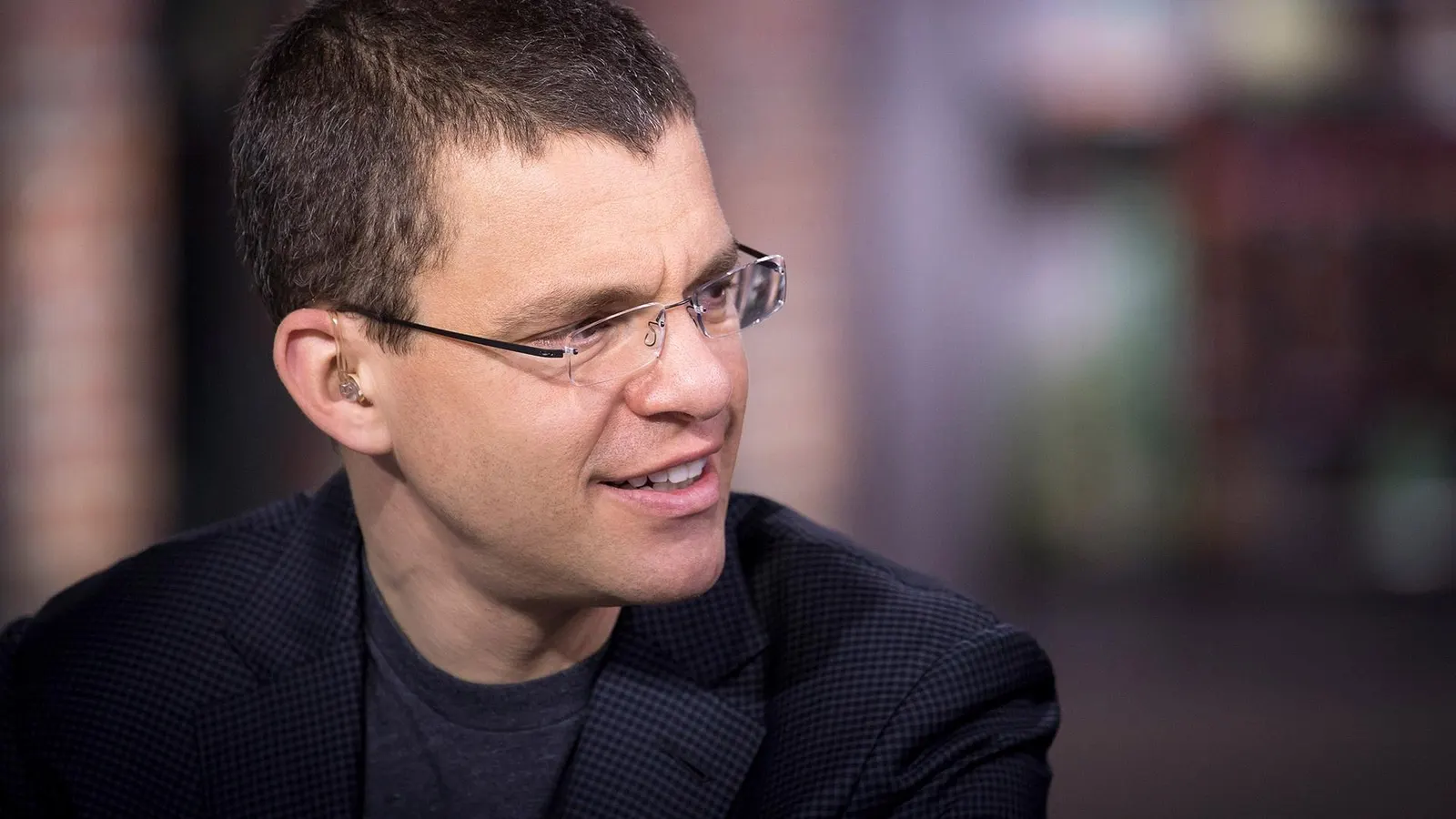
In the summer of 2000, amid the marble floors and generic elegance of a mid-tier Palo Alto hotel, Max Levchin sat perched on an indoor fountain, delivering what he believed might be his final public appearance as PayPal’s chief technology officer. The 25-year-old cofounder had gathered his then-girlfriend Nellie and trusted advisor Scott Banister for what felt like a eulogy for his fledgling company. “This may be the last conference I’m going to speak at about PayPal, because I think we’re going to die,” he confessed, the weight of impending failure pressing down on his young shoulders. The crisis consuming his 18-month-old startup was invisible to most outsiders but devastating in its impact: sophisticated criminals had discovered that PayPal’s rapid growth and relatively loose controls made it the perfect vehicle for large-scale fraud. These cybercriminals would create fake seller accounts, make bogus purchases using stolen credit card numbers, and then rapidly siphon the money into bank accounts they controlled before anyone could catch on. At the peak of this onslaught, PayPal was hemorrhaging more than $10 million monthly to fraud while generating less than $1 million in legitimate revenue—a catastrophic imbalance that threatened to sink the company before it could ever truly sail.
What made the situation even more surreal was the bizarre relationship that developed between Levchin and his adversaries. As he worked feverishly to build new anti-fraud defenses, one particularly brazen Eastern European fraudster somehow obtained Levchin’s personal email address and began sending him taunting messages. “He would email me summaries of his takedowns of my latest idea,” Levchin recalled decades later, still marveling at the audacity. The situation was almost comical in its absurdity—like a bank executive receiving play-by-play commentary from the very robber currently emptying the vault. Off-the-shelf fraud prevention tools proved useless, their blunt approaches no match for criminals who adapted faster than traditional software could evolve. Levchin realized that survival demanded a radically different approach: he would need to build his own solution from scratch, tailored specifically to the unique challenges PayPal faced. Working alongside early employee Dave Gausebeck, Levchin developed an ingenious test that presented users with distorted, curvy letters they had to type correctly to prove they were human rather than automated bots. This early version of what would become known as CAPTCHA technology represented one of the first commercial applications of an automated Turing test, and its impact was immediate and dramatic. The rate of fake account creation plummeted, and Levchin was so overjoyed that he blasted Wagner’s triumphant “Ride of the Valkyries” throughout the office, the soaring operatic strains marking a victory against seemingly insurmountable odds.
This formative experience taught Levchin lessons that would shape his entire approach to business and technology. The most crucial insight was that forecasting losses with extreme accuracy was essential for survival, and achieving that precision required building proprietary software and systems rather than relying on generic solutions. However, this do-it-yourself philosophy carried a heavy price tag, one that would haunt Affirm’s early years. When Levchin founded the buy-now, pay-later company in 2012, he applied the same principles, investing heavily in custom infrastructure and proprietary underwriting models. The costs were staggering, and for years, Levchin found himself wondering whether the company would ever achieve profitability. “Holy crap! Are we ever going to be profitable?” he sometimes asked himself, the question echoing through more than a decade of losses that would eventually exceed $2 billion. Yet Levchin’s status as a PayPal Mafia celebrity—that legendary group of founders and early employees who went on to build some of Silicon Valley’s most successful companies—gave investors confidence to keep pouring money into Affirm despite its perennial red ink. His track record suggested that he would eventually figure things out, and that faith has finally been rewarded.
Last year marked a turning point when Affirm’s revenue finally began consistently outstripping its costs on a generally accepted accounting principles basis. The company’s massive investments in proprietary systems began paying dividends, as issuing new loans and processing payments now required minimal additional expense. Since the second quarter of 2025, Affirm has remained solidly profitable, most recently reporting $100 million in net income on $1 billion in revenue. The company now originates nearly $12 billion in loans and payments every three months, and its stock market value hovers around $25 billion—a remarkable recovery from its post-IPO struggles, though still below the dizzying $47 billion peak it reached in November 2021. Levchin’s personal net worth has surged to $2.2 billion, double what it was just two years ago. But the question that now occupies his mind is whether Affirm can escape the trap that has ensnared specialty lenders for decades: how to maintain growth without either loosening credit standards or spending excessively to acquire new customers. The fintech lending landscape is littered with cautionary tales, and while companies like Nubank and SoFi have built substantial businesses, many niche-focused lenders have found it nearly impossible to scale sustainably. The temptation to lower credit standards to fuel growth is, as Levchin puts it, “always a road to hell,” while the alternative of expensive customer acquisition eats into margins.
Levchin’s strategy for Affirm rests on a deceptively simple network-effects thesis: more merchants make Affirm more valuable to consumers, and more consumers make Affirm harder for merchants to ignore. Visa represents the gold standard of this dynamic in financial services, generating $20 billion in net profits last year through the power of its network. This logic drives every product decision at Affirm, with Levchin insisting that any new offering must benefit both sides of the network. When customers requested personal loans to refinance credit card debt, Levchin resisted because such products wouldn’t help his merchant partners. This philosophy extends to the company’s technical architecture, where Levchin’s PayPal experience taught him that proprietary systems are essential for building a truly effective network. The Affirm Card, which Levchin affectionately calls his “favorite child,” exemplifies this approach. This debit card allows users to pay in full or split purchases into installments at the point of sale, but building it required Affirm to develop its own ledger system capable of tracking payments, loans, and refunds in a unified way. A refund on a standard debit card purchase is straightforward, but a refund on a purchase that has also become a loan creates complexity that off-the-shelf systems couldn’t handle. The company’s investment in proprietary infrastructure has paid off spectacularly, with the Affirm Card now boasting 4.4 million active cardholders and more than $2 billion in quarterly purchase volume, growing at an astonishing 130% annually.
The company’s custom-built systems have also proven invaluable for managing credit risk, which lies at the heart of any lending business. With borrowers’ permission, Affirm analyzes bank account cash flows alongside traditional credit reports, using this data to adjust interest rates, credit limits, and repayment periods, and sometimes requiring down payments for riskier borrowers. Levchin emphasizes that the most complex part isn’t actually building the credit models themselves but rather the “scaffolding” surrounding them—the vast infrastructure that stores, protects, anonymizes, and distributes the enormous volume of data generated by tens of millions of loans each quarter. This system took seven years to build and requires a workforce where more than 800 of Affirm’s 2,200-plus employees are engineers. The payoff is an unusual degree of control over lending decisions: Affirm can test new credit models on small subsets of customers before deploying them company-wide, updating its core model quarterly and making smaller tweaks weekly. This agility has given Affirm a reputation for exceptional underwriting, with delinquency rates consistently below national credit card averages. Between 2.1% and 2.8% of its installment loan balances have been at least 30 days past due in recent years, compared with the national credit card average of about 3.7%. Even during the turbulent 2022-2023 period when many lenders saw delinquencies spike, Affirm’s remained relatively stable, allowing it to maintain rapid growth while competitors pulled back.
Looking ahead, Levchin faces the challenge of sustaining Affirm’s historical 30%-plus revenue growth, which remains critical for the stock’s valuation. His plan involves multiple growth engines: the original checkout business and newer direct-to-consumer products, led by the Affirm Card, are each expected to contribute at least 10 percentage points of growth, while international expansion could add another one to five points. Affirm currently operates only in the United States, Canada, and the United Kingdom, but a partnership with Shopify will bring it to Australia, Germany, France, and the Netherlands. The company also must navigate industry-wide concerns about “loan stacking,” where consumers take out multiple installment loans from different providers without any single lender seeing the full picture. Affirm is the only major buy-now, pay-later lender that reports all its loans to credit bureaus, providing better visibility for the entire financial system. As Levchin contemplates the next three years of growth, he acknowledges the pressure but embraces the challenge: “I think my job these days, which is delightful but also fairly high-pressure, is to try to figure out what the next three years of growth looks like.” It’s a far cry from that desperate moment on the fountain in Palo Alto, but the lessons learned there—about building your own solutions, forecasting accurately, and never compromising on standards—continue to guide one of fintech’s most resilient entrepreneurs.