


Cardano’s Quiet Surge: Whales Pile In Amid Price Slump
In the volatile world of cryptocurrencies, where fortunes can turn on a dime, Cardano stands as a testament to resilience and strategic investment. As one of the oldest and most prominent altcoins on the market, Cardano ($ADA) has faced its share of ups and downs. Yet, despite a notable underperformance in price, a fascinating undercurrent of activity has emerged. Large investors, often dubbed “whales” in crypto circles, are ramping up their holdings of $ADA, signaling a confidence that belies the surface-level stagnation. This paradox highlights the nuanced dynamics at play in the blockchain space, where long-term vision often triumphs over short-term fluctuations. Santiment, a leading on-chain data platform, has been tracking these movements closely, revealing patterns that could foreshadow a significant shift in Cardano’s trajectory.
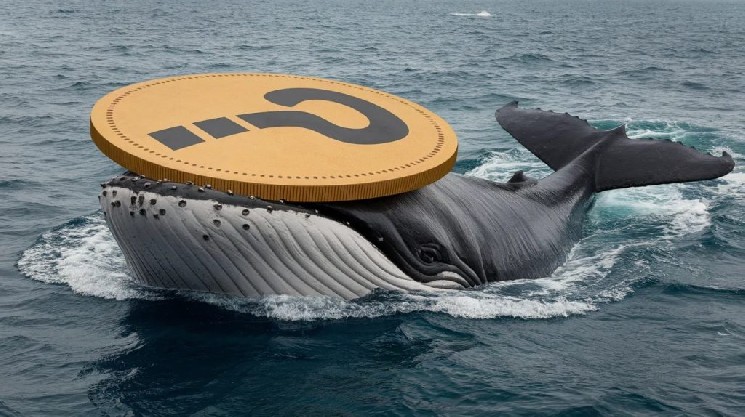
The crypto market is no stranger to contradictions, and Cardano’s recent behavior exemplifies this perfectly. While the price of $ADA has languished, failing to meet expectations, the accumulation by large investors has hit record highs. Santiment’s latest insights indicate that these whales—defined as wallets holding more than 1 million $ADA tokens—are amassing quantities not seen since 2023. This buildup started quietly in December of that year and has continued unabated, with key stakeholders progressively adding larger portions of the available supply to their portfolios. Such moves are not impulsive; they reflect a calculated approach amid broader market uncertainties. For instance, global economic pressures, including interest rate hikes and geopolitical tensions, have rattled investor sentiments across sectors. Yet, for Cardano enthusiasts, this accumulation might hint at an underlying belief in the project’s fundamentals, rooted in its proof-of-stake consensus mechanism and commitment to scalability through innovations like smart contracts and the upcoming Chang hard fork.
Delving deeper into the data, Santiment reported that wallets surpassing the 1 million $ADA threshold now hold a staggering 25.009 billion tokens. This figure equates to roughly 67.47% of the total circulating supply, a level not achieved since July 2020. To put this in perspective, imagine controlling nearly two-thirds of a stock in an analogue market; it’s a position of immense influence. The report underscores the uninterrupted nature of this accumulation since December 2023, painting a picture of steadfast dedication. Whales, typically composed of institutional investors, hedge funds, and seasoned traders, are often the barometers of market health. Their ongoing buys suggest they perceive the current price dip as a buying opportunity rather than a harbinger of doom. This strategy echoes historical patterns in cryptocurrencies, where savvy accumulators like those in Bitcoin observed similar phases before major upswings. As Cardano’s network evolves, with features like consensus upgrades and integrations with decentralized applications (dApps), these investors might be positioning themselves for future rewards, unaffected by daily volatility.
Intriguingly, this whale-driven accumulation coincides with a period of substantial price depreciation for $ADA, which has plummeted by approximately 71%. In the crypto realm, price drops often trigger panic selling, but here, the opposite is occurring. Whales are not just weathering the storm; they’re bracing for it, escalating purchases to leverage what they view as undervalued assets. This behavior could stem from several factors: Cardano’s robust developer community, its emphasis on sustainability (reducing energy consumption compared to competitors like Ethereum), and partnerships with real-world entities ranging from governmental initiatives to fintech firms. For example, projects leveraging Cardano’s blockchain for everything from identity verification to educational systems in Africa and Latin America are gaining traction. Such real-world applications provide a tangible foundation, encouraging long-term holdings over speculative trades. Analysts often compare this to the telecom industry in the 1990s, where innovators invested heavily during downturns, laying groundwork for explosive growth. With institutional adoption on the rise, as seen in recent endorsements from figures like the Ethiopian government, $ADA’s resilience might soon translate into upward momentum.
However, not all aspects of Cardano’s ecosystem are mirroring this bullish undercurrent. While whales accumulate tokens, decentralized finance (DeFi) activity has taken a noticeable hit. DefiLlama’s metrics reveal a striking decline, with the network’s Total Value Locked (TVL)—a key indicator of funds entrusted to DeFi protocols—hovering around just $137 million. This marks an 80% drop from the $686 million reported in December 2023, highlighting a broader slowdown in on-chain engagement. DeFi, which includes lending platforms, decentralized exchanges, and yield farming opportunities on Cardano, had been a beacon of growth. But recent market headwinds, coupled with competition from faster, lower-fee networks like Solana and Polygon, have siphoned off liquidity. Users seeking quick profits or high-yield opportunities have migrated elsewhere, leaving Cardano’s ecosystem quieter than in its heyday. This disparity underscores a challenge: even as strategic investors pour in, grassroots adoption—crucial for sustained success—remains tepid. Experts speculate that upcoming upgrades, such as enhanced interoperability tools, could reignite interest, but for now, the ecosystem is recalibrating.
Current trading dynamics further illuminate this mixed picture. Cardano-based decentralized exchanges (DEXs) are generating about $1.95 million in daily volume, a modest figure that reflects subdued activity. Over the last 24 hours, network fee revenue stood at $1,767, while on-chain revenue dipped to roughly $353. Daily active wallets, numbering around 15,975, indicate a core user base that’s loyal but not expanding rapidly. These statistics, when juxtaposed with the whale accumulation, suggest a market in transition: cautious optimism among heavy hitters versus a broader audience that’s holding back. Factors like macroeconomic uncertainty, including potential recessions and regulatory scrutiny of crypto assets, may be contributing to this cautious stance. Yet, within the Cardano community, there’s a sense of anticipation. Events like the upcoming Hydra scaling solution promise to alleviate congestion and attract more users. As the crypto landscape shifts—with nations exploring central bank digital currencies—Cardano’s focus on decentralization and security positions it well for the future. Investors, from retail holders to giants, are watching closely, with the whale activity serving as a subtle nod to impending possibilities.This article is for informational purposes only and is not intended as investment advice. Always conduct your own research and consult with financial professionals before making investment decisions.