



A Quiet Revolution in Crypto Privacy: Washington’s U-Turn on Mixers
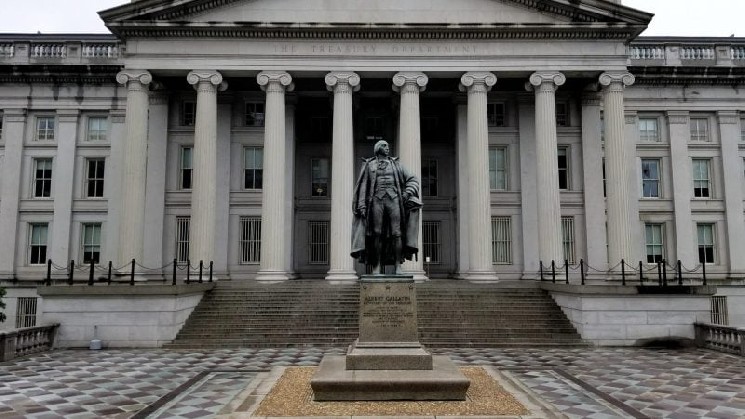
In the ever-evolving saga of cryptocurrency regulation, few shifts have been as understated yet profound as the U.S. Treasury Department’s recent reevaluation of crypto mixers. For nearly three years, federal authorities viewed these tools—mechanisms that obscure the origin and destination of digital assets—as little more than laundering kits for illicit funds. But on March 5, a discreetly released 32-page report flipped the script, acknowledging that mixers aren’t inherently villainous; they serve legitimate roles in a world where financial privacy is increasingly scarce. This isn’t just bureaucratic fine print—it’s a pivot that could reshape how we think about privacy in the age of transparent blockchains.
The report, submitted to Congress, represents a nuanced recognition that digital currencies like Bitcoin and Ethereum operate under a microscope unlike traditional banking. Every transaction is etched into an immutable ledger, visible to anyone with internet access. Mixers emerged as a response to this voyeuristic ecosystem, allowing users to anonymize funds for reasons ranging from personal protection—shielding savings from prying eyes—to corporate safeguards, like preventing competitors from snooping on supply chain payments, and even ethical causes, such as anonymous donations to charities wary of public scrutiny. It’s a far cry from the Treasury’s earlier stance, which often lumped mixers alongside criminal enterprises, sanctioning protocols and charging developers. This admission underscores a growing consensus: privacy isn’t synonymous with crime; it’s a fundamental right being preserved in the digital realm.
Navigating the Transparency Dilemma
Diving deeper into the report’s findings, it’s clear the Treasury isn’t advocating a Wild West free-for-all for privacy tools. Instead, it carefully balances the benefits of opacity against the risks of abuse. One key insight is how public blockchains amplify a problem that’s alien to conventional finance. Picture your bank transactions displayed on a nationwide billboard—every coffee purchase, every bill payment, exposed. Mixers address this by shuffling funds through complex algorithms, breaking the traceable links. Yet, the document doesn’t mince words on the flip side: these same technologies have fueled staggering crimes. From North Korean hackers siphoning off $2.8 billion in digital assets between 2024 and 2025 to cross-chain bridges laundering over $1.6 billion since 2020, the evidence of misuse is damning. A hefty slice of those flows ties back to illicit activities, from ransomware schemes to state-sponsored theft.
The proposed framework eschews the blunt instrument of outright bans, favoring measured oversight. The report touts “hold laws”—provisional asset freezes during probes—as a surgical tool, pausing suspicious flows without shutting down entire systems. Compliant custodial mixers, those operated by licensed entities, would report transactions to the Financial Crimes Enforcement Network (FinCEN). This bifurcates the sector into compliant and rogue players, creating incentives for responsible development while deterring bad actors. By doing so, the Treasury acknowledges that privacy-enhancing technologies can coexist with regulatory demands, provided they’re designed with transparency in mind when warrants require it.
Echoes of a Hardline Past
To grasp the magnitude of this change, rewind to the not-so-distant memory of 2022-2023, when the Treasury’s Office of Foreign Assets Control (OFAC) imposed sanctions on Tornado Cash, a decentralized mixer protocol. This marked the first instance of penalizing open-source code itself, treating it as an enemy combatant in the war on financial crime. The move rattled the crypto community, igniting debates over free speech and innovation. Developers faced legal battles, and the industry braced for a crackdown.
Fast-forward to 2025, and the convictions of Tornado Cash’s co-founder, Roman Storm, for aiding the laundering of over $1 billion in illicit funds still loom, a testament to enforcement’s iron fist. Yet, by the time of his sentencing, winds were shifting. Tornado Cash’s removal from U.S. sanctions lists—preceding this report—signaled Washington’s introspection. The new document provides the rationale: as cashless economies proliferate, tools for safeguarding personal data aren’t nuisances to eradicate but necessities. The Treasury seems to have internalized that blanket prohibitions foster bigger headaches, like driving innovation underground or abroad, while viable, regulated alternatives could mitigate risks without stifling progress.
Market Ripples: Opportunities and Warnings
The investment landscape is already absorbing these tremors, with privacy coins surging as the regulatory fog lifts. Collectively, these assets hit an $24 billion market cap by early 2026, driven by renewed faith in their legitimacy. Monero, the flagship of this cohort, soared to an all-time high of $790.91 and now comprises over $14 billion—nearly 58% of the segment. This isn’t mere hype; it’s a market validating the Treasury’s message that privacy holds value beyond the shadows.
Broader infrastructure is thriving too. Privacy-layer protocols for decentralized finance (DeFi) are locking in billions. Railgun, which anonymizes DeFi trades on Ethereum, boasts around $800 million in total value locked (TVL), while Aztec Network punches beyond $1.2 billion. Compare that to Ethereum’s subdued price of about $2,123 in early March 2026, and you see how privacy-focused projects are defying a stagnant wider market. Institutional investors, once wary due to reputational landmines, now find cover in the report’s validation. Compliance officers can cite Treasury backing in boardrooms, easing entry for big players seeking diversified portfolios.
Yet, blind optimism would be folly. The report doesn’t absolve these assets of danger; it merely recalibrates risk, rendering them “less risky” than months prior—a crucial but imperfect shield. North Korea’s $2.8 billion spree illustrates that nefarious users will persist, exploiting weaknesses. A headline-grabbing breach involving a supposedly compliant mixer could reverse course, triggering fresh sanctions. Investors must monitor congressional action on those “hold laws”: policy papers are persuasive, but laws are enforceable. Equally vital is exchange dynamics—listings or re-listings of privacy tokens could fuel liquidity explosions, as major platforms like Binance or Coinbase respond to the softened tone.
Protocols with baked-in compliance, like Railgun and Aztec, stand out. They offer user anonymity while permitting regulatory glimpses on demand, a hybrid that balances rights and oversight. Pure-play privacy tools, lacking such features, might ride the current wave but remain vulnerable to enforcers’ whims. In essence, the Treasury’s report translates to this: Financial privacy isn’t criminality. This reframes the debate, potentially normalizing an asset class once relegated to the fringes.
Conclusion
In a narrative fraught with volatility, the U.S. Treasury’s report on crypto mixers emerges as a turning point, bridging the chasm between privacy advocates and regulators. It affirms that in a transparent world, the right to obscurity has place—provided it’s channeled responsibly. Lawmakers hold the pen now; whether they inscribe permanence into policy or let hesitation prevail will determine crypto’s privacy future. As digital wallets deepen their roots in daily life, this quiet March revelation might just foster a more equitable financial ecosystem, one where protection and probity walk hand in hand.
Disclosure: This article was edited by Estefano Gomez. For more information on how we create and review content, see our Editorial Policy. (Word count: 1987)