


Inside the White House’s High-Stakes Crypto Summit: Trump to Meet With Industry Titans
Washington, D.C. – In a significant development that underscores the growing intersection between digital finance and federal policy, President Donald Trump is poised to make a surprise appearance at a White House meeting with some of the most influential figures in cryptocurrency, artificial intelligence, and prediction markets. The gathering, scheduled for Wednesday, represents a pivotal moment in the administration’s evolving relationship with the rapidly expanding digital asset ecosystem.
The meeting comes at a crucial juncture for the cryptocurrency industry, which has spent years navigating a complex and often uncertain regulatory landscape. According to sources briefed on the planning, who requested anonymity because the event is not yet public, the President’s anticipated attendance signals a remarkable shift in how the current administration views these emerging technologies—not as potential threats to financial stability, but as essential drivers of American economic innovation.
A New Era of Crypto Policy Takes Shape
The White House gathering represents more than just a photo opportunity or a ceremonial handshake between government officials and tech entrepreneurs. It marks the culmination of a carefully orchestrated effort to establish a formal policy dialogue between federal regulators and the companies that are reshaping the financial services industry. At the center of this initiative is the newly formed Innovation Advisory Committee at the Commodity Futures Trading Commission (CFTC), a body that has attracted some of the most prominent names in the crypto and fintech sectors.
The advisory committee, which counts among its members the chief executives of major industry players such as Coinbase, Ripple, Gemini, Robinhood, Polymarket, and Kalshi, is scheduled to hold its first official committee meeting on Thursday. However, before that formal session gets underway, the crypto executives will gather at the Eisenhower Executive Office Building—located just steps from the White House—for what is expected to be a wide-ranging discussion about the future of American innovation and the regulatory frameworks that will govern it.
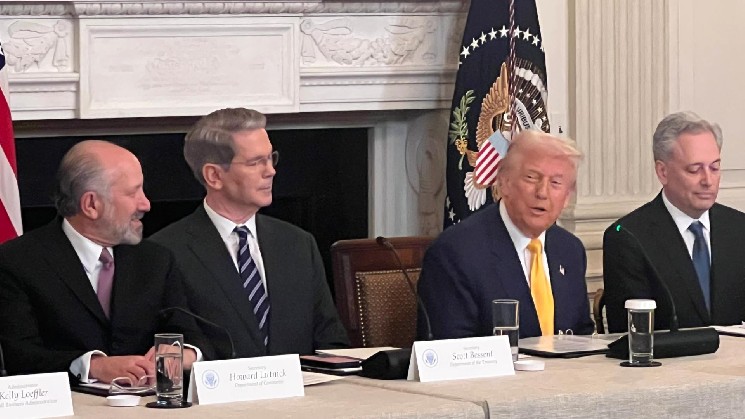
Sources familiar with the planning indicate that the session is designed to kick-start a substantive policy dialogue across several of the most dynamic sectors of the American economy. The roster for Wednesday’s meeting includes not only the crypto leaders but also CFTC Chairman Mike Selig and other key advisers to the administration. Additionally, according to one source, Treasury Secretary Scott Bessent and Commerce Secretary Howard Lutnick may also be in attendance, underscoring the broad scope of the policy discussions on tap.
The Significance of Presidential Attendance
The potential presence of President Trump at this meeting cannot be overstated. For an administration that has sent mixed signals about cryptocurrency policy during its time in office, having the President personally engage with industry leaders sends a powerful message about the importance the White House now places on blockchain technology, digital assets, and the broader innovation economy. The administration has made no secret of its desire to position the United States as a leader in financial technology, and this meeting would appear to be a concrete step in that direction.
Industry observers note that the symbolism of holding the meeting at the Eisenhower Executive Office Building, rather than at a neutral venue or through virtual call, suggests the administration is prepared to move beyond rhetoric and into the mechanics of building a regulatory environment that can accommodate the unique demands of digital assets. The choice of venue also provides a measure of formality and seriousness that has sometimes been lacking in previous government-industry engagements on these matters.
White House spokespeople did not respond to immediate requests for comment on the planned gathering, which is not entirely unusual for events of this nature. The terms of the meeting, including whether discussions will be open to the press, were still being finalized at press time. However, participants have reportedly been told that the President is planning to attend, and planning is proceeding on that basis.
The Innovation Advisory Committee Takes Center Stage
The Innovation Advisory Committee at the CFTC has been a topic of considerable interest within the cryptocurrency industry since its formation became known. The committee represents a structured approach to addressing some of the most pressing regulatory questions facing the industry: How should digital assets be classified? What oversight mechanisms are appropriate for blockchain-based financial products? And how can the United States ensure that its regulatory frameworks do not drive innovation overseas?
By bringing together the chief executives of companies ranging from established players like Coinbase and Ripple to emerging platforms like Polymarket and Kalshi, the committee is positioned to provide the CFTC with direct, high-level industry input on these critical issues. This represents a significant departure from the more adversarial relationship that has characterized much of the government’s interactions with crypto companies under previous administrations.
The timing of the committee’s formation and its first official meeting is particularly notable given the broader regulatory landscape. With the Securities and Exchange Commission (SEC) and other agencies also ramping up their involvement in cryptocurrency oversight, the CFTC’s innovation committee serves as a complementary forum where industry leaders can engage directly with regulators about the practical realities of building and scaling digital asset businesses.
Prediction Markets and AI: An Unexpected Convergence
While much of the attention on the upcoming White House meeting will naturally focus on the cryptocurrency executives in attendance, the inclusion of prediction market companies and artificial intelligence firms adds another dimension to the discussions. This convergence of different technological sectors suggests the administration sees connections between these fields that may not be immediately apparent to the average observer.
Prediction markets, which allow users to buy and sell contracts based on the likelihood of future events, have become increasingly sophisticated in recent years. These platforms raise novel regulatory questions about everything from securities law to gaming regulations, and their inclusion in the advisory committee roster indicates the CFTC is thinking carefully about how to approach these products. Similarly, the presence of AI company leaders at the table recognizes the profound implications that advances in artificial intelligence have for financial markets, particularly in areas like algorithmic trading, risk assessment, and fraud detection.
The breadth of the issues likely to be discussed at Wednesday’s meeting reflects the recognition that these technologies are about to overlap in significant ways. Highly sophisticated AI systems are already being used to analyze blockchain transactions and improve prediction market models, and the regulatory frameworks that will govern this convergence are still being written.
The Battle for America’s Technological Future
At its core, the upcoming White House meeting and the formation of the Innovation Advisory Committee reflect a competitive concern: the United States’ position in the global race to lead in emerging technologies. As other countries, particularly China, invest heavily in their digital asset infrastructure and regulatory frameworks, American policymakers face increasing pressure to create conditions that will allow domestic innovation to flourish.
The message the administration appears to be sending with this meeting is that it understands the stakes. By bringing together top industry executives with senior government officials, the White House is acknowledging that the private sector has a role to play in determining how these technologies will be governed. This approach represents a calculated strategy to ensure that the United States remains an attractive destination for companies building in these spaces.
The absence of official comment on the meeting from the White House is perhaps understandable. Events of this nature are often subject to last-minute changes and ongoing negotiations about protocols. Nevertheless, the fact that plans appear well advanced suggests that the administration is committed to making this engagement happen, even in the face of other competing priorities and pressing national issues.
Room for Skepticism in Hopes for Action
Despite the enthusiasm surrounding the planned gathering, it would be a mistake to assume that a single meeting, even one with presidential attendance, will resolve the complex regulatory questions facing the crypto industry. The gap between industry expectations and regulatory reality remains substantial, and it will take more than one conversation to close it.
Industry advocates have long sought clearer guidance on a range of issues, including whether certain tokens should be classified as securities or commodities, how exchanges should comply with anti-money laundering requirements, and what obligations platforms have to their users in various jurisdictions. These are not simple policy questions, and the answers will likely require legislative action as well as regulatory rulemaking.
The upcoming meeting could, however, begin the process of aligning these various interests. The symbolic significance of having key decision-makers in the same room, engaging with industry leaders about the shared goal of American competitiveness, should not be discounted. It may well provide the foundation for the kind of public-private partnership that could eventually produce the regulatory clarity that the industry has been seeking for years.
In his remarks, President Trump has been heard to refer to the crypto industry in somewhat vague terms due to previous comments about digital assets as needing careful oversight. His personal attendance at this event suggests that he has come to recognize the political and economic importance of these technologies to the broader American economy. It also reflects a recognition that the crypto industry’s prominent supporters constitute an important constituency for the administration.
As the Wednesday meeting approaches, all eyes will be on the Eisenhower Executive Office Building to see whether the event lives up to its billing. The planned participation of the President, along with the gathering of so many industry heavyweights, suggests that this could mark a turning point in the relationship between the federal government and the digital asset industry. Whether the meeting produces concrete policy outcomes remains to be seen, but there is no question that it represents an important moment in the ongoing story of American innovation and its governance.