




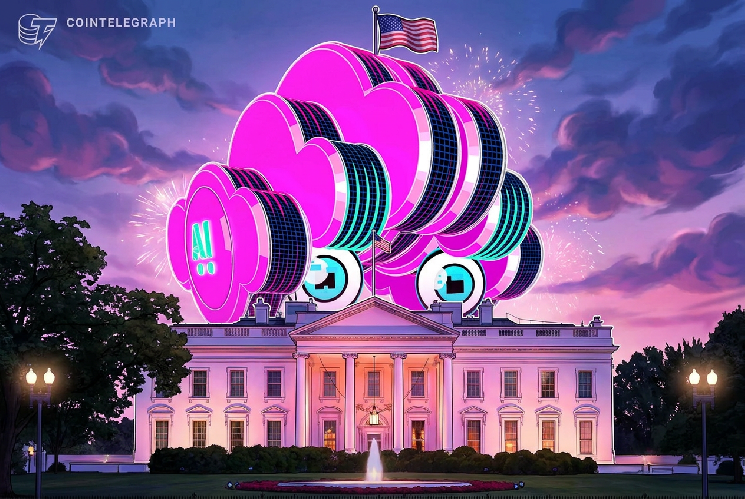
AI Safety Takes Center Stage: Anthropic CEO’s Call to Slow Development Splits Silicon Valley and Draws White House Action
A Three-Step Framework for Caution
The race to build ever-more powerful artificial intelligence has reached a critical inflection point, and the industry’s own leaders are now publicly wrestling with a question that once belonged to the realm of science fiction: How fast is too fast? For much of the past two years, the dominant sentiment in Silicon Valley has been one of unbridled momentum — multibillion-dollar investments, frenzied product launches, and an escalating competition among the world’s most valuable companies to push AI systems to ever more impressive heights. From the viral spread of large language models to the rapid integration of generative tools into everything from search engines to office productivity suites, AI has become the defining technology of this economic moment. But that consensus is beginning to fray. On Sept. 12, Dario Amodei, the chief executive of Anthropic, issued an unusually detailed three-step proposal urging a more measured approach to AI development. Amodei warned in stark terms that without deliberate intervention, the rapid advance of frontier systems could “outrun our ability to understand and control these systems,” according to a report from Cointelegraph. The warning carried extra weight given its source. Anthropic has spent its entire existence positioning itself as the safety-first alternative to OpenAI and other rivals, founded by former researchers who wanted to build powerful AI while keeping human welfare at the center of the project. Amodei’s willingness to publicly press for restraint suggests that concerns about AI’s trajectory are not confined to outside critics but are being felt acutely inside the industry itself — a notable departure from the carefully managed confidence that typically defines public communication from AI executives. The announcement arrives at a moment when public trust in AI companies is arguably at a low point, with governments around the world scrambling to craft rules for a technology that evolves faster than legislation can follow. Observers noted the significance of Amodei choosing to publish such a detailed critique rather than simply expressing general concern, reflecting a broader shift among AI leaders from philosophical hand-wringing to concrete policy proposals. The stakes, in other words, could hardly be higher.
Accenture Steps In as Embedded Evaluator
Amodei’s framework, described as a three-step roadmap for deliberate progress, places its primary emphasis on structured oversight and independent accountability at each stage of the development process. The first step, and arguably the most consequential, calls for the integration of external evaluators directly into the operations of AI companies — a mechanism designed to ensure that safety assessments are conducted by parties with no vested interest in shipping a product quickly. These embedded evaluators would, in effect, function as a permanent checks-and-balances presence within the laboratories where frontier models are built, reviewing everything from training data and model architecture to deployment protocols and mitigation measures before a system ever reaches the public. Subsequent phases of the framework are understood to involve staged deployment protocols and more rigorous post-release monitoring, creating a comprehensive oversight loop that extends from the earliest stages of model design to real-world use. Anthropic did not wait long to put that principle into practice. The company announced it had chosen Accenture, the global professional services giant, to serve as its embedded evaluator — a move that Cointelegraph characterized as the first concrete step in implementing Amodei’s proposal. The partnership is significant on multiple levels. Accenture, which boasts an extensive portfolio of cybersecurity, risk management, and regulatory consulting work across virtually every major industry, brings a level of institutional credibility that few other firms could match. By inviting such an established outside entity into its internal processes, Anthropic is effectively trading some degree of corporate secrecy and development speed for an independent stamp of approval — a tradeoff that many of its competitors have so far been reluctant to make. It is a strategic bet that demonstrating a genuine commitment to safety will pay long-term dividends in public trust and regulatory goodwill, at a time when both are in short supply across the technology sector. The announcement was met with considerable attention across the industry, with specialists in AI governance noting that the arrangement could serve as a template for other companies under pressure to demonstrate accountability. The broader implications extend beyond Anthropic itself, potentially setting a precedent that regulators and policymakers could point to as a model for how AI companies should handle oversight.
Tech Titans Split Over the Need for Restraint
The response from the highest echelons of the technology world was immediate and revealing. OpenAI CEO Sam Altman, whose company stands at the very center of the AI boom, responded positively to Amodei’s proposal — an endorsement that surprised some observers given the fierce commercial rivalry between the two firms. Altman has consistently acknowledged the risks associated with advanced AI, even as he has pushed ahead with rapid deployment of increasingly capable models, and his willingness to back a framework that would impose external oversight suggests a growing recognition that the industry’s credibility depends on demonstrable accountability. Notably, Altman’s response came even as his own company has faced scrutiny over its safety practices, with former employees publicly questioning whether commercial pressures have eroded OpenAI’s commitment to cautious development. Elon Musk, the CEO of SpaceX and a longtime outspoken critic of unchecked AI development, also voiced his support, aligning himself with a call for caution that echoes warnings he has made for more than a decade. Musk’s history on the subject is well documented, from his famous description of AI as more dangerous than nuclear weapons to his repeated calls for preemptive regulation and his subsequent launch of his own AI venture, xAI. The unanimity, however, ended there. Jensen Huang, the chief executive of Nvidia, pushed back sharply against the notion that additional regulation is necessary. Huang, whose company supplies the essential chips powering nearly every major AI system in the world, argued that the industry is capable of self-regulating and that excessive oversight risked stifling innovation at a moment when the United States is locked in a global technological competition with China. Huang’s position reflects the perspective of a company that has benefited enormously from the AI boom, with its graphics processing units now serving as the industry standard for training large models. The split among these three figures underscores a deeper fault line within the industry: those who view AI as a transformative opportunity to be seized with minimal interference and those who fear that the technology’s potential risks demand a far more cautious course. As the costs and consequences of AI deployment become increasingly visible, that fault line is likely to grow only more pronounced.
Trump Moves to Lock In Industry Self-Policing
The debate has now moved beyond the private boardrooms of Silicon Valley and into the highest levels of the US government. On Tuesday, President Donald Trump convened a gathering of AI and technology leaders at the White House, where they signed a new commitment to “self-police” their companies’ AI models and development practices, according to CNN. The meeting, which brought together some of the most powerful figures in the American tech industry, reflected the administration’s preference for voluntary compliance over hard regulation — an approach that aligns with the wishes of many in the sector but has drawn criticism from safety advocates who argue that self-policing has historically been an unreliable mechanism for protecting the public interest. Critics note that voluntary commitments, however well-intentioned, are only as strong as the resolve of those who sign them, and history offers numerous examples of industry self-regulation falling short in areas ranging from financial services to data privacy. The timing of the White House meeting, coming so soon after Amodei’s public proposal and the ensuing controversy, suggested that the administration is seeking to position itself as a leader on AI policy while avoiding the kind of heavy-handed legislation that many tech executives fear. Trump’s relationship with the technology sector has been characterized by a blend of courtship and confrontation, and this latest engagement appeared designed to project an image of constructive partnership — with the industry setting its own rules, under the watchful eye of a president eager to claim credit for American technological dominance. This is not the first time the administration has engaged with the tech industry on matters of national importance, but it represents one of the clearest signals yet that AI is being elevated to a top-tier policy priority. The symbolism of a Republican president and Democratic-leaning tech executives sharing a stage on AI policy was not lost on observers, who noted that the issue has emerged as one of the few areas of potential bipartisan agreement in an otherwise polarized Washington. For the first time, the White House has formally inserted itself into the AI safety conversation, and the industry has been put on notice that its internal debates now have national implications. Whether the self-policing commitment will carry meaningful weight remains an open question, and how the administration follows up — and whether it has the appetite or the machinery to enforce compliance — will be key tests in the months ahead.
Jay Clayton Emerges as Frontrunner for AI Oversight Post
Amid the flurry of proposals and commitments, another significant development was unfolding behind the scenes. CBS News first reported that Jay Clayton, a veteran Wall Street lawyer and former chairman of the Securities and Exchange Commission, had emerged as the frontrunner to take on a top artificial intelligence policy role within the administration. A White House official, however, told CBS that any such announcement would come directly from the president, dismissing the reports as speculation. But the reporting has drawn renewed attention to Clayton, whose career spans the highest corridors of American financial regulation. A former partner at the prestigious law firm Sullivan & Cromwell, Clayton led the SEC during Trump’s first term, earning a reputation as a steady hand during periods of market turbulence, and later served as interim United States Attorney for the Southern District of New York — one of the most prominent and demanding law enforcement posts in the nation. According to sources cited by CNN, Clayton is expected to remain in his current role as director of national intelligence even as he potentially takes on additional AI responsibilities. The Senate confirmed Clayton in July to lead the intelligence community, a post that has placed him at the center of the government’s efforts to understand both the promises and the perils of emerging technology. Asked about AI during his confirmation hearing, Clayton described the technology as a “game changer,” adding that it is “not only an opportunity but a threat” — a nuanced assessment that appears to have resonated with lawmakers on both sides of the aisle. His background in securities law, where disclosure, transparency, and risk assessment are paramount, could prove valuable in shaping an AI policy framework that emphasizes accountability. If the reports are borne out, Clayton would bring a distinctly financial-regulatory perspective to a field dominated by engineers and entrepreneurs, potentially signaling a shift toward more legally grounded oversight mechanisms and a more rigorous approach to evaluating AI risk across the federal government. His appointment would also mark a departure from the pattern of naming technology industry insiders to key AI posts, instead reaching for someone with deep experience in law, finance, and national security. Clayton, if tapped, would also inherit a policy landscape that is still very much in flux, with no federal AI legislation having yet passed Congress despite years of proposals and hearings.
David Sacks’ Tenure Ends, but Influence Lingers
The evolving landscape of AI policy also saw the conclusion of a notable chapter earlier this year when David Sacks, the venture capitalist who served as Trump’s special White House official for crypto and AI, wrapped up his tenure in that capacity. Cointelegraph reported in March that Sacks had completed a 130-day stint in the role, the maximum allowed under US rules for special government employees within a 12-month period. “We’ve now used up that time,” Sacks told Bloomberg at the time, confirming that his formal appointment had run its course. The unusual arrangement — a specialist brought in for a limited term — suited Sacks’ style, allowing him to operate as a high-level advisor without the burdens of permanent government service. During his time in the role, he was credited with helping shape the administration’s approach to both cryptocurrency and artificial intelligence, two sectors that have become increasingly intertwined as tech companies pour billions into AI development and digital assets. His pragmatic, market-oriented perspective stood in contrast to the more alarmist rhetoric that often characterizes discussions of AI risk. But Sacks’ departure from the formal role does not mean a departure from influence. He is expected to continue shaping policy recommendations across a broad range of technology industries in his capacity as co-chair of the President’s Council of Advisors on Science and Technology. His dual focus on digital assets and AI — often referred to colloquially as the “crypto and AI czar” position — helped cement a policy approach that treats both sectors as strategic priorities rather than passing trends. Sacks’ background as a member of the so-called PayPal Mafia and a successful venture capitalist at firms like Craft Ventures gave him a unique perspective on how emerging technologies evolve from niche curiosities into mainstream industries. As the United States continues to grapple with how best to oversee the development of transformative technologies, the interplay between industry leaders, government officials, and independent evaluators will only grow more complex. Amodei’s proposal has placed a marker in the ground, and the response from Silicon Valley and Washington alike suggests that the conversation around AI safety — far from fading — is only just beginning. The coming months will reveal whether the industry’s cautious voices can translate their principles into durable policy, and whether the nation’s leaders are prepared to make the difficult choices that a rapidly evolving technological landscape demands. The only certainty, for now, is that the question of how to manage the most consequential technology of our era is no longer a matter of idle speculation — it is a pressing policy challenge demanding immediate attention.