


Trump Unleashes Major Offensive Against Iran Amid Escalating Tensions
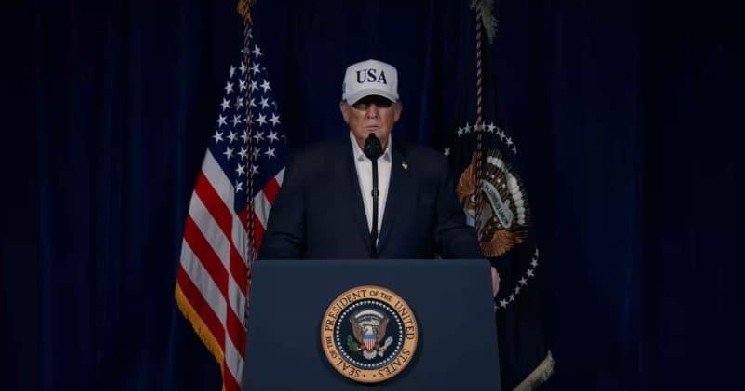
In a bold and unprecedented move, President Donald Trump announced on Saturday that the United States military had launched extensive combat operations against Iran, aiming to dismantle what he described as existential threats posed by the Islamic Republic. Standing defiant in a video address broadcasted globally, Trump declared the initiative as a decisive blow against Tehran’s aggression, signaling a new chapter in the fraught relationship between Washington and Tehran. This declaration comes at a time when geopolitical tensions in the Middle East have reached a boiling point, with accusations flying across the board. Trump’s words echoed through the corridors of power, framing the operations as not just retaliatory but preventative—a shield for American interests against a regime he labeled as “very wicked and radical.” As the world watched, the implications of this escalation rippled outward, prompting questions about the delicate balance of power in the region and the potential for broader conflict. Observers noted that such a sweeping military campaign marks one of the most aggressive stances taken by the Trump administration, especially in its second term, where foreign policy has often revolved around confronting perceived adversaries head-on. This moment, captured in Trump’s stern delivery, blended bravado with a raw urgency, as he vowed to eradicate Iran’s missile capabilities and naval strength, painting a picture of a president unwilling to back down.
A Campaign to Neutralize Iranian Threats and Safeguard U.S. Security
Digging deeper into the president’s rhetoric, the operations appear meticulously designed to target key Iranian assets that have long fueled instability. Trump specified that the strikes focus on missile production sites, military outposts, and the intricate networks that support armed proxy groups throughout the Middle East, including Hezbollah and various militias in Syria and Yemen. By destroying these elements, the White House argues, the U.S. is not only responding to years of provocative Iranian actions—such as attacks on tankers in the Strait of Hormuz and drone incursions—but also preventing Tehran from advancing its nuclear ambitions. Experts in international relations and military strategy have long warned that Iran’s ballistic missile program represents a formidable threat, capable of striking U.S. allies in the region and even beyond. Coupled with Tehran’s persistent uranium enrichment, despite global non-proliferation norms, this escalation underscores Washington’s view that diplomatic patience has worn thin. Diplomats and analysts alike have speculated on how this could reshape regional alliances, with some Middle Eastern governments quietly supporting the U.S. stance while others grapple with domestic pressures. The president’s framing of the campaign as a safeguard for American national security has resonated with his base, who see it as a fulfillment of campaign promises to prioritize U.S. interests. Yet, beneath the surface, this move raises concerns about blowback, including potential retaliation that could ignite wider hostilities. The narrative unfolding here is one of calculated risk, where Trump’s administration bets on swift action to curb Iranian influence, potentially altering the dynamics of power in a volatile theater.
Echoes of Last Year’s Airstrikes and Failed Diplomacy
To fully grasp the magnitude of this latest offensive, one must rewind to June 2025, when U.S. forces executed “Operation Midnight Hammer,” a precision airstrike involving B-2 Spirit stealth bombers and submarine-launched missiles aimed at Iran’s critical nuclear infrastructure. Targets included the underground uranium enrichment plants at Fordow and Natanz, as well as the facility at Isfahan, which processes nuclear materials. These sites have been central to Tehran’s controversial nuclear program, drawing international condemnation for years. Trump himself highlighted how this operation was intended to set back Iran’s atomic pursuits, yet the regime’s refusal to halt enrichment post-strikes left Washington dissatisfied. Following those dramatic raids, the U.S. embarked on diplomatic avenues, exploring backchannel talks in neutral ground like Oman and Switzerland. These negotiations, spanning early 2025, involved intermediaries and aimed at securing verifiable commitments from Iran to scale back its activities. However, sources familiar with the discussions reveal a yawning gap: Tehran demanded sanctions relief and steadfast commitments not to withdraw from regional conflicts, while Washington insisted on tangible halts to missile tests and support for proxies. The breakdown of these talks underscored a fundamental mistrust, pushing Trump toward militaristic resolve. In the months since, Iran has reportedly ramped up its defenses, integrating advanced air systems and bolstering alliances with Russia and China, complicating the landscape further. This history of failed outreach and subsequent military action paints a troubling picture of a standoff where words have given way to weapons, with each side interpreting the other’s moves through a lens of suspicion. For the global community, this chapter in U.S.-Iran relations serves as a stark reminder of how quickly diplomatic windows can slam shut, leaving open-ended confrontations that ripple across economies and societies.
Pentagon’s Strategic Buildup in the Persian Gulf
The swift execution of this new campaign didn’t happen in isolation; it was underpinned by extensive preparations that the Pentagon orchestrated over the preceding months. Intelligence reports indicate that by late February 2025, Washington had discreetly deployed two carrier strike groups, including the USS Gerald R. Ford and USS Dwight D. Eisenhower, alongside over a dozen additional warships, establishing a formidable naval presence in the Arabian Sea and Persian Gulf. This maritime armada, equipped with advanced guided missile destroyers and cruisers, positions the U.S. to project overwhelming force, enabling sea-launched strikes and aerial dominance. Military strategists emphasize that such deployments signal a shift from reactive deterrence to proactive engagement, allowing for sustained operations without immediate vulnerabilities. Satellite imagery and tracking data from global monitoring firms like Stratfor have corroborated these movements, noting the buildup as a clear escalation point. For instance, the carrier groups carried a full complement of F/A-18 Super Hornet jets and other assets capable of deep-strike missions, enhancing the U.S.’s ability to penetrate Iranian air defenses. This forward posture not only supports the anti-missile focus but also deters potential Iranian counterattacks on civilian shipping or allied bases. Analysts point out that similar deployments in past crises, like the 2019 tank warfare standoff, have proven effective in signaling resolve. However, this concentration of firepower in such close proximity to Iran raises logistical challenges, from managing intelligence-sharing with allies like Israel to ensuring supply lines remain uninterrupted. The narrative here is one of meticulous strategy, where every ship and aircraft represents a calculated move in a high-stakes chess game, designed to force Tehran into concessions or, failing that, isolation. As tensions simmer, the potential for miscalculations looms large, with experts warning that even a single spark could ignite unintended conflicts far beyond the Gulf.
Direct Appeals to Iranian Forces and Civilians Amid the Onslaught
Amid the barrage of strikes, Trump’s address carried a personal edge, directly engaging Iranian security forces and civilians in a message that blends deterrence with appeals for internal change. He extended an olive branch shrouded in condition—offering immunity to military personnel who lay down their arms and sever ties with the regime, while warning that resistance would lead to severe, potentially lethal outcomes. This tactic, reminiscent of psychological warfare tactics used in conflicts like Iraq or Afghanistan, aims to fracture Tehran’s defenses from within, exploiting any latent dissent among the ranks. At the same time, Trump urged ordinary Iranians to stay indoors, shielding themselves from the crossfire, but proposed a revolutionary path forward: once the military operations conclude, citizens should seize control of their government—a rare exhortation that positions the U.S. as a catalyst for regime change. “When we are finished, take over your government, it will be yours to take. This will be probably your only chance for generations,” he stated poignantly, invoking the fervor of popular uprisings like those in 2009. Such rhetoric resonates with narratives of liberation, drawing parallels to historical calls for self-determination. Critics argue this could inflame Iranian nationalism or provoke harder-line responses from Ayatollah Khamenei and his circle. Proponents see it as pragmatic, tapping into the undercurrents of economic discontent and suppressed freedoms that have fueled protests in recent years. Human rights groups have documented growing unrest in Iran, with inflation and sanctions biting hard, potentially priming the populace for such a moment. Yet, the gamble here is enormous—could this lead to a grassroots revolution, or merely unify Iranians against foreign interference? As the dust settles, these words from a U.S. president echo as both a threat and a promise, weaving the human element into a mechanized military operation.
Immediate Fallout: Israeli Strikes and Global Market Shudders
The ripples from Trump’s announcement spread rapidly, intertwining with concurrent developments that underscore the volatile Middle East powder keg. Reports emerged that Israel conducted its own precision strike on Iran mere hours before the U.S. declaration, with explosions rocking Tehran and triggering nationwide emergency alerts. This Israel-U.S. coordination, while not officially confirmed, suggests a synchronized effort to pressure Tehran, potentially targeting similar military or intelligence hubs. The synergy between the two allies highlights a deepening partnership against shared threats, with Israeli Prime Minister Benjamin Netanyahu praising the actions as necessary for regional stability. Meanwhile, the economic repercussions were felt acutely on global markets, where volatility spiked almost instantaneously. Bitcoin, the crypto benchmark, tumbled about 4%, dipping from around $65,500 to $63,000 amid broader investor unease about inflationary impacts and supply chain disruptions tied to Gulf tensions. Oil futures edged higher, reflecting fears of restricted flows through Hormuz, while stock indexes in New York and London fluctuated as traders digested the news. Diplomats and policymakers scrambled for clarity, with the UN Security Council convening an emergency session to discuss de-escalation. European leaders, including those from Germany and France, expressed concern over the potential for escalation, urging restraint and a return to negotiations. In contrast, some in Asia and Latin America viewed the moves as a display of American might, influencing their own foreign policy decisions. This confluence of military fireworks and financial tremors illustrates the interconnected web of global affairs, where one spark can unsettle everything from digital currencies to international diplomacy. As the standoff unfolds, questions linger: Will this pave the way for a lasting peace, or merely delay an even fiercer confrontation? In the annals of Middle East conflicts, this episode stands as a testament to the high stakes of power plays in an unpredictable world, leaving observers pondering the long road ahead.