



A New Era of Monetary Austerity: How Fed Chair Kevin Warsh is Reshaping Wall Street’s Bond and Digital Asset Markets
The Great Bond Repricing: Kevin Warsh and the Hawkish Dawning of a New Fed Regime
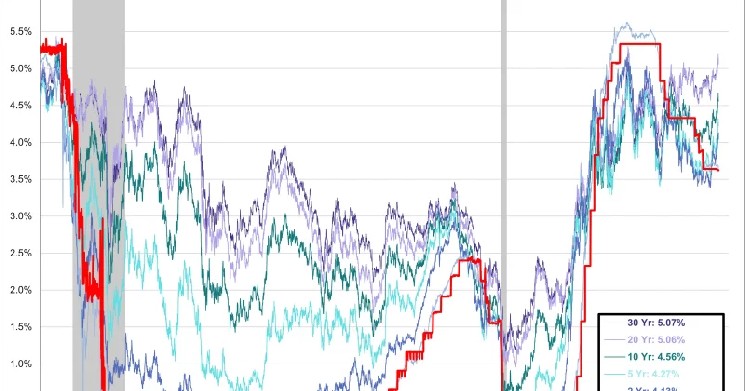
The global financial architecture is undergoing a seismic realignment as the bond market aggressively reprices the future of American monetary policy in the wake of a historic leadership transition. Following the official swearing-in of Kevin Warsh as the 17th Chair of the Federal Reserve on May 22, 2026, the complex machinery of Wall Street’s fixed-income desks quickly abandoned their long-held projections of aggressive interest rate cuts, pivoting instead toward a stark and reality-driven outlook. This dramatic psychological swing is most vividly illustrated by the performance of the benchmark 10-year Treasury yield, which has aggressively pushed past the critical 4.4% threshold, signaling a profound shift in how institutional capital views the cost of borrowing for the foreseeable future. Gone are the comfortable assumptions of a soft landing characterized by steady, predictable cuts; they have been replaced by a quiet realization that the new regime under Warsh will prioritize long-term inflation control over the immediate, short-term desires of equity markets. Tracing the footsteps of his predecessor, Jerome Powell, Warsh has assumed control of the world’s most powerful central bank at a structural crossroads where the legacy of post-pandemic inflation continues to shadow economic forecasts. Traders from Manhattan to Tokyo have spent the weeks following Warsh’s ascension adjusting their portfolios to reflect a “higher-for-longer” narrative, as short-term debt instruments feel the pressure of an unyielding central bank posture that refuses to blink in the face of financial market volatility. This sudden movement at the long end of the yield curve reveals a market that is not merely adjusting to a new personality in the Marriner S. Eccles Building, but is systematically rewriting its fundamental models for pricing capital, credit risk, and asset valuations on a global scale.
Anatomy of the Flattening Curve: Decoding the 2s10s Spread Dynamics
To understand the depth of this market transformation, one must look directly at the narrowing distance between short-term and long-term borrowing costs, specifically the closely watched 2s10s spread. The Treasury yield curve represents the graphical relationship between interest rates and the time to maturity of debt securities, and its structural flattening under Warsh’s early tenure suggests a market that is preparing for a period of protracted monetary tightening. In a healthy, expanding economy, the yield curve typically slopes upward because investors demand higher compensation, known as a term premium, to tie up their money over long durations where inflation could erode purchasing power. However, as the 2s10s spread compresses toward flat or even moves into inverted territory, it signals that investors are bracing for the Federal Reserve to hold short-term interest rates high to choke off economic overheating, even if it eventually results in a broader economic slowdown. This flattening dynamic reflects the bond market’s absolute belief in Warsh’s hawkish determination, signaling that long-term inflation expectations are being kept in check by a central bank that is willing to accept slower macroeconomic growth in exchange for ironclad price stability. For commercial banks, institutional pension funds, and sovereign wealth funds, this flattening curve compresses net interest margins and alters the traditional mechanics of lending, forcing a defensive shift in credit allocation and asset management. The compressing spread serves as a stark warning to leverage-heavy sectors of the economy, proving that the Federal Reserve under its new leadership is fully prepared to use the blunt instrument of elevated interest rates to restructure the macroeconomic environment from the ground up.
Geopolitics and High Energy Prices: The Inflationary Crucible Testing the New Chair
The external economic landscape confronting Chair Warsh is exceptionally complex, dominated by supply-side shocks and geopolitical tinderboxes that lie far beyond the direct reach of traditional monetary policy. Most notably, the ongoing Iran conflict and escalating tensions across the Middle East have triggered severe disruptions in global shipping lanes, maritime trade, and oil-producing infrastructure, sending Brent crude and domestic gasoline prices to levels that directly threaten the progress made on inflation over the past several years. These supply-driven price increases represent a classic monetary policy dilemma: raising interest rates cannot secure shipping routes or drill more crude oil, yet allowing elevated energy costs to seep into the broader domestic economy risks unanchoring long-term inflation expectations among consumers and businesses alike. Compounding this challenge is the politically charged environment surrounding Warsh’s appointment, highlighted by a narrow 54-to-45 Senate confirmation vote that reflects the deep partisan divisions and intense legislative scrutiny bearing down on the Federal Reserve. This razor-thin confirmation margin underscores the intense political pressure on Warsh as he succeeds Jerome Powell, with factions on Capitol Hill demanding low interest rates to stimulate domestic job growth, while others insist on immediate, aggressive action to preserve the purchasing power of the US dollar. By choosing to embrace a hawkish posture in his initial public addresses, Warsh has signaled his commitment to institutional independence, demonstrating to global markets that the Federal Reserve will not hesitate to maintain restrictive policies to neutralize persistent inflationary pressures, regardless of political crosscurrents.
A Legacy Forged in Crisis: Kevin Warsh’s Journey from the GFC to the Helm of the Fed
To anticipate how Kevin Warsh will guide the American economy through these contemporary storm systems, one must examine his formidable professional pedigree, particularly his previous tenure as a Federal Reserve Governor from 2006 to 2011. Serving alongside Chairman Ben Bernanke and Treasury Secretary Timothy Geithner during the darkest days of the Global Financial Crisis, Warsh was thrust into a historical crucible where he operated as the crucial, primary liaison between the academic-heavy central bank and the fast-paced, pragmatic trading desks of Wall Street. This baptism by fire constructed a policymaker who is uniquely sensitive to the plumbing of the global financial system, possessing an intimate understanding of how quickly banking sector liquidity can evaporate and how sudden panic can paralyze the real economy. Unlike conventional central bankers who rely almost exclusively on abstract mathematical theories and historical econometric models, Warsh’s crisis-era experience gave him a healthy skepticism of monetary groupthink and a deep awareness of the moral hazards associated with prolonged emergency interventions. This background explains his current hawkishness; having observed firsthand how extended periods of artificially low interest rates and massive balance-sheet expansion can distort market signals and inflate systemic bubbles, Warsh is inherently inclined to normalize policy as quickly as circumstances permit. His worldview is defined by the belief that true long-term financial stability cannot be achieved through perpetual central bank life support, and his early decisions as Chair reflect a determined effort to return free-market discipline to the pricing of risk and leverage in modern banking.
The Digital Asset Paradigm Shift: Inside Warsh’s Unprecedented Crypto Landscape
Beyond his traditional central banking credentials, what makes Kevin Warsh a truly revolutionary figure in modern finance is his extensive, sophisticated relationship with the digital asset ecosystem and the broader Web3 sector. During his grueling Senate confirmation process, Warsh made headlines by disclosing personal investments in more than 30 diverse cryptocurrency-related ventures, blockchain research funds, and decentralized finance protocols, establishing himself as the most tech-literate chairman in the Fed’s history. This personal involvement dates back to at least 2018, when Warsh publicly broke ranks with the traditional financial establishment by describing Bitcoin not as a speculative bubble or a transient fad, but as a “sustainable store of value” that could legitimately challenge gold in the digital age. This philosophical orientation represents an extraordinary departure from the skeptical, often dismissive stances of his predecessors, Janet Yellen and Jerome Powell, who largely viewed digital currencies as systemic hazards or vehicles for illicit finance. Under Warsh’s leadership, the institutional consensus is expected to transition rapidly from defensive hostility to pragmatic engagement, shifting the focus of federal oversight toward establishing clear, transparent regulatory frameworks that can foster compliant innovation. For institutional investors who have sat on the sidelines due to legal ambiguity, the presence of a crypto-literate Fed Chair suggests that the elusive dream of comprehensive cryptocurrency regulation may finally be realized, paving the way for the integration of public ledgers, tokenized real-world assets, and compliant stablecoin networks into the mainstream financial system.
The Investor’s Playbook: Navigating Higher-for-Longer Yields and Demanding Clarity
For asset allocators and retail investors, the strategic implications of the Warsh-led central bank are both challenging and full of unique opportunities, requiring an immediate reevaluation of historical portfolio construction. When risk-free, gold-standard asset yields like 10-year US Treasuries hold firm past 4.4%, the fundamental hurdle rate for every other asset class in the global ecosystem is permanently elevated, creating intense competition for incoming investment capital. Speculative growth stocks, biotechnology companies, and venture capital projects can no longer rely on the cheap capital that fueled their expansions during the post-pandemic era; instead, they must prove their capacity to generate real cash flows that can comfortably outpace a high risk-free return. Simultaneously, however, the promise of structural cryptocurrency regulation under a supportive Fed Chair introduces a powerful counter-trend, potentially triggering a historic influx of institutional capital into digital assets as major exchange-traded funds (ETFs) and retirement accounts gain clean, legalized pathways to allocate funds. Moving forward, the ultimate diagnostic tool for market participants will remain the 2s10s yield spread: if it continues to compress or falls into a deep, prolonged inversion, it will serve as the definitive signal that the bond market believes Warsh is willing to trigger a controlled economic slowdown to eradicate persistent inflation. Investors must therefore maintain a posture of strict tactical agility, recognizing that while the era of easy money has officially drawn to a close, the dawn of clear policy rules and structural modernization under Chair Kevin Warsh represents a fresh, incredibly dynamic chapter for global capital markets.