


The Digital Treasury: How the $322 Billion Stablecoin Market Is Redefining Global Finance
The $322 Billion Milestone: How Stablecoins Outgrew Sovereign Nations
STABLECOIN RESERVES VS. SOVEREIGN FX RESERVESStablecoins (Global) [==================================================] $322 Billion
United Kingdom (FX) [============================] $180 Billion
United Arab Emirates [===========================] $160 Billion
Canada (FX Reserves) [================] $110 Billion
In a transformation that has caught both Wall Street analysts and central bankers off guard, the collective market capitalization of the global stablecoin market has shattered all historical records, scaling a monumental mountain to surpass $322 billion. This astronomical figure represents more than just a milestone for digital currency enthusiasts; it marks a structural realignment of international liquidity that places the aggregate capital parked in these dollar-pegged digital assets above the foreign exchange reserves of over 95 sovereign nations. To put this into perspective, the financial engineering occurring within the decentralized crypto ecosystem now commands a pool of capital larger than the sovereign reserve war chests of G7 industrial powers like the United Kingdom and Canada, as well as oil-rich, high-growth economies such as the United Arab Emirates. Historically, foreign exchange reserves have served as a nation’s ultimate economic defense mechanism—a buffer maintained by central banks to back liabilities, stabilize national currencies, and weather severe macroeconomic shocks. That a class of purely digital assets, born barely a decade ago outside the traditional banking system, could amass a treasury of this scale challenges our fundamental understanding of global reserve management and signals a quiet, developer-led revolution that is eroding the monopoly of traditional banking rails.
A Paradigm Shift in Global Capital Allocation
This extraordinary capital accumulation points to a profound, secular migration of wealth from legacy financial institutions to modern digital financial infrastructure. For decades, global capital has been forced to navigate a labyrinth of traditional banking systems characterized by slow settlement cycles, restrictive weekend market closures, opaque fee structures, and the friction of intermediary correspondent banks. As corporations, family offices, and retail investors seek to optimize their liquidity, they are increasingly voting with their capital, migrating into blockchain networks that offer 24/7 programmable transactions, instant finality, and transparent, audit-ready ledgers. This shifts the perception of stablecoins from speculative trading instruments used to move between volatile digital assets to a foundational utility layer for the global financial system. The traditional banking apparatus, burdened by legacy codebase systems from the late twentieth century, is finding it difficult to compete with the sheer efficiency of open-sourced, public blockchain architecture. What we are witnessing is not merely a cyclical trend driven by cryptocurrency market movements, but a structural shift in how businesses and individuals choose to store, process, and deploy the world’s primary reserve currency—the US dollar.
Traditional Banking Rails Modern Digital Infrastructure
- Slow Settlement (T+2 Days) =========> – Instant Settlement 24/7/365
- Intermediary Counterparties =========> – Direct Peer-to-Peer Routing
- Regional & Siloed Networks =========> – Borderless Interoperability
The Dominance of the Digital Dollar: Inside the Duopoly of Tether and Circle
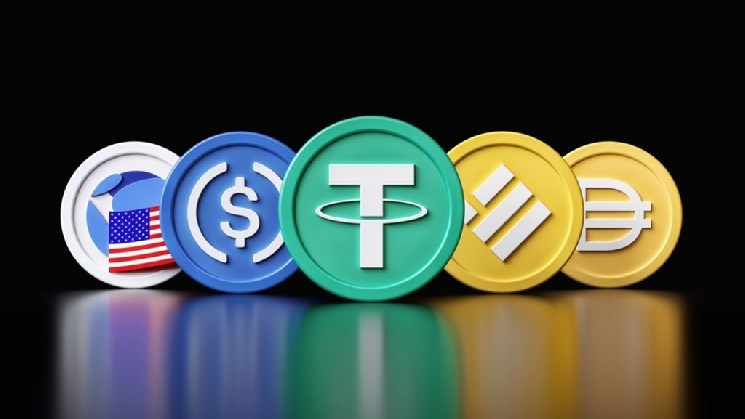
At the heart of this monetary expansion lies the undisputed reign of US dollar-backed stablecoins, which have effectively transformed the greenback into a highly portable digital commodity. This digital dollar economy is largely anchored by a powerful duopoly: Tether’s USDT, the undisputed liquidity king that dominates trading volumes across global exchanges, and Circle’s USDC, which has carved out a massive market share by positioning itself as the compliant, highly auditable darling of institutional finance. To support their massive issuance, these private issuers have quietly become some of the largest buyers of short-term US Treasury bills in the world, positioning themselves alongside major nation-states as critical creditors to the United States government. This systemic importance has driven traditional fintech companies, payments giants, and legacy asset managers to integrate these digital dollar solutions into their own offerings. Payment processors like Visa, Mastercard, and Stripe are working to bridge the gap between credit card networks and public ledgers, while corporate treasuries are actively exploring stablecoin-based cash management systems to maximize capital efficiency. This interest-bearing, high-velocity digital dollar represents a major upgrade to legacy cash equivalents, blurring the line between software-as-a-service and global central banking.
                COLLECTIVE STABLECOIN MARKET SHARE DISTRIBUTION

           Tether (USDT)                      Circle (USDC)          Others
     [======================================][====================][======]
                   ~70%                              ~24%            ~6%
Democratic Dollars: Empowering Developing Economies and Cross-Border Trade
While institutional adoption dominates headlines in Western financial hubs, the most profound human and economic impact of the stablecoin boom is unfolding across developing nations and emerging markets. In countries plagued by chronic double-digit inflation, currency depreciation, and strict capital controls—such as Argentina, Turkey, Venezuela, and Nigeria—stablecoins have evolved into a vital economic shield, providing ordinary citizens and local businesses with unprecedented access to stable US dollar liquidity without requiring a premium bank account. By bypassing the rent-seeking intermediaries of the traditional remittance economy, migrant workers can deploy cross-border payments instantly to their families for pennies, ensuring that hard-earned wages are not eaten away by foreign exchange spreads and processing fees. Furthermore, in the realm of international trade, small-and-medium enterprises (SMEs) in emerging economies are bypassing traditional correspondent banks, utilizing stablecoin rails to settle international B2B transactions in minutes instead of weeks. This bottom-up democratization of financial services is transforming stablecoins into an essential financial survival tool, demonstrating that the real engine of digital asset utility lies in its capacity to offer economic agency to the unbanked and underbanked populations of the Global South.
EMERGING MARKET PAIN POINTS STABLECOIN SOLUTIONS
- 100%+ Fiat Hyperinflation =========> – Dollar-Pegged Purchasing Power
- $20+ Cross-Border Wire Fees =========> – Micro-Transaction Gas Fees (<$0.01)
- Severe Capital Controls =========> – Censorship-Resistant Repatriation
The Regulatory Frontier: Bridging the Divide Between Crypto and Traditional Finance
As the stablecoin market swells to systemic proportions, regulatory bodies worldwide are transitioning from passive observation to active, comprehensive oversight. The era of the unregulated “Wild West” is rapidly drawing to a close, replaced by sophisticated legal structures such as the European Union’s landmark Markets in Crypto-Assets (MiCA) regulation and ongoing legislative efforts in the United States Congress. Far from dampening the market’s momentum, the introduction of clear, robust regulatory guidelines acts as a massive accelerant, providing traditional institutions with the legal safety net needed to deploy capital on-chain. By codifying strict capital reserve audits, consumer protection mandates, and clear redemption rights, these new laws are removing the reputational and operational hurdles that once kept risk-averse commercial banks and asset managers on the sidelines. According to policy experts, this ongoing regulatory integration is paving the way for stablecoins to transition from isolation into clean, deeply integrated instruments of the traditional financial system. This shift could soon yield a world where commercial bank liabilities, money market funds, and tokenized deposits coexist on standard public ledgers, unified under cohesive international compliance frameworks.
              THE EVOLUTION OF STABLECOIN REGULATION

  Phase 1: Unregulated         Phase 2: Global Frameworks     Phase 3: Deep TradFi
  Speculative Collateral  ===> (MiCA, US Stablecoin Bills) ===> Integration & Tokenized
  (2014-2021)                  (2022-2025)                     Deposits (2026+)
The Road Ahead: Will Stablecoins Become the Bedrock of the Future Financial System?
If current growth trends persist, the stablecoin ecosystem is poised to move from the periphery of finance to its very center, entirely re-engineering how value is generated, distributed, and preserved in the global digital economy. This trajectory is not without serious challenges; structural risks ranging from collateral asset quality and systemic liquidity mismatches to the threat of coordinated cyberattacks and centralized censorship remain subjects of intense debate among market strategists. Yet, the sheer scale of the network effects built by networks like Tether and Circle suggests that the digitization of national currencies is an irreversible trend. As sovereign nations contemplate their own Central Bank Digital Currencies (CBDCs), private stablecoin issuers continue to outpace public alternatives, relying on open-source, developer-led innovation to maintain their competitive advantage. The future global financial system will likely not be built on isolated national networks, but on open, interoperable, and secure stablecoin ledgers that democratize access to sound economic units of exchange. Ultimately, the rise of stablecoins to a $322 billion powerhouse is a preview of a borderless monetary architecture—one that promises to make financial services as ubiquitous, instantaneous, and accessible as the internet itself.
Disclaimer: The information provided in this article is for informational and educational purposes only and does not constitute financial, investment, legal, or professional advice. Readers should consult with a qualified financial advisor before making any investment decisions.