



Treasury Secretary Bessent Warns Trump About Potential Market Fallout from Powell Investigation
Federal Reserve Chairman Probe Creates Financial Uncertainty Amid Administration Tensions
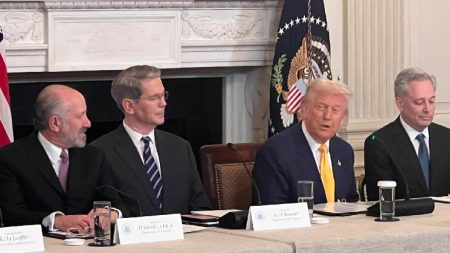
In a significant development that has sent ripples through financial markets, U.S. Treasury Secretary Scott Bessent has cautioned President Donald Trump about potential economic consequences stemming from the federal investigation into Federal Reserve Chairman Jerome Powell. The warning, delivered during a Sunday night meeting, highlighted concerns that the probe could destabilize markets and create unnecessary financial turbulence at a delicate economic moment.
According to multiple sources with direct knowledge of the conversation, Bessent expressed that the investigation has “created a great deal of confusion” in financial circles and could trigger negative repercussions across various market sectors. His concerns proved prescient, as Monday’s trading sessions reflected immediate market responses to the news, with the dollar weakening against major currencies, bond yields climbing, and gold prices—often considered a safe haven during periods of uncertainty—rising significantly. Market analysts attribute these movements directly to growing apprehension about potential political interference in the Federal Reserve’s traditionally independent operations.
Investigation Details and Unusual Circumstances Surround Powell Probe
The investigation against Powell centers on allegations that he made false statements regarding renovation costs for the Federal Reserve building in Washington, D.C. What makes this situation particularly unusual is the manner in which the probe was initiated. According to insider accounts, the investigation was launched by Washington D.C. Attorney Jeanine Pirro’s office without providing advance notification to the Treasury Department, senior White House officials, or high-ranking Justice Department leadership—a procedural deviation that multiple sources have characterized as “unprecedented” in federal governance protocols.
In an apparent attempt to distance himself from the controversy, President Trump stated Sunday evening that he was “unaware” of any subpoenas issued in connection with the investigation. Nevertheless, he continued his criticism of Powell’s performance, remarking that “He’s not very good at the Fed, he’s not good at building buildings either.” This dual-pronged critique suggests the president remains committed to pursuing the investigation despite acknowledging Bessent’s concerns about potential market destabilization. The timing has raised eyebrows among financial experts, who note that regulatory independence has historically been considered essential to maintaining market confidence in monetary policy decisions.
Powell Responds with Unusual Public Statement as Political Tensions Escalate
In a rare and forceful video statement released Sunday night, Chairman Powell categorically denied the accusations leveled against him while simultaneously criticizing the Trump administration for what he characterized as “politicizing” the Justice Department. Powell suggested the investigation represented retribution for the Federal Reserve not implementing interest rate cuts at the pace preferred by the president. “We face the threat of criminal charges because we set interest rates in the public interest,” Powell stated, framing the investigation as an attack on the central bank’s independence.
The political ramifications have already begun to manifest in the Senate, where Banking Committee member Thom Tillis has announced his intention to block the nomination process for Powell’s potential replacement due to concerns about the investigation’s timing and motivations. This development adds another layer of complexity to what is already a fraught transition period for one of the nation’s most critical economic institutions. Monetary policy experts warn that extended uncertainty surrounding Fed leadership could hamper economic planning for businesses and financial institutions across the country.
Treasury-White House Tensions Surface Amid Succession Planning Complications
Sources familiar with internal discussions indicate that Bessent’s concerns extend beyond immediate market reactions to encompass broader succession planning for the Federal Reserve leadership. Powell’s term is set to conclude in May, and administration officials had reportedly anticipated he might depart earlier once Trump announced his nominee for the chairmanship. However, the investigation has apparently eliminated that possibility, with one insider noting, “Bessent thought Powell would leave when the new chairman was announced. That’s not going to happen anymore; Powell is cornered, and that has made things even more complicated.”
Despite these reported tensions, a Treasury Department spokesperson issued a statement to Axios firmly declaring, “There is no disagreement between Secretary Bessent and President Trump. The sources in the report do not represent the Secretary.” The same sources clarified that during his meeting with Trump, Bessent neither questioned the necessity of the investigation nor defended Powell. This careful positioning highlights the delicate balance Treasury officials must maintain between supporting administration priorities and safeguarding financial market stability—a tension that has characterized many previous administrations but appears particularly acute in the current environment.
Investigation Origins Questioned as Markets Process Implications
Questions about the investigation’s origins have led to speculation among senior administration officials that Federal Housing Finance Agency Director Bill Pulte may have initially advocated for the probe. Pulte, however, has publicly denied any involvement, telling Bloomberg Television that the matter falls outside his agency’s jurisdiction. Reports indicate that Pulte had previously pushed for criminal proceedings against certain individuals in separate matters, though those efforts were ultimately unsuccessful in resulting in prosecutions.
As financial markets continue to process these developments, economists are closely monitoring indicators for signs of prolonged uncertainty or volatility. Bond market movements suggest investors are recalibrating their expectations about future monetary policy independence, while currency traders appear to be factoring in new risk premiums associated with potential political influence over central banking decisions. While the ultimate resolution of this situation remains unclear, what is certain is that the relationship between the White House, Treasury Department, and Federal Reserve has entered unprecedented territory with potential consequences for economic policy coordination during a period of ongoing inflation concerns and global economic challenges. As always with matters affecting financial markets, investors are reminded that news developments should be considered as information rather than investment advice.