






A 21st-Century Digital Capital Firm: Inside Strategy’s High-Stakes Bitcoin Playbook
In the rarefied world of institutional finance, few names have become as synonymous with risk-taking and visionary—or, to detractors, reckless—capital allocation as that of Michael Saylor. Recently, in an exclusive investor Q&A session moderated by journalist Natalie Brunell, Saylor—the co-founder and chief evangelist of the software behemoth reborn as a Bitcoin treasury company, Strategy—took center stage alongside his trusted lieutenant and CEO, Phong Le. This was not a typical quarterly earnings call; it was a masterclass in conviction, a philosophical and operational deep-dive into the heart of a conglomerate that has staked its entire existence on the enduring power of a single, volatile digital asset. More than just a discussion of balance sheets and financial instruments, the session offered a rare, unfiltered look into the psychology of a company that has, against all odds, become one of the largest corporate holders of Bitcoin. Saylor, ever the strategist, used the platform to reiterate his core doctrine: that the company is not in the business of trading crypto but is, rather, the vanguard of a new monetary order, building the infrastructure for the digital capital of the future. With the conversation touching on everything from the mechanics of leveraged buybacks to the psychology of enduring severe market drawdowns, the duo painstakingly painted a picture of a company that is resolutely secular in its mission, utterly undeterred by the skepticism of the broader stock market and the legacy financial institutions that continue to wield significant, if waning, influence.
Redefining the Asset: From Payment Rail to Digital Capital
Saylor launched an intellectual assault on the very definition of Bitcoin, meticulously separating it from the often-dismissive label of a “cryptocurrency” or a low-friction payment rail designed for buying coffee. Rejecting the arguments of countless central bank governors and regulatory bodies, he instead argued that the prevailing financial consensus is fundamentally flawed. He challenges the very notion that Bitcoin exists to facilitate transactions, instead casting it as a brand-new, vital asset class—a form of pure digital capital, akin to a digital Manhattan or a perpetual energy source, that exists to be accumulated and hoarded, not squandered on everyday expenses. He painted a stark and compelling picture of the current global economy, noting that 99.9% of the world’s wealth is currently locked away in traditional—and often failing—stores of value like real estate, gold, and conventional credit markets, vaults that have seen better days. For the price of Bitcoin to experience the 10- to 100-fold growth that Saylor envisions, it must attract a nearly incomprehensible tsunami of capital from these very same traditional markets. It is this grand vision that anchors the firm’s primary motivation for creating its suite of digital credit instruments. These are not just financial products; they are the bridge, the pipeline, designed to funnel assets from the fiat world into the promised land of the blockchain. They serve as a safe, regulated, and institutional-grade gateway for corporate treasuries and sovereign wealth funds to gain direct exposure to this digital gold, without ever having to touch a wallet or a private key.
The “Per Share” Metric: Justifying Dilution and Volatility
Inevitably, the conversation turned to the mechanics and the inherent contradictions of the stock-picking strategy. CEO Phong Le was asked to address a persistent concern that plagues the minds of value investors: how can a company, whose entire strategy involves perpetual capital raises and large-scale debt issuance, plausibly justify diluting existing shareholders? Le delivered a resolute and passionate defense. He argued that, in this new paradigm, the only metric that truly matters is “BTC per share.” As long as the company is increasing the amount of Bitcoin it holds for every single share outstanding, he posited, then any increase in the share count—whether through convertible notes, term loans, or an at-the-market (ATM) stock sale—is actually accretive to the long-term value for shareholders. Le unveiled a stark, unapologetic acceptance of the stock’s inherent volatility. He acknowledged that a sudden 50% pullback in the price of Bitcoin can, and almost certainly will, translate into a stomach-churning 50-70% correction in the price of Strategy’s stock. However, he framed this not as a sign of weakness or mismanagement but as a natural, unavoidable, and even desirable feature of a long-term, leverage-driven model. He insisted that the company is not running a short-term trading desk. Instead, they are running a multi-year, perhaps multi-decade, capital growth model, built on the unshakable belief that Bitcoin will eventually reach a market cap that dwarfs the current size of the United States economy.
Navigating the Macro Maze: A Dynamic System of Capital Management
The discussion was not limited to high-level philosophy; the executives also offered a rare look into the sophisticated machinery behind their treasury operations. Far from being a simple, static buy-and-hold strategy, they described a hyper-dynamic system governed by complex rules and market signal-based triggers. They delved into the company’s playbook for navigating the treacherous waters of downside, highlighting the perpetual management of their cash positions. This involves a granular level of detail: they actively manage their dollar inflows and outflows while simultaneously managing a volatile asset base. When the opportunity is right, they can deploy strategies like using their treasury stock to issue more debt, or conversely, buying back their own discounted bonds. The talk revolved around a sophisticated understanding of their capital structure as a fluid, living entity rather than a static balance sheet snapshot. They discussed the “sequence of returns” risk and how they plan to use the cash flows from their now-profitable software business to provide a floor for the price of their stock, ensuring that they are not forced to sell their most precious asset during a downturn. This isn’t a company blindly accumulating a digital token; this is a company actively managing a diversified risk portfolio, using complex financial engineering to maximize the accretion of a single, hyper-volatile digital commodity.
The Fiat-Funded Infinite-Leverage Playbook
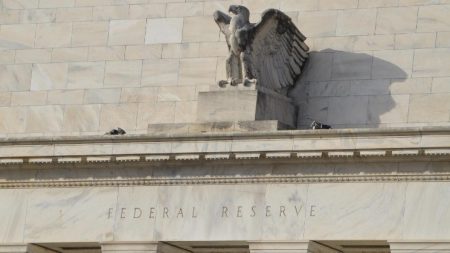
Perhaps the most striking segment of the entire session arrived when Saylor took a question about returning capital to shareholders in the form of a Bitcoin-denominated dividend. Defying the request of a vocal minority of investors, Saylor dismissed the idea with a wave of his hand, calling it, in no uncertain terms, “illogical.” For him, the rationale is elegantly simple: the ultimate arbitrage is to borrow in a depreciating asset and buy an appreciating one. The only true logic, in his view, is to accumulate capital at its lowest opportunity cost, and that means tapping the zero-yield, endlessly depreciating pool of fiat currencies—the dollar, the yen, the euro—and converting them into a hard, un-depreciable asset. In his world, the potential of a Federal Reserve or a Bank of Japan printing press is their greatest ally. Taking on debt in a fiat currency, even at a nominal interest rate, is effectively a short position against the central bank, a strategy that only works if the borrower is willing to refinance or repay in cheaper, inflated dollars. It is a high-conviction, all-in bet on the very failure of fiat money itself, a permanent bear case for the world’s reserve currencies. It’s a brilliant, almost audacious financial maneuver that positions the company as a kind of “perpetual motion machine” for arbitraging the monetary system, converting worthless paper into digital property, one bond issuance at a time.
The Immaculate Destination: A Legacy in the Balance
As the session drew to a close, the tone shifted from the operational to the adversarial. Saylor, who has been reticent to give a specific price target for fear of discouraging adoption, remained committed to his long-stated belief that a single Bitcoin could eventually be worth between $1 million and $10 million. Such a price would require Bitcoin to become the global reserve asset of the digital economy, capturing a significant slice of the world’s total store of value. Yet, despite the audacity of these claims, there was an undercurrent of calculated risk. The entire enterprise rests on the assumption that the traditional financial system will continue to be plagued by inflation and monetary debasement, making Bitcoin’s fixed supply more valuable. Is this the immortal strategy of a pioneer, courageously building a billion-dollar company on a foundation of digital gold? Or is it a high-wire act with no safety net, a parabolic bet on the collapse of the global economy? One thing is certain: the story of Strategy and its colorful CEO has forever changed the conversation about corporate treasuries, forcing a fundamental question upon every CFO in America and beyond: what is the true cost of capital if the currency itself is losing value? The answer, it seems, is a bet that will either be remembered as the greatest trade ever executed or the most spectacular controlled demolition in the history of corporate finance—and Saylor, for one, is content to wait and watch it all play out.