






Digital Wardens of the Wild: How a Global Alliance is Redefining Conservation
In an era where the frontlines of ecological preservation have shifted from remote African savannahs to the clean-room server farms of Silicon Valley, a groundbreaking global coalition has formed to dismantle the sophisticated financial pipelines of the illegal wildlife trade. Convened in London under the auspices of Prince William and The Royal Foundation’s United for Wildlife taskforce, this unprecedented collaborative initiative unites East African telecommunications powerhouse Safaricom with an elite cadre of multinational technology conglomerates, financial institutions, and digital asset analytics firms. Historically, the defense of endangered species was left to underfunded forest rangers and localized non-profit groups waging a brave but unequal war against heavily armed poaching syndicates. Today, however, as transnational criminal cartels increasingly exploit the dark corners of the internet to coordinate their networks and liquidate their spoils, the global corporate establishment is stepping in to weaponize its proprietary infrastructure. By integrating advanced digital hunting protocols directly into the global economic architecture, this alliance seeks to transform the traditional, reactive model of conservation into a proactive system of predictive interception, fundamentally altering how humanity protects its most vulnerable ecosystems against modern capitalistic plunder.
Policing the Digital Frontier: Smothering the Black Market in Virtual Space
To understand the necessity of this alliance, one must look at how modern e-commerce and social media platforms have accidentally democratized the sale of illegal wildlife commodities. Recognizing their role as involuntary intermediaries, tech giants including Google, Meta, TikTok, and Alibaba have committed to absolute containment strategies, pledging to scrub their networks of illicit wildlife listings before a single physical transaction can occur. Historically, black-market traders could hide in plain sight, utilizing coded language, private forums, and visual double-entendres to market everything from exotic live pets to carved ivory on mainstream platforms. Under the new agreement, these tech conglomerates are deploying cutting-edge artificial intelligence and computer-vision algorithms designed to decipher these covert lexicons and automatically flag suspicious imagery in real time. Rather than relying on peer reporting or slow, manual moderation teams, these proprietary digital systems intercept suspect listings during the upload phase, analyzing metadata, spatial patterns, and historical listing histories to ban offenders instantly. By establishing an automated digital dragnet across their platforms, these tech companies are effectively starving trafficking syndicates of their primary customer acquisition funnels, shutting down the digital storefronts of the global black market.
Starving the Syndicates: Mobile Money and the Demise of Shadow Capital
While cleaning up public-facing websites addresses the visible supply side of the black market, the core of the problem lies deeper within the global financial system, where the illegal wildlife trade flourishes as an exceptionally lucrative $23 billion annual enterprise. According to current estimates from the United Nations Environment Programme (UNEP), this massive illicit economy is a primary catalyst driving upwards of one million plant and animal species to the precipice of extinction. To sever the financial arteries sustaining these international cartels, Safaricom—alongside its parent organizations Vodafone and Vodacom—is deploying advanced artificial intelligence within its anti-money laundering (AML) and transaction-monitoring systems. The focal point of this defense is M-Pesa, Africa’s dominant mobile money platform, which has revolutionized financial inclusion across the continent but has also been targeted by criminal networks seeking to move funds quickly across rural borders. By utilizing machine-learning models to analyze millions of micro-transactions, Safaricom can now identify anomalous payment behavior—such as rapid, localized transfers occurring near national wildlife parks followed by larger, consolidated transfers to urban hubs—allowing financial institutions to freeze suspect accounts before the capital can be laundered into the legitimate financial stream.
The Crypto Crackdown: Exposing Hidden Corridors of Alternative Finance
As traditional financial routes become increasingly hostile to criminal cartels, traffickers have turned to decentralized digital environments and pseudonymous payment processors to move their wealth undetected across national borders. In response, mainstream payment processors and leading blockchain analytics firms, including PayPal, Chainalysis, TRM Labs, and Luno, have forged a parallel front to track and expose the digital asset corridors used by modern wildlife smugglers. Utilizing advanced digital forensics, transaction mapping, and cryptographic analysis, these security networks strip away the anonymity layer often associated with public ledgers, tracing illicit funds directly to concrete off-ramps and matching virtual wallets with real-world identities. This specialized tracing network allows investigators to track payments made in diverse cryptocurrencies across the globe, flagging transactions associated with key transit points in Southeast Asia, Africa, and Europe. This collaborative tracking of digital assets and traditional cash flows ensures that no matter how complex the financial architecture of the trade becomes, the cash flow can be mapped, monitored, and dismantled, proving that decentralized networks are no longer a safe haven for transnational criminal syndicates.
Keratin on the Scale: The Brutal Economics and Bitter Legacy of Extinction
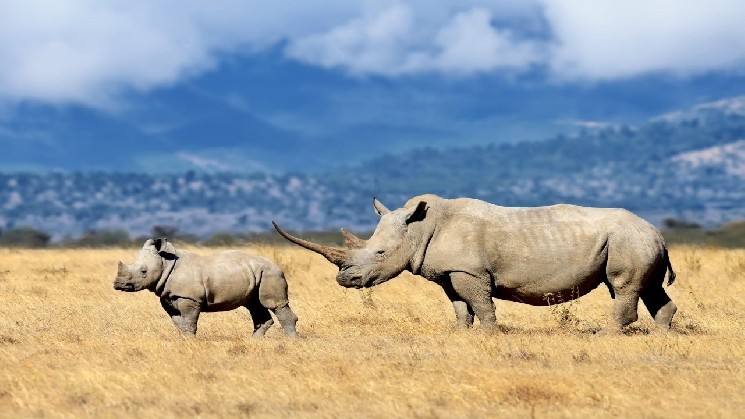
The urgent necessity of this digital and financial intervention is illustrated by the tragic history of Africa’s iconic megafauna, particularly the white rhinoceros, a species that has long served as a warning of how quickly unregulated, high-value black markets can push an animal to the edge of extinction. Over the last century, intensive, highly coordinated global conservation efforts managed to successfully revive the Southern White Rhino population from the brink of extinction to a fragile status of around 17,000 individuals, only to see those hard-won victories threatened by a modern rise in organized poaching. On the illicit market, rhino horn—which is biologically composed of simple keratin, the exact same unremarkable protein found in human hair and fingernails—has commanded prices as high as $60,000 per kilogram, making it more valuable by weight than gold, platinum, or cocaine. This massive profit margin transformed poaching from localized sustenance hunting into the domain of transnational military-style syndicates, who use helicopters, night-vision equipment, and corrupt border officials to harvest the horn for wealthy buyers. By neutralizing the payment infrastructure that makes this highly organized violence profitable, the new coalition aims to disrupt the business model of these syndicates, ensuring other vulnerable species do not face the same systematic destruction.
A New Paradigm for Global Security: Tying the Net on Transnational Environmental Crime
This coordinated pivot by the private sector represents a major turning point in corporate environmental responsibility, moving past symbolic philanthropic donations toward deploying core digital, technological, and financial architecture against organized crime. David Fein, the co-chair of United for Wildlife, noted that the private sector’s modern focus reflects a growing understanding that the illegal wildlife trade is not merely an isolated environmental crisis, but a systemic threat to international financial security, public health, and corporate integrity. To ensure that these digital and monetary initiatives are matched by ground-level physical security, global aviation and transport leaders, including British Airways and Heathrow Airport, have also announced public awareness and training programs designed to assist airport personnel and international travelers in identifying and reporting smuggled wildlife components. By combining digital transaction monitoring, machine-learning platform surveillance, and global transit point security, this alliance has constructed a highly integrated defense network, demonstrating that in a highly connected world, the most effective way to save endangered wildlife is to disrupt the flows of technology and capital that drive the trade.