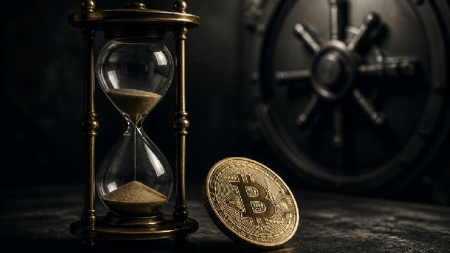




The Quantum Time Bomb: Why Nation-States Are Stockpiling Encrypted Data Today
Subheadline: “Harvest Now, Decrypt Later” attacks pose a growing threat to global cybersecurity, with experts warning that today’s encrypted secrets won’t stay secret forever
In the shadowy corridors of cyberspace, a quiet but relentless operation is unfolding. Sophisticated threat actors — including some of the world’s most powerful nation-states — are systematically intercepting and storing vast troves of encrypted data, not because they can read it today, but because they are confident they will be able to read it tomorrow. This strategy, known in cybersecurity circles as “harvest now, decrypt later,” represents one of the most insidious and underappreciated threats to global data security in the modern era. While organizations around the world pour billions into firewalls, endpoint detection, and zero-trust architectures, they may be overlooking a far more existential danger: the data they believe is secure today could become an open book within the next decade. As quantum computing edges closer to reality, the question is no longer whether this decryption will happen, but when — and whether the world’s most sensitive information will still be worth protecting when that day arrives.
The Economics of Digital Espionage: Why Attackers Play the Long Game
To understand why this stockpiling strategy is so effective, one must first appreciate the fundamental asymmetry of time. For a nation-state intelligence agency, the calculus is simple: storing encrypted data is cheap, and the potential payoff is enormous. Every intercepted email, every financial transaction, every diplomatic cable, and every healthcare record represents a potential intelligence goldmine — if only the encryption can be broken. The logic is reminiscent of a bank robber who, unable to crack a vault today, simply steals the building and waits for a locksmith to retire. In the digital realm, this means massive data collection operations targeting everything from government communications to corporate trade secrets and personal identities. Security researchers have documented this behavior across multiple threat groups, with particular concern focused on operations originating from countries with advanced cyber capabilities. These actors understand something that many corporate IT departments have yet to fully grasp: encryption has a shelf life, and information retains its value long after it was first created. This creates a perverse incentive structure where the most sensitive data — the very information protected by the strongest encryption — becomes the primary target for harvesting operations.
Cracking the Code: Understanding Today’s Encryption Vulnerabilities
The encryption standards that protect modern digital communications — RSA, Elliptic Curve Cryptography, and AES — were designed in an era when computing power followed predictable, linear growth curves. For decades, the mathematical problems underlying these systems, such as factoring large numbers or computing discrete logarithms, have remained computationally intractable with conventional computers. But quantum computing threatens to upend this paradigm entirely. In 1994, mathematician Peter Shor developed an algorithm that, if run on a sufficiently powerful quantum computer, could factor large numbers exponentially faster than any classical computer. This seemingly abstract breakthrough has profound implications: nearly every encrypted communication transmitted today over the internet, through VPNs, across banking networks, or via messaging applications could be rendered decryptable by a machine running Shor’s algorithm. The race is now on to build that machine. Companies like IBM, Google, and various national research programs are making steady progress, with quantum computers now routinely performing calculations that would have seemed impossible just a decade ago. While true cryptographically relevant quantum computers may still be years away, the trend lines are unmistakable, and intelligence agencies are betting that those timelines will compress faster than most expect.
The Regulatory Trap: How Data Retention Laws Create Vulnerabilities
Compounding this threat is a factor that receives far less attention: legal and regulatory requirements mandating data retention. Organizations across the globe are legally obligated to store identity logs, financial records, medical histories, and sensitive corporate communications for periods ranging from five to twenty-five years or more. Banking regulations, healthcare privacy laws like HIPAA, tax codes, and national security statutes all require businesses to maintain comprehensive records of their transactions and communications. This means that even organizations that would prefer to purge old data for security reasons simply cannot do so without running afoul of regulators. The result is a ticking time bomb of sensitive information sitting in databases, backup servers, and cloud storage environments — all protected by encryption that may become obsolete before the retention period expires. A medical record created today, containing an individual’s genetic information, treatment history, and personal identifiers, is required to be retained for decades. But if quantum computers become operational before that retention period ends, that record becomes a liability. The same holds true for corporate contracts, intellectual property documentation, and government records. Regulators have created a system that forces organizations to hold onto precisely the information that adversaries are most eager to harvest — and then punishes them if they try to protect themselves by deleting it.
High-Stakes Targets: Industries Sitting on the Edge of a Quantum Abyss
While no sector is immune to the threat, some industries are significantly more exposed than others. The financial services sector, which processes billions of transactions daily and maintains decades of customer records, represents an especially attractive target. A harvested dataset of global financial transactions, decrypted a decade from now, would provide an adversary with a forensic map of the global economy — revealing mergers, acquisitions, investment strategies, and individual wealth patterns that could be weaponized for economic espionage or market manipulation. Similarly, the healthcare and pharmaceutical sectors hold genomic data and proprietary research that maintain their value for exceptionally long periods. A pharmaceutical company’s research into a new drug, if decrypted and stolen, could be used to create generics or to undercut the company’s market position years before its patents expire. Government and defense contractors face even more existential risks: classified communications, weapons system specifications, and intelligence methods that, if exposed years from now, could compromise ongoing operations and endanger lives. The problem is particularly acute for organizations in the intelligence community, diplomatic corps, and armed forces, where the operational security of sensitive information has a truly indefinite lifespan. And then there are the individuals — everyday citizens whose personal data, once harvested and decrypted, could be used for identity theft, blackmail, or social engineering attacks that unfold years or even decades from the original violation.
The Cryptographic Imperative: Preparing for a Post-Quantum World
The good news, if it can be called that, is that the security community is not powerless in the face of this threat. Cryptographers have been developing post-quantum cryptography (PQC) — encryption algorithms designed to resist attacks from both classical and quantum computers — for more than two decades. In 2016, the National Institute of Standards and Technology (NIST) launched a public competition to identify and standardize quantum-resistant algorithms, and in 2022, the agency announced its selections: CRYSTALS-Kyber for general encryption and CRYSTALS-Dilithium for digital signatures. But implementing these new standards is a massive undertaking that requires time, investment, and strategic planning. Every system that relies on legacy encryption must be updated, from the internet’s TLS protocol to corporate VPNs, email encryption, cloud services, and government networks. This process, known as “crypto-agility,” involves building systems flexible enough to swap out cryptographic algorithms as threats evolve. Organizations that begin this transition now, proactively, will be far better positioned than those that wait until a practical quantum computer is announced. Yet surveys suggest that most organizations have not even begun the process. A 2023 poll of cybersecurity professionals found that fewer than a third of organizations had established a quantum readiness roadmap, and even fewer had allocated budget to post-quantum migration efforts. This complacency is dangerous, especially given the “harvest now, decrypt later” threat landscape that continues to expand.
Racing Against Time: Why Organizations Must Act Before It’s Too Late
The parallels between this moment and previous inflection points in the cybersecurity landscape are instructive. When the Heartbleed vulnerability was disclosed in 2014, organizations scrambled to patch systems that had been exposed for years, and security experts grimly noted that attackers had likely been capturing data throughout the entire period — they just couldn’t use it yet. A similar dynamic is playing out today, but on a vastly larger scale and with an even more uncertain timeline. The “harvest now, decrypt later” threat is fundamentally about the intersection of time, technology, and data governance. No organization can fully control how long its information must be retained, and no one can precisely predict when a cryptographically relevant quantum computer will arrive. Estimates range from five to twenty years, with the most recent analyses suggesting that investment, not physics, is the primary constraint on the timeline. But the direction of travel is clear, and the risks of inaction are staggering. Every piece of sensitive data encrypted with current standards and stored for legal compliance could be exposed to a determined adversary with quantum capabilities. The solution requires a three-pronged approach: immediate assessment of data exposure and retention requirements, strategic investment in post-quantum cryptography and crypto-agile systems, and sustained collaboration between the public and private sectors to accelerate the migration to quantum-safe standards. The time to act is now — not because the quantum calamity has arrived, but because the adversaries are already building their collections, waiting for the day when the locks finally come off. When that day arrives, the data reveals its secrets, and the organizations that prepared will be the ones still standing. Those that failed to act will be left to explain to stakeholders, regulators, and the public why they allowed the world’s most sensitive secrets to be harvested for an inevitable decryption that they knew was coming all along. The quantum time bomb is ticking — the only question is whether we’ll be ready when it goes off.