



LIBRA Token Ruling: Why a New York Court Tossed the RICO Case Against Milei-Linked Crypto Backers
A Valentine’s Day Launch That Ended in Court
Valentine’s Day 2025 was supposed to be a celebration of the digital-asset market’s ability to reward momentum and buzz. Instead, it became the opening scene in one of the most closely watched cryptocurrency legal battles of the year. LIBRA, a newly launched token tied to Argentine President Javier Milei, exploded onto the market and was quickly promoted by the president, a libertarian leader whose enthusiasm for digital assets has made him a hero to many in the crypto community. But within hours, the fairy-tale narrative fell apart. Milei withdrew his support on the same day he had offered it, and the token’s price began a violent slide that left many investors holding significant losses. The whiplash was global: social media went into overdrive, financial regulators took notice, and a group of investors filed suit in a New York federal court. Their complaint, as recounted by the court, painted a picture of a crypto project launched with political star power and abandoned at the first sign of trouble. But when the case reached legal judgment, the story got far more complicated.
The court dismissed the complaint, resolving questions about the legal sufficiency of the claims and the court’s jurisdiction. The decision did not say that the LIBRA launch was legitimate, and it did not say that the defendants had acted lawfully. What it said was that the investors’ legal theories, at least as pleaded, could not survive the rigorous standards of federal litigation. For a case that had generated so much public interest, the ruling was a procedural end, not a final verdict on the merits. But for the investors, it was a decisive defeat, and one that illustrates just how difficult it can be to translate a chaotic crypto collapse into a winning lawsuit.
RICO Claims and the Six-Month Obstacle
At the center of the investors’ federal case was RICO, the Racketeer Influenced and Corrupt Organizations Act, a statute originally designed to dismantle organized crime but now frequently invoked in high-stakes fraud litigation. RICO is a powerful tool because it allows plaintiffs to seek treble damages and because it targets not just individuals but enterprises engaged in a pattern of criminal conduct. But the law was never intended to be a general-purpose remedy for unhappy investors. To survive a motion to dismiss, a RICO plaintiff must show a pattern of related racketeering acts — usually crimes like wire fraud — that demonstrates continuity. That continuity requirement is the heart of any RICO case, and it is often where ambitious lawsuits fail.
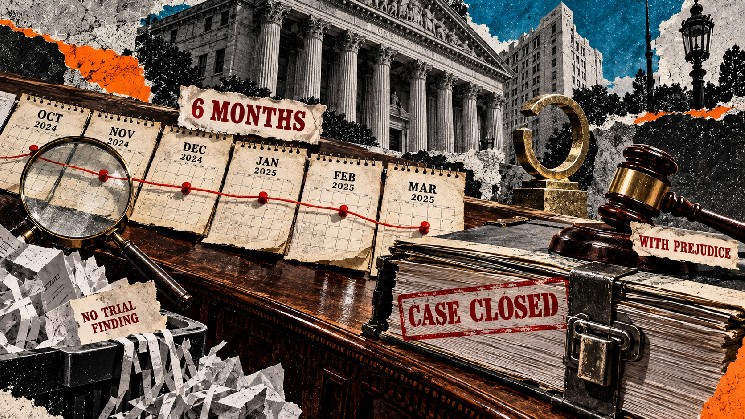
The LIBRA plaintiffs faced that challenge directly. They alleged that the defendants’ conduct stretched from October 2024 through March 2025, when the complaint was filed. The court measured that period carefully and concluded that it amounted to roughly six months. That was the first problem. Under Second Circuit precedent, closed-ended continuity generally requires a substantial period of time. The court acknowledged that two years is not a fixed cutoff and that courts must look at the totality of circumstances, but it also made clear that six months is not enough. The plaintiffs argued that the number of alleged schemes and the size of the victim pool should tip the scales. The judge disagreed. A large group of victims may be sympathetic, but it cannot substitute for an adequate duration of alleged criminal behavior. That reasoning undermined the RICO claims against the Kelsier defendants, a group that included Kelsier Ventures and Hayden Davis, as well as Benjamin Chow, Meteora’s co-founder and former CEO. Without a pattern that met the legal standard, the entire federal case lost its foundation.
No Continuing Threat, No Conspiracy
Because RICO plaintiffs have more than one way to establish continuity, the investors also tried to show an open-ended threat. This alternative route does not depend on proving how long the alleged wrongdoing lasted. Instead, it requires facts suggesting that the criminal conduct would continue unless stopped. The LIBRA investors argued that the project was not a one-off event. They described the defendants as operators of a repeatable token-launch business — a machine built to manufacture new digital assets, market them, and move on to the next opportunity. They pointed to referrals to other ventures and suggested that this playbook was actively in use. The court was not convinced.
The judge found that the complaint’s broad assertions about a repeatable business model and references to other projects did not establish, defendant by defendant, that the alleged wire fraud was a regular business practice. In other words, the plaintiffs needed to connect the dots between the general theory and each individual defendant’s actual conduct. That specificity was missing. The court’s reasoning is important because it highlights a recurring theme in federal litigation: a powerful narrative is not the same as a plausible legal claim. Jurors might have listened to an exciting story about a digital-asset scheme, but the judge’s job was to decide whether the complaint met the federal pleading standard. It did not. And because the substantive RICO claims failed, the accompanying RICO conspiracy claims failed as well. There was no conspiracy claim left to stand on its own.
The Amendment That Couldn’t Save the Case
The investors did not give up after the initial dismissal. They asked the court for permission to amend their complaint, a move that is common in complex litigation. Their proposed amended complaint introduced three additional token projects — MELANIA, ENRON, and TRUST — alongside a new plaintiff and new defendants. The goal was simple: to show that the LIBRA launch was not an isolated incident but part of a much broader pattern of deceptive token launches. In legal terms, adding these projects was an attempt to lengthen the alleged racketeering period and make the continuity argument more compelling.
But the court saw it differently. Even with the additional projects, the alleged racketeering period extended only to seven months. That was still not enough to establish closed-ended continuity. More importantly, the amendment did not add facts that would have cured the open-ended continuity problem. It simply added more examples of the same kind of conduct, without supplying the defendant-specific detail that the court said was missing. Under the legal standard that governs motions to amend, a court must allow a plaintiff to fix a curable defect unless the amendment would be futile. Here, the judge concluded that the proposed amendment was futile. Adding more names and more projects did not change the fundamental legal deficiency. The request was denied, and with it, the investors lost their final opportunity to reshape the federal case.
State Claims and the Jurisdiction Collapse
The failure of the RICO claims was only the beginning of the case’s unraveling. With the federal racketeering charges gone, the remaining state-law claims against the Kelsier defendants had to pass a separate test: personal jurisdiction. In the American legal system, a court cannot hear a case against an out-of-state defendant unless that defendant has enough minimum contacts with the forum state. This is not a technicality; it is a constitutional requirement rooted in due process. The investors argued that the LIBRA defendants had such contacts because they had used nationwide social media and operated in cryptocurrency infrastructure that touched New York. The court was not persuaded. Being active on social media and using blockchain platforms that are accessible everywhere is not the same as deliberately directing conduct at New York.
The court dismissed the state-law claims for lack of personal jurisdiction, and in doing so, it declined to reach the merits of those claims. That means the court did not decide whether the underlying state-law misconduct occurred. It simply decided that New York was not the right place for that part of the fight. The rest of the case collapsed under similar legal weight. Benjamin Chow, Meteora’s co-founder and former CEO, was dismissed from the case because the plaintiffs had not adequately pleaded fraudulent intent. Claims against Meteora itself were dismissed because the plaintiffs had not shown that it was a legal association or partnership capable of being sued. Each of those rulings may sound technical, but together they had a devastating effect on the investors’ ability to recover through this lawsuit.
A Defeat That Isn’t the Last Word
Hayden Davis, one of the most prominent figures in the LIBRA story, has denied wrongdoing from the moment the allegations became public. In June 2025, he raised jurisdictional objections and challenged the lawsuit’s foundation. That earlier procedural battle turned out to be a preview of the final outcome. The new ruling transforms that dispute into a concrete setback for investors pursuing recovery through this action. But the court’s order does not establish that every alleged act was lawful. It does not determine the status of every other possible recovery route. There may be opportunities for investors to pursue claims in other forums or under other legal theories. Regulatory investigations may still produce consequences. The LIBRA saga may not be over, but this chapter has come to a close.
For the broader cryptocurrency community, the ruling serves as a reminder that federal RICO claims are a demanding tool. Courts have grown increasingly cautious about allowing complex crypto market losses to be converted into federal racketeering cases. The narrative of a political endorsement, a quick launch, and a sudden collapse may have generated headlines, but it did not generate a legally sufficient complaint. The dismissal was with prejudice, meaning the same claim cannot be filed again in the same court. It is a clear legal victory for the defendants and a sobering lesson for investors. In the volatile world of digital assets, damage can happen quickly. But legal relief requires far more than a compelling story — it requires proof, precision, and a court willing to hear the case. In this case, the court made clear that the RICO road was not the right path.