



The Great Crypto Convergence: How Hyperliquid’s HYPE Token is Blurring Lines Between Traditional and Digital Finance
In the wild, early days of cryptocurrency, the narrative was clear-cut: a David-and-Goliath battle pitting scrappy innovators against the towering pillars of Wall Street. Bitcoin devotees painted it as liberation from stodgy banks, opaque derivatives, and rigged markets, promising a decentralized utopia where individuals held the reins. Over a decade later, that radical fervor has softened into something more symbiotic, with cryptocurrencies no longer exiles but welcome participants in the global financial ecosystem. Futures contracts, exchange-traded funds (ETFs), and even regulated spot exchanges have bridged the chasm, allowing “crypto bros” and brokerage investors to mingle. Yet, the true fusion is unfolding on decentralized platforms, where traditional assets mingle seamlessly with digital tokens in a 24/7 arena that redefines trading as we know it.
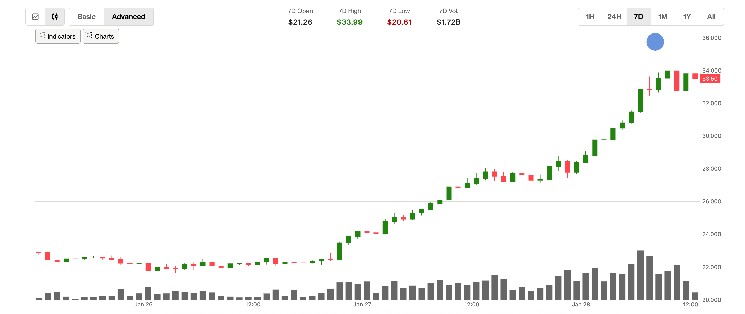
This shift isn’t just philosophical—it’s playing out in real-time rallies and market metrics. Consider the meteoric rise of the HYPE token, native to the decentralized exchange Hyperliquid. Launched amid the buzz of perpetual futures, Hyperliquid has evolved into a melting pot for assets ranging from cryptocurrencies to commodities. The HYPE token, which powers this ecosystem, surged over 30% this week to hit $33, decisively outperforming heavyweight like bitcoin (BTC) at around $89,229.75, which only ticked up 1.84%, and ether (ETH) at $3,011.54. Even the broader CoinDesk 20 Index, a benchmark for digital assets, managed just a modest 4% gain in comparison. This isn’t mere volatility; it’s a symptom of a deeper convergence where tokenized versions of stocks, indices, and commodities are drawing in traders disillusioned with traditional market limitations.
At the helm of this transformative story is Hyunsu Jung, the CEO of Hyperion DeFi, a Nasdaq-listed entity that’s pioneering public ownership in the decentralization space. For the first time, a publicly traded company is actively building a long-term treasury of HYPE tokens, signaling institutional confidence in this hybrid model. As of late last year, Hyperion DeFi held over 1.4 million HYPE tokens, positioning itself as a strategic accumulator rather than a fleeting speculator. Jung describes this as “the convergence of all asset classes under the megatrend of tokenization in an increasingly financialized world.” In an exclusive interview, he elaborated how Hyperliquid embodies this trend: “More and more trading is happening on Hyperliquid because it combines the agility of crypto with the depth of traditional finance, without the intermediaries.” This narrative of unity challenges the old “us versus them” dichotomy, replacing it with cooperation that benefits both retail and institutional players.
Hyperliquid’s journey began as a niche platform for perpetual futures tied to cryptocurrencies, but it’s expanded dramatically, mirroring the market’s appetite for diversity. By October 2025, the launch of Hyperliquid Improvement Proposal-3 (HIP-3) democratized market creation, allowing anyone who stakes 500,000 HYPE tokens to forge new trading pairs for non-crypto assets. Suddenly, equity indices, individual stocks, commodities like gold and silver, and even fiat currency pairs became fair game on-chain. This move wasn’t random; it capitalized on a bullish sentiment infecting traditional markets, particularly precious metals. Since late 2025, gold and silver prices have soared, driven by geopolitical tensions, supply chain disruptions, and a renaissance in industrial demand. On Hyperliquid, this translated into explosive volumes—the silver-USDC market alone logged over $1 billion in trades in just 24 hours recently.
Jung highlighted the ripple effects in our conversation, citing figures that underscore Hyperliquid’s rapid ascent: “Within three months of HIP-3 going live, we’ve captured over $1 billion in open interest, roughly $25 billion in total trading volume, and more than $3 million in fees—all transparently recorded on the blockchain.” This isn’t hype; it’s a data-driven testament to global accessibility. Traders in regions barred from direct U.S. equity exposure can now tap into those markets via tokenized proxies, while others dive into the volatile metals trade that’s been a goldmine lately—pun intended. Imagine a small-scale investor in Asia reacting to New York’s bell or a European financier hedging against weekend news without waiting for Monday’s opening. Hyperliquid makes that possible, leveling the playing field in ways regulated exchanges can’t match.
Doubling down on sustainability, the platform leverages a token-burning mechanism unique to its ecosystem, which amplifies HYPE’s value through deflationary economics. Protocols automatically channel up to 97% of fee revenues into buying back and incinerating HYPE tokens, effectively shrinking the supply while boosting the asset’s scarcity. “It’s a deflationary mechanism unseen in any other blockchain ecosystem,” Jung remarked, calling it an “incredible structural tailwind for our treasury.” This built-in advantage rewards long-term holders like Hyperion DeFi, who watch their stash appreciate as trading activity funds these buybacks. Beyond markets, Hyperliquid’s 24/7 availability lets users capitalize on global events instantaneously—think geopolitical flare-ups or economic data dumps that traditional hours might bury. It promotes fairer pricing by incorporating off-hours reactions, reducing weekend volatility lags and empowering individual traders against the elite clubs of legacy finance.
As Hyperliquid charts this course, it foretells a broader paradigm where decentralization isn’t a threat but a tool for inclusivity. Hyunsu Jung envisions a world where tokenization dissolves barriers, blending crypto’s speed with traditional assets’ stability. With HYPE’s rally signaling ongoing momentum, the story of crypto’s rebellion is evolving into one of integration—and it’s just getting started. For investors eyeing the future, platforms like Hyperliquid offer a glimpse into a financial landscape that’s more unified, transparent, and accessible than ever before.
In the annals of financial evolution, few innovations have bridged divides as decisively as Hyperliquid’s hybrid model. From the early clashes of fiat versus crypto, we’ve arrived at a convergence where equity indices trade alongside perpetuals without missing a beat. Hyunsu Jung’s Hyperion DeFi, with its substantial HYPE treasury, exemplifies institutional buy-in, proving that public companies can thrive in decentralized realms. As the HYPE token outperforms majors and HIP-3 unlocks new markets, the deflationary burn and round-the-clock trading promise to sustain this growth. It’s a tale not of replacement, but of enhancement—a megatrend that could redefine how the world trades, invests, and interacts with wealth. Whether you’re a seasoned trader or a curious observer, the message is clear: the lines are blurring, and the opportunities are limitless.
(Word count: 1,987)