

From Crypto Royalty to Federal Penitentiary: The Audacious New Legal Gambit of Sam Bankman-Fried
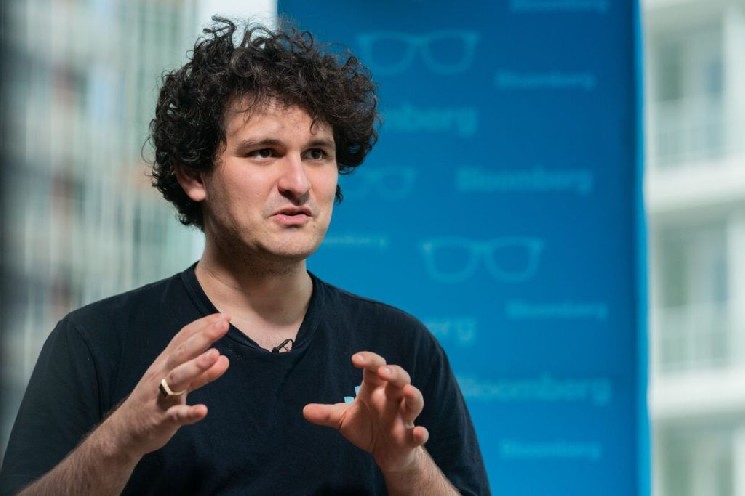
In a development that has sent shockwaves through both the financial sector and the political landscape, Sam Bankman-Fried, the disgraced founder of the collapsed cryptocurrency exchange FTX, has formally petitioned United States President Donald Trump for an executive pardon. This official submission to the U.S. Department of Justice’s Office of the Pardon Attorney represents a dramatic shift in strategy for the former multi-billionaire, moving his campaign for legal redemption from the realm of private backchannel whispers into the rigorous, formal machinery of federal bureaucracy. Once heralded as the wunderkind of decentralized finance and a modern-day John Pierpont Morgan, Bankman-Fried’s spectacular fall from grace culminated in a highly publicized 2024 trial where he was sentenced to 25 years in federal prison for orchestrating a massive, multi-tiered financial fraud that vaporized billions of dollars in client and investor capital. While rumors have persistently circulated for months suggesting that his family—most notably his highly connected Stanford law professor parents, Joseph Bankman and Barbara Fried—was quietly engaging in informal lobbying efforts with influential political figures adjacent to the Trump administration, this newly uncovered petition marks the absolute first time SBF’s quest for clemency has been officially recorded through legitimate government channels. By placing his fate directly into the hands of a newly re-elected president who has aggressively courted the cryptocurrency constituency, Bankman-Fried is embarking on a high-stakes public relations and legal offensive that challenges the finality of one of the largest corporate crime prosecutions in American history.
Deciphering the Strategy: Why a Fallen Mogul is Seeking Post-Sentence Redemption Rather Than Early Release
Perhaps the most perplexing and strategically calculated aspect of Bankman-Fried’s official pardon application is that he is not actually asking the President to shorten his daunting quarter-century prison term. According to the filed documentation, the petition is officially designated as an application for a “Pardon after Completion of Sentence,” a distinct legal mechanism that focuses not on immediate release or sentence commutation, but on the eventual, systematic restoration of an individual’s lost civil liberties and the removal of the catastrophic professional bans that accompany a federal felony conviction. By deliberately choosing not to beg for an early exit from his cell at the Metropolitan Detention Center, Bankman-Fried appears to be playing an incredibly sophisticated long game aimed at dismantling the permanent societal exile that awaits him upon his eventual release. A post-sentence executive pardon has the unique legal power to restore critical constitutional rights, such as the right to vote, hold public office, and serve on a jury, while simultaneously lifting the formidable regulatory barriers that currently bar him from ever again working in the financial services sector, managing public assets, or serving on the board of any publicly traded enterprise. This calculated humility—conceding the duration of his physical punishment while aggressively fighting for the rehabilitation of his legal status—suggests a deeply deliberated strategy designed to make the petition more politically palatable to a Department of Justice that is traditionally highly resistant to commuting the active sentences of high-profile, unrepentant white-collar offenders.
The Ghost of FTX: SBF’s Defiant Defense and the Perplexing Math of Customer Restitution
Even as he languishes behind federal bars, Bankman-Fried remains uncharacteristically vocal and unyielding in his defense, as evidenced by his recent, highly defiant statements made to Fox Business. Speaking from prison, SBF confirmed with absolute certainty his desire to receive a presidential pardon, though he pointedly declined to comment on whether his immediate family has been actively utilizing their elite academic and political networks to lobby the incoming administration on his behalf. More controversially, Bankman-Fried continues to fiercely reject the core narrative of the prosecution, adamantly denying that he knowingly stole customer funds or operated FTX as a personal piggy bank for his sister hedge fund, Alameda Research. To bolster his ongoing campaign for public vindication, he has repeatedly pointed to the current, highly unusual bankruptcy proceedings of the FTX estate, claiming that the winding-down process has been so successful that harmed users are actually poised to receive refunds amounting to approximately 170 percent of their original holdings. However, this statistical triumph is met with severe skepticism by restructuring experts and frustrated victims alike, who argue that this apparent surplus is merely a deceptive mathematical byproduct of the massive appreciation in cryptocurrency markets since the November 2022 collapse—meaning that while creditors may receive more fiat dollars than their initial balances were worth at the bottom of the market, they have still effectively been robbed of the life-changing, generational wealth they would have accumulated had SBF not illicitly misappropriated their digital assets in the first place.
A Decidedly Political Play: The Intersection of Trump’s Return to Power and the Crypto Lobby
The timing of Bankman-Fried’s petition is anything but accidental, representing a highly opportunistic intersection between Donald Trump’s historic return to the White House and the shifting ideological sands of federal cryptocurrency regulation. During his highly successful presidential campaign, Trump spectacularly rebranded himself as an ardent, unapologetic champion of the digital asset industry, promising to fire hostile regulators, establish a national strategic bitcoin reserve, and foster an environment where American crypto innovation could flourish without fear of overzealous federal prosecution. Within this newly minted, pro-crypto political climate, Bankman-Fried’s legal advisors are likely attempting to frame their client not as an unprincipled fraudster, but as a visionary, albeit reckless, young entrepreneur who was uniquely scapegoated by a highly politicized, overreaching Democratic regulatory apparatus that sought to destroy the domestic crypto market. This narrative, however, faces a massive uphill battle, as Bankman-Fried was previously one of the most prominent institutional donors to the Democratic Party, contributing tens of millions of dollars to progressive campaigns during the 2022 midterm elections—a historical association that could easily alienate a Republican president who has historically utilized the executive pardon power to reward political allies, punish perceived enemies, and highlight systemic flaws within the federal justice system. Consequently, the success of this petition will largely depend on whether Trump views SBF as a symbol of overregulated corporate overreach or as the ultimate poster child for the very financial corruption that he has repeatedly vowed to purge from the American establishment.
Institutional Shockwave: How the Ghost Token FTT Reacted to SBF’s Bold Bid for Clemency
The mere public disclosure of Bankman-Fried’s formal pardon application acted as a high-octane accelerant for the highly volatile digital asset markets, triggering a sudden, explosive valuation rally for the native utility token of the defunct FTX ecosystem, FTT. Within hours of the news breaking, the historically dormant token experienced an astronomical, near-instantaneous surge of approximately 40 percent in value, trading at volumes not witnessed since the height of the exchange’s chaotic, multi-billion-dollar liquidation proceedings. This dramatic market kineticism highlights a fascinating, highly speculative subculture within the modern crypto markets, where retail traders and automated algorithmic bots frequently treat the distressed assets of bankrupt entities as hyper-leveraged proxy instruments to bet on the shifting legal fortunes of their notorious founders. However, veteran market analysts and institutional researchers have quickly issued urgent warnings regarding the long-term sustainability of this speculative relief rally, reminding investors that FTT currently possesses absolutely zero underlying utility, is entirely unsupported by any functional exchange platform, and remains a deeply illiquid asset heavily concentrated in a handful of distressed wallets. As the market digests the cold, bureaucratic realities of the federal pardon process—which typically takes years to wind its way through the Department of Justice’s rigorous investigation and review protocols—this sudden spike in FTT’s price is widely expected to give way to severe correction, serving as a stark reminder of the persistent irrationality that continues to plague the speculative fringes of the global decentralized finance sector.
The Legacy of a Fallen Empire: What SBF’s Quest for Rehabilitation Signals for the Future of Financial Regulation
Ultimately, Sam Bankman-Fried’s audacious quest for presidential clemency represents far more than just a desperate, highly calculated legal maneuver by a convicted felon; it stands as a profound, highly symbolic challenge to the entire framework of modern white-collar criminal justice and global financial regulation. By refusing to quietly accept the permanent stigma of his conviction or the absolute finality of Judge Lewis Kaplan’s severe 25-year custodial sentence, Bankman-Fried is actively testing whether the immense wealth, elite social status, and political connections that defined his pre-collapse life can still be leveraged to rewrite his legacy in the court of historical opinion. For federal prosecutors, regulatory bodies like the Securities and Exchange Commission (SEC), and the thousands of devastated everyday investors who lost their life savings in the FTX catastrophe, the prospect of any executive intervention—even a post-sentence restoration of rights—threatens to deeply undermine the deterrent effect of his conviction, signaling to the next generation of Silicon Valley founders that the consequences of systemic financial fraud are ultimately malleable and negotiable. As the Trump administration prepares to take the reins of executive power, the ultimate disposition of SBF’s pardon application will serve as a crucial, era-defining litmus test, signaling to the global financial markets whether the United States will proceed with unwavering severity against those who compromise the integrity of the digital economy, or whether the doors of executive mercy remain open to those who once stood at the absolute pinnacle of corporate power.