


DTCC Teams Up with Blockchain Pioneers to Revolutionize Corporate Actions on Chain
In the bustling corridors of Wall Street, where billions in securities change hands daily, the Depository Trust and Clearing Corporation (DTCC) is quietly scripting a new chapter in financial history. Often overshadowed by the flashier pursuits of trading and investing, corporate actions—like dividend payouts, stock splits, and tender offers—form the unsung backbone of capital markets. These post-trade events are notoriously complex, involving meticulous reconciliation and distribution processes that can bog down even the most efficient systems. Now, DTCC is forging alliances with blockchain developers to bring this vital function onto distributed ledgers, promising faster, more transparent, and resilient operations in tokenized environments. This move isn’t just incremental; it represents a seismic shift towards modernizing infrastructure that has long relied on legacy technologies riddled with inefficiencies.
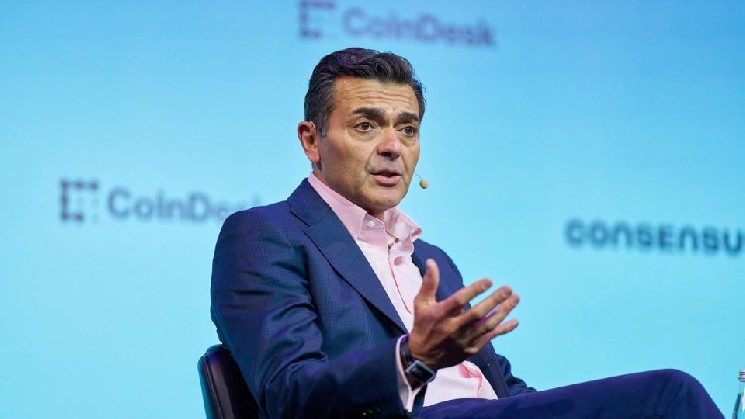
At the heart of this initiative is DTCC CEO Frank La Salla, whose insights at Consensus 2026 in Miami painted a vivid picture of the collaboration’s ambitions. Speaking candidly before an audience of blockchain enthusiasts and financial innovators, La Salla revealed that DTCC is partnering with top-tier layer-1 blockchain networks to overhaul how corporate actions are handled. These “very good L1s,” as he called them, are engineered for blistering processing speeds and formidable resilience, addressing long-standing issues that have hampered adoption in traditional finance. The goal? To streamline everything from dividend disbursements to buyback offers in the tokenized world, where assets reside on blockchain rather than in cumbersome databases. La Salla’s enthusiasm was palpable, framing this as not merely a tech upgrade but a catalyst for broader market evolution.
Yet, the current state of blockchain paints a sobering reality. La Salla pointed out that many networks, particularly those not optimized for high-throughput demands, can languish for days processing these intricate events. Imagine a world where a company’s quarterly payout stalls, causing ripples across portfolios and investor expectations—it’s the kind of delay that erodes trust and efficiency. DTCC, processing millions of such payments daily to serve the entire industry, yearns for layer-1 platforms capable of matching this scale. “We process millions of dividend payments a day to feed to the industry; we need high-performance L1s to do that,” he emphasized, underscoring the urgency. This isn’t about pie-in-the-sky dreams; it’s about practical solutions to bottlenecks that have persisted in decentralized finance, where transaction speeds often fall short of institutionalized expectations.
Zooming out, DTCC’s role as the linchpin of U.S. capital markets can’t be overstated. Settling roughly $20 trillion in Treasury and corporate securities trades each day, the clearinghouse has been a guardian of stability for decades. For nearly a decade, they’ve dipped their toes into blockchain waters, experimenting with prototypes and pilots. But as La Salla reflected, the technology only gained real traction in recent years, propelled by tangible use cases in the wild. Buoyed by this momentum, DTCC has ramped up its modernization efforts, including an announcement this week of starting tests for its tokenized securities platform in July, with a full rollout slated for October. This platform aims to digitize assets, enabling seamless trading and settlement without the friction of intermediaries and manual processes.
One of the most tantalizing prospects on this blockchain frontier is the concept of tokenized collateral, which La Salla hailed as potentially blockchain’s “first large-scale institutional use case.” In his vision, firms could deploy tokenized assets as collateral, unlocking liquidity instantaneously, unbound by the rigid schedules of traditional settlement windows. Picture this: A financier in Asia, working late on a New York Sunday, posts tokenized bonds or cash equivalents onchain and instantly taps U.S. dollar liquidity. No waiting for markets to reopen, no intermediary hold-ups—just pure, real-time access. “That is incredibly powerful,” La Salla declared, evoking a future where global finance operates 24/7, democratizing capital flows and boosting efficiency. It could transform cross-border operations, especially for institutions grappling with time zone disparities, fostering a more interconnected and fluid financial ecosystem.
Still, La Salla was quick to temper the optimism with a dose of realism, highlighting blockchain’s formidable challenges in scalability, liquidity fragmentation, and risk management. Netting transactions, for instance—a process where vast trading volumes are condensed into compact settlement obligations—remains elusive in decentralized systems. Traditional markets excel at this, compressing activity and slashing capital needs through centralized hubs. “Blockchain is decentralized,” La Salla noted, “Many of the efficiencies we get in our industry are through concentration of liquidity.” Without sophisticated netting equivalents, blockchain risks amplifying costs and fragmenting markets, where assets are siloed. Moreover, ensuring robust risk controls amid volatility is paramount, as failures could have systemic repercussions. These hurdles echo broader debates in the crypto space, from regulatory scrutiny to interoperability woes, yet DTCC’s persistent push signals that breakthroughs are within reach, blending blockchain’s strengths with institutional rigor.
The Road Ahead: Balancing Innovation with Stability in Decentralized Finance
As DTCC navigates this terrain, the broader implications for the financial sector loom large. Industry veterans recall how previous tech disruptions, like the advent of electronic trading in the 1990s, initially sparked skepticism before reshaping markets. Blockchain could follow a similar arc, but only if scaled wisely. La Salla’s collaborations with L1 networks aren’t isolated efforts; they align with global trends, from Ethereum’s ongoing upgrades for better throughput to emerging chains built for enterprise-grade security. By testing these integrations, DTCC is not just adopting technology—it’s helping define its future, ensuring that corporate actions in tokenized realms are as dependable as their off-chain counterparts.
Critics might argue that rushing tokenized securities could introduce new vulnerabilities, such as smart contract bugs or cyber threats. Yet, DTCC’s methodical approach, starting with secure tests and gradual rollouts, mitigates these fears. The July platform trial, for example, will involve controlled simulations, allowing experts to iron out kinks before October’s live unveiling. This phased strategy reflects a prudent balance: embracing innovation while safeguarding the $20 trillion daily settlement win that underpins economic vitality.
On the liquidity front, tokenized collateral holds transformative potential beyond mere Sunday trading scenarios. In a world plagued by fragmented pools, where assets on different blockchains can’t easily interact, DTCC’s vision could pioneer cross-chain liquidity protocols. Firms might soon borrow against tokenized assets held on one network to fuel trades elsewhere, reducing idle capital and enhancing returns. For emerging markets, this could mean unprecedented access to global liquidity, empowering entrepreneurs in regions traditionally marginalized by slow, paper-based systems.
However, the path forward isn’t without friction. Netting, that cornerstone of market efficiency, requires rethinking in a decentralized world. Traditional systems rely on central clearinghouses to aggregate and offset trades, minimizing exposure. Blockchain’s peer-to-peer nature challenges this, potentially leading to higher collateral demands if not addressed. La Salla’s insights suggest exploring hybrid models, where off-chain netting complements onchain execution, melding the best of both paradigms. Such innovations could prevent fragmentation, ensuring decentralized finance doesn’t devolve into isolated islands.
Amid these developments, DTCC’s decade-long blockchain journey offers valuable lessons. Early experiments were met with hurdles, from technical limitations to regulatory hesitance, but real-world successes—like automated dividends in test environments—have validated the premise. As La Salla emphasized, it’s the practical applications that matter, turning theoretical potential into operational reality. With tokenization on the horizon, the clearinghouse is poised to catalyze adoption across Wall Street, potentially inspiring counterparts in Asia and Europe to follow suit.
Ultimately, while challenges like scalability persist, the pursuit of resilient, high-speed L1s represents a beacon for the future. DTCC’s collaborative spirit with blockchain developers underscores a shared goal: a financial ecosystem that’s faster, fairer, and more accessible. As Consensus 2026 attendees digested La Salla’s remarks, one thing became clear—this isn’t just about corporate actions; it’s about reimagining the very fabric of markets for a digital age. The question isn’t if blockchain will transform finance, but how soon it will. And with leaders like DTCC at the helm, that transformation feels tantalizingly close. (Word count: 2042)