


Donald Trump’s DeFi Venture Sparks Debate with Staking Overhaul
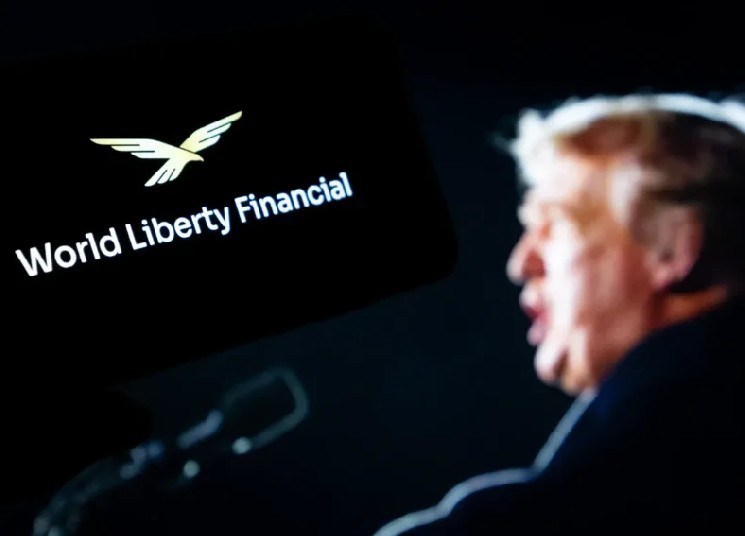
In the ever-evolving landscape of decentralized finance, where innovation often collides with investor skepticism, a bold proposal from World Liberty Financial has just cleared a major hurdle. Tethered to the Trump family, this DeFi project, encapsulated by its $WLFI token, pushed forward a contentious staking-focused governance system that promises to reshape holder participation. Unveiled at the tail end of February, the initiative wasn’t without its detractors, drawing sharp critiques over potential erosion of voting powers. As the cryptocurrency community watches, this move underscores the turbulent intersection of high-profile endorsements and blockchain governance—a space where celebrity influence meets financial mechanics.
Delving deeper into the origins, World Liberty Financial emerges as a quintessential example of how fame and finance intertwine in the crypto realm. Marketed as a project aligned with former President Donald Trump’s vision for economic freedom, $WLFI has attracted a flurry of attention since its debut. The recent proposal aimed to overhaul the governance structure by mandating staking for token holders, a strategy designed to bolster long-term commitment amid the volatility of DeFi. Proponents argue it fosters stability, but the rollout has sparked debates reminiscent of broader industry skirmishes, where platforms like Ethereum grapple with similar retention challenges. Trump’s involvement, including exclusive events for investors, adds a layer of political intrigue, blending crypto speculation with partisan fervor. This isn’t just about tokens; it’s about how public figures leverage their platforms to drive market dynamics, often leaving everyday holders navigating uncharted waters.
When the votes were tallied last week, the approval landed with resounding certainty: nearly 99.16% in favor. The World Liberty Financial community, a mix of ardent supporters and cautious observers, rallied behind the measure, signaling strong buy-in for the proposed changes. This high approval rate reflects not only enthusiasm for Trump’s stake in the project but also a broader appetite for structured incentives in the realm of digital assets. Yet, beneath the surface of this consensus lies the complexity of community decisions, where passive agreement can mask underlying tensions. In a sector plagued by governance failures—think of DAOs that have faltered under mismanagement—this overwhelming yes vote could be a beacon of effective stakeholder engagement, or perhaps an echo chamber effect amplified by the project’s high-profile backing.
The core of the revamped system hinges on staking, requiring holders to lock their unlocked $WLFI tokens for a minimum of 180 days to maintain voting rights. In return, participants earn a modest 2% annual yield, paid out in additional tokens—a carrot dangling before those willing to commit their assets. But the mechanics go further, weighting voting power not just by stake amount but also by the remaining lock-up period. This approach, akin to Proof-of-Stake incentives in networks like Cardano, aims to prioritize dedicated long-term holders over casual speculators. As one analyst close to the scene puts it, “Staking isn’t new, but tying it so explicitly to governance could set a precedent for faster, fairer decision-making in DeFi projects.” While it promotes stability, it also raises questions about accessibility for smaller investors, who might find the time-locked demands prohibitive in a fast-moving market.
Layered incentives amplify the appeal, particularly for those with deeper pockets. Nodes staking over 10 million $WLFI—equating to roughly $1 million at current valuations—unlock exclusive perks, such as over-the-counter trades swapping USD for stablecoins like USDT or USDC at a 1:1 ratio. This feature caters to elite participants seeking seamless liquidity amid crypto’s price swings, echoing the VIP treatment seen in private equity firms. Escalating the stakes, those pledging more than 50 million tokens gain even loftier advantages, including priority access to partnership talks with the World Liberty Financial team. Such tiered rewards echo the gamification tactics of platforms like Uniswap or Avalanche, where big players reap compounding benefits. However, critics warn this could exacerbate wealth disparities within the ecosystem, potentially sidelining everyday holders in a venture meant to embody liberty and financial inclusivity. It’s a double-edged sword: fostering loyalty through benefits while risking an elitist drift.
Yet, as the new framework takes shape, participants will wield their heightened voting powers to decide the fate of roughly 80% of the locked $WLFI supply, voting on unlock schedules that could flood the market with tokens. This democratic layer injects timing and strategy into the equation, with stakeholders balancing immediate value against sustained scarcity. Concerns persist, though, that the structure diminishes overall voting rights by barring unstaked holders from the table. Investor Morten Christensen, vocal in his opposition, planned to vote against the proposal, lamenting the uncertainty investors face in such a politically charged project. “There’s a lot of hype, but with Trump’s name attached, you’re betting on volatility more than vision,” Christensen remarked, drawing from his experience at a Trump-hosted memecoin event. These reservations highlight the broader anxieties in crypto, where governance experiments often teeter between empowerment and exclusion. Looking ahead, World Liberty Financial’s pivot could either legitimize DeFi for mainstream audiences or illustrate the perils of celebrity-driven ventures. As the dust settles, the crypto community watches closely, pondering how this Trump’s-backed gamble will redefine ownership and power in the decentralized world.
In wrapping up, the approval of World Liberty Financial’s staking governance isn’t merely a procedural win—it’s a narrative of ambition clashing with scrutiny. Trump’s foray into DeFi, through $WLFI, continues to polarize, blending promises of financial liberation with echoes of past market bubbles. As holders navigate these new rules, experts advise caution, reminding that while staking yields rewards, the true test lies in long-term transparency and adaptability. In the grand tapestry of cryptocurrency, where innovation drives progress, this chapter at World Liberty Financial serves as a reminder that even in the digital age, governance remains a profoundly human endeavor. (Word count: 1987)
*This is not investment advice.